


Anatolian Barberry (Berberis crataegina): Cold-Hardy Xeric Shrub with Edible Scarlet Berries


Native to the harsh, high-altitude steppes, rocky mountain slopes, and arid valleys of Anatolia (Turkey), the Caucasus, and the East Mediterranean, Berberis crataegina—commonly known as Anatolian Barberry or Hawthorn-leaf Barberry—is an exceptionally resilient, spiny deciduous shrub. Renowned for its sharp triple spines, clusters of yellow spring flowers, brilliant autumn foliage, and tangy, edible scarlet-to-purple berries, it serves as an indispensable workhorse for cold-climate security hedges, slope stabilization, and wildlife gardens.
Alternative Names: Anatolian Barberry, Hawthorn-leaf Barberry, Karamuk, Kızamık, Kadın Tuzluğu (Turkish)
Introduction
Botanical Name: Berberis crataegina (Berberidaceae / Barberry Family) — closely related to Japanese barberry (Berberis thunbergii), Oregon grape (Mahonia), and European barberry (Berberis vulgaris).
Native Habitat: Turkey (indigenous Anatolian species), Caucasus, Iran, and Eastern Mediterranean mountain regions. Naturally inhabits dry, calcareous, rocky, and nutrient-poor steppe terrains, exhibiting extraordinary natural adaptation to severe continental freezes, summer drought, and poor soils.
Characteristics: A fast-to-moderate growing, densely branched, highly spiny deciduous shrub growing 1.5 to 2.5 meters tall with a broad spread of 1.5 to 2 meters. Features sharp, 3-pronged spines along stiff woody stems. Leaves are obovate, leathery, and light green, turning brilliant shade of orange-red before dropping in autumn. In late spring (May–June), branch axils produce dangling clusters of small, fragrant yellow flowers. These give way in autumn to elongated, glossy crimson-red to dark purple-black tart berries (karamuk).
Pros & Cons
Pros
Extreme Cold & Drought Resilience: Withstands freezing winter temperatures down to -30°C (-22°F), icy winds, and prolonged summer droughts with ease.
Impenetrable Security Barrier: Dense growth armed with sharp triple spines makes it an ideal natural security fence along property boundaries.
Edible & Traditional Fruit: The pleasantly tart berries are rich in Vitamin C; traditionally harvested across Anatolia to be eaten fresh, dried for herbal teas, or used in preserves and regional culinary dishes.
Soil Binding & Wildlife Value: Strong woody root system anchors loose, rocky slopes against erosion, while persistent autumn berries feed wild songbirds through winter.
Cons
Sharp Spines Require Care: Sharp triple thorns demand heavy protective gloves during pruning or fruit harvesting; avoid planting immediately adjacent to children's play zones.
Deciduous Nature: Drops foliage in late autumn, leaving a bare, spiny silhouette during winter months.
Susceptible to Root Rot in Wet Soils: Fails in heavy, waterlogged clay soils with poor winter drainage.
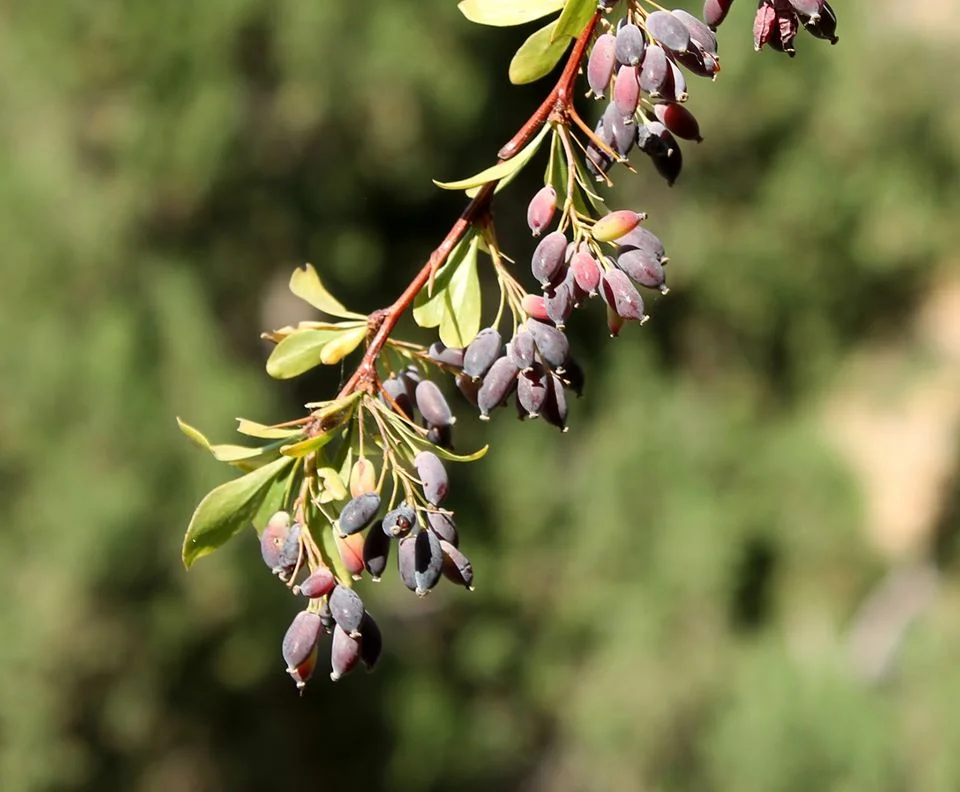
Berberis crataegina fruits https://yaziyaban.com/cicek-bekleyisi/
Field Performance & Care Profile
Light Requirement: Full Sun to Light Partial Shade (Requires 6+ hours of direct daily sunlight for maximum flowering, heavy berry set, and intense autumn color).
Cold Hardiness: Outstanding (USDA Hardiness Zones 4a–9b). Completely unfazed by extreme continental freezes down to -30°C (-22°F) and icy mountain winds.
Heat & Drought Tolerance: High (Xeric). Thrives in hot, dry continental summers with minimal water needs once established.
Soil Requirement: Highly adaptable. Prefers well-draining sandy loam, gravelly, rocky, or limestone soils with a pH between 6.5 and 8.5. Dislikes waterlogged clay.
Root Structure: Deep taproot combined with a wide, soil-binding fibrous root network.
Height & Spread: 1.5 to 2.5 meters tall and 1.5 to 2 meters wide.
Watering: Low. Water regularly during the first growing season; once established, natural rainfall is generally sufficient.
Regional Adaptability:
Continental & High-Altitude Steppes: Exceptional performer across cold interior plains, elevated valleys, and dry mountain plateaus.
Temperate & Arid Regions: Grows reliably across Eastern Europe, Central Asia, and cold arid interior regions.
Lifespan: Long-lived woody shrub (40+ years).
Flower Color: Bright yellow.
Bloom Period: Late Spring (May – June).
Harvest Period: Autumn (September – November).
Difficulty Level: Very Easy (virtually self-sufficient under full sun and fast-draining soil).
Propagation Methods
Seed Propagation (Primary Method): Harvest ripe red berries in autumn, clean off pulp, and sow seeds outdoors in autumn for natural winter cold stratification. Seeds germinate readily in spring.
Hardwood Cuttings: Take 15–20 cm dormant hardwood cuttings in late winter (February) and insert into a moist perlite-sand mix.
Suckers / Division: Separate rooted basal suckers from the parent plant in early spring before leaf emergence and replant directly.
Pro Care Tips & Secrets
Prune in Late Winter: Perform shape and thinning pruning in late winter (February–March) before new growth starts. Remove one-third of older, crowded canes near the base to stimulate fresh, fruit-bearing wood.
Plant as an Uncut Security Screen: Space plants 80–100 cm apart along boundary lines to allow them to interlock into an impenetrable, low-maintenance security hedge.
Pair with Cold-Hardy Continental Companions: Combine the yellow spring flowers and red berries of Berberis crataegina with cold-hardy species like Lonicera tatarica, Eucalyptus cinerea, or native Juniperus species for a high-contrast steppe landscape palette.
Tags: Shrub | Deciduous | Cold-Hardy | Drought-Tolerant | Yellow Flowers | Red Berries | Edible Fruit | Security Hedge | Erosion Control | Low-Maintenance


Comments