


Architectural Warm-Season Ornamental Grass: Chinese Silver Grass (Miscanthus sinensis)


An exceptionally graceful, highly versatile warm-season perennial grass celebrated for its arching fountain-like habit, silvery late-summer plume panicles, brilliant golden-bronze autumn foliage, winter structural persistence, and outstanding performance across modern, naturalistic, and Mediterranean landscapes.
Alternative Names: Chinese Silver Grass, Maiden Grass, Eulalia Grass, Roseau de Chine (French), Chinaschilf (German), Pasto de Plata (Spanish), Çin Kamışı / Gümüş Çimi / Çin Çimi / Sümbül Çimi (Turkish)
Introduction
Botanical Name: Miscanthus sinensis (Family Poaceae) — closely related to sugarcane (Saccharum), big bluestem (Andropogon), and flame grass (Miscanthus x giganteus).
Native Habitat: Native to East Asia (including China, Japan, Korea, and Taiwan). Naturally inhabits sunny mountain slopes, grassy lowland meadows, coastal dunes, and woodland margins.
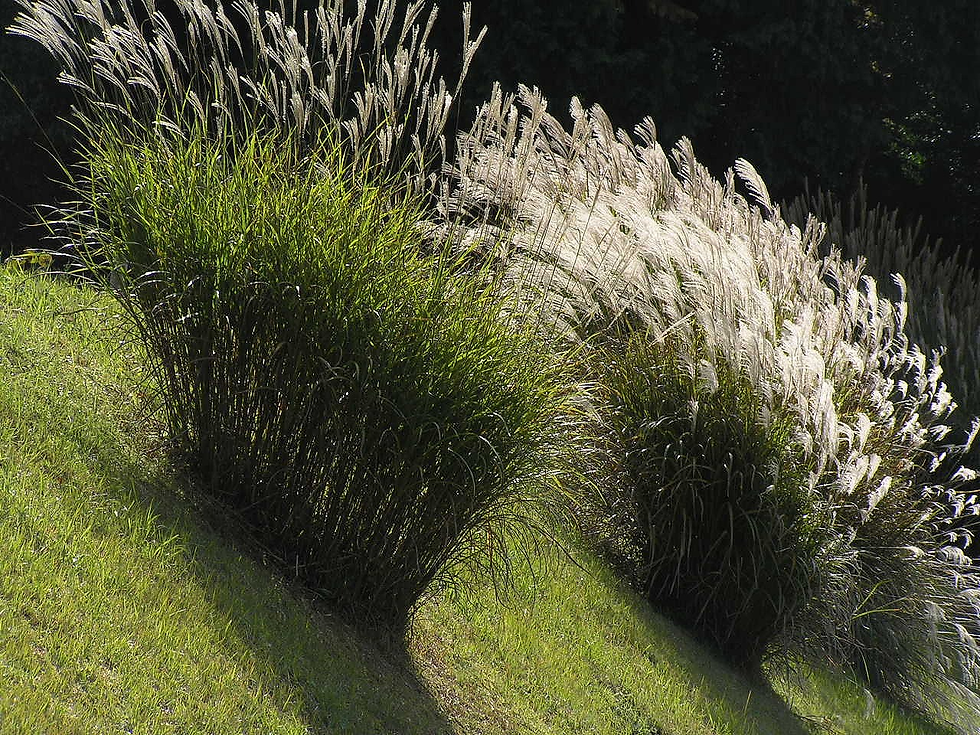
Characteristics: A robust, clump-forming warm-season perennial grass growing 1.5 to 3 meters in height with a fountain-like spread of 1 to 2 meters. Produces dense clumps of narrow, linear, arching green leaves (50 to 100 cm long) featuring a distinctive white midrib running down the leaf center. In late summer through early autumn (August to October), tall, sturdy scapes rise well above the foliage, topped with silky, feathery panicle plumes (20 to 40 cm long) that emerge copper-red to pinkish-silver and mature into fluffy, soft-white seed heads that persist all winter. Popular cultivars include Miscanthus sinensis 'Gracillimus' (Maiden Grass), 'Zebrinus' / 'Strictus' (Zebra Grass with yellow horizontal bands), and 'Morning Light' (fine variegated leaf borders).
Pros & Cons
Pros
Four-Season Landscape Architecture: Offers dynamic green movement in spring/summer, silky pink-silver flower plumes in late summer, golden-copper autumn tones, and a rigid, bleach-tan winter silhouette.
High Soil & Drought Adaptability: Deep root systems allow established clumps to thrive in dry, nutrient-poor, sandy, or heavy clay soils once rooted.
Non-Invasive Clump Habit: Unlike aggressive spreading rhizomatous grasses, most ornamental Miscanthus sinensis cultivars expand slowly in tight clumps without running underground.
Deer, Pest, & Salt Tolerance: Fibrous, sharp-edged silica leaves naturally repel deer, rabbits, and leaf-chewing insects; highly resilient against coastal salt spray.
Erosion Control & Windbreak Value: Excellent for stabilizing sloping banks, acting as a seasonal privacy screen, and absorbing heavy wind gusts.
Cons
Requires Hard Annual Late-Winter Pruning: Accumulated dry, woody stems must be cut back down to ground level every year before spring growth begins.
Self-Seeding Risk in Specific Moist Climates: Fertile species forms can produce airborne seeds that naturalize aggressively along wet ditches and roadsides in humid temperate zones.
Center Dieback in Old Un-Divided Clumps: Outer edges of mature clumps continue growing while the center can hollow out after 5 to 7 years, requiring physical division.
Field Performance & Care Profile
Light Requirement: Full direct sunlight (6+ hours daily required). High solar exposure keeps stems sturdy and rigid; partial shade causes weak, floppy growth requiring artificial staking.
Cold Hardiness: Extremely cold-hardy perennial grass (USDA Hardiness Zones 4a–9b). Clump crowns comfortably survive deep winter ground freezes down to -30°C (-22°F).
Heat & Drought Tolerance: High. Thrives effortlessly in hot, dry summer environments (35°C–40°C) once its root structure reaches deep soil strata.
Soil Requirement: Highly adaptable. Prefers light, fertile, well-drained loams, sandy clay, gravelly substrates, or lean soils (pH 5.5 to 7.8, slightly acidic to slightly alkaline). Tolerates heavy clay provided water doesn't pool continuously in winter.
Root Structure: Deep, dense, fibrous clump root system accompanied by short, non-running woody rhizomes.
Height & Spread: Grows 1.5 to 3 meters tall (including flower plumes) with a clump base spread of 1 to 2 meters. (Dwarf cultivars like 'Adagio' stay around 1 to 1.2 meters).
Watering: Low to Moderate. Categorized in the Low-to-Moderate Water Group once established. Requires baseline moisture during its first season; mature plants need only natural rainfall and rare summer irrigation.
Regional Adaptability:
Anatolia & Mediterranean: Outstanding performer across all Turkish provinces—from dry Central/Eastern Anatolian plateaus to Aegean, Mediterranean, and Marmara coastal landscapes; excels in modern xeriscapes and countryside gardens.
Global: One of the most widely planted structural ornamental grasses across Europe, North America, Japan, and Australia.
Lifespan: Long-lived herbaceous perennial (clumps thrive for 20+ years).
Plume Color: Copper-red, rosy-pink, turning to soft metallic silver and fluffy white.
Blooming Period: Late summer to mid-autumn (August to October); dried plumes persist through winter.
Foliage Status: Deciduous warm-season grass (green foliage turns golden-copper in autumn, bleaching to tan straw in winter; breaks dormancy in mid-spring).
Difficulty Level: Very Easy (low-maintenance once established; single annual pruning step).

Propagation Methods
Clump Division (Primary & Best Method): Divide mature clumps in early spring (March to April) just as fresh green shoots begin to push up from the base. Use a sharp spade or saw to slice the heavy root mass into smaller sections with healthy shoots attached, and replant immediately.
Seed Sowing (Species Only): Sow fresh seeds in spring under light surface coverage. (Note: Cultivar traits like variegated stripes or fine leaves will not breed true from seed; cultivars must be propagated by division).
Pro Care Tips & Secrets
Cut Back to 10–15 cm Above Ground in Late Winter: Leave the dry brown foliage and silver plumes standing all winter to provide structural garden interest and shelter for beneficial garden insects. In late winter (February to March), before new green shoots emerge, shear the entire plant down to 10 to 15 cm above ground level using hedge shears or a brush cutter.
Divide Old Clumps to Prevent Center Hollows: When the center of an old Miscanthus clump stops producing fresh shoots, dig up the whole root mass in early spring. Discard the dead woody center, and replant the vigorous outer ring divisions into refreshed soil.
Pair with Structural Perennials for Prairie-Style Contrast: Combine Miscanthus sinensis with late-summer perennials like Echinacea, Rudbeckia, Salvia, and Buddleja. The soft, moving texture of the silver grass provides a high-contrast backdrop for bold floral structures.
Tags: Perennial | Ornamental-Grass | Poaceae | Cold-Hardy | Drought-Tolerant | Heat-Tolerant | Architectural-Plant | Xeriscaping | Low-Maintenance


Comments