


Essential Host Plants for Anatolian Butterfly Caterpillars
Nature's Nurseries:
Designing a true butterfly sanctuary requires more than simply planting nectar-rich flowers for adult butterflies—it demands cultivating the specific host plants that sustain their caterpillars. Every lepidopteran species has evolved specialized biological relationships with host flora. By integrating these critical larval food sources into dedicated, unmanaged zones of your landscape, you establish a self-sustaining breeding habitat for native butterfly and moth populations.

Part 1: Foundational Host Plants of Anatolia
1. Stinging Nettle (Urtica dioica)
Arguably the most crucial "caterpillar engine" in temperate ecosystems. In Anatolia, caterpillars of widespread species such as the Peacock Butterfly (Aglais io) and the Red Admiral (Vanessa atalanta) feed exclusively on stinging nettle foliage. Allocating a secluded, wild corner of your garden to nettles is the single most effective action for local butterfly conservation.
2. Fennel, Dill & Parsley (Apiaceae Family)
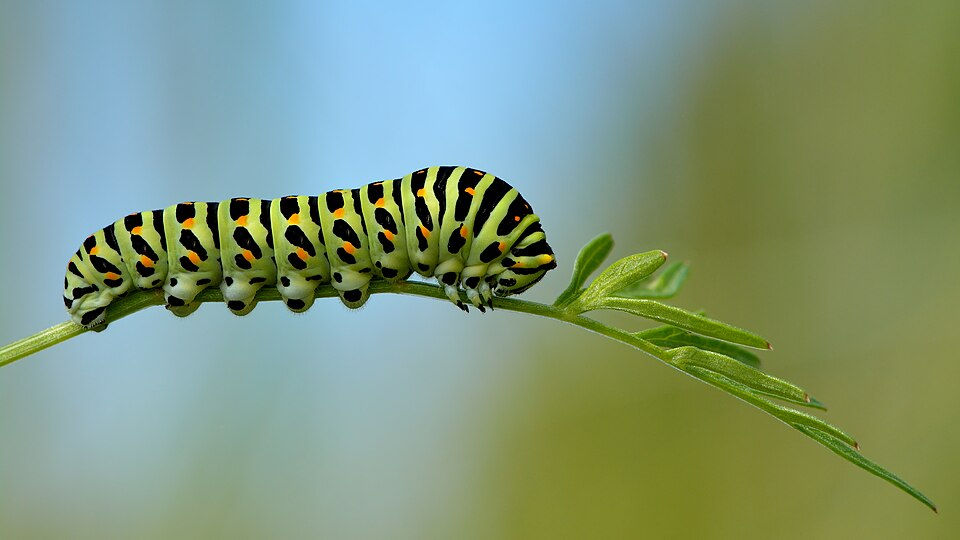
The striking Old World Swallowtail (Papilio machaon) relies heavily on aromatic umbellifers. The aromatic foliage of fennel (Foeniculum vulgare) is particularly attractive to egg-laying females. Sacrificing a small portion of your herb garden to these larvae ensures a steady return of swallowtails every season.
3. Mallow & Hollyhock (Malvaceae Family)
Foliage of mallow (Malva) and hollyhock (Alcea) feeds the caterpillars of the Mallow Skipper (Carcharodus alceae) and the migratory Painted Lady (Vanessa cardui). Painted Lady larvae also utilize wild thistles (Cirsium spp.) as primary host sites.
4. Willow, Poplar & Elm Trees
Many large forest butterflies depend on broadleaf tree canopies during their larval stages. For instance, caterpillars of the Large Tortoiseshell (Nymphalis polychloros) develop within the high canopy foliage of native willows (Salix), poplars (Populus), and elms (Ulmus).

5. Wild Legumes, Sorrel & Native Grasses
Alfalfa (Medicago) & Sainfoin (Onobrychis): Primary host plants for Clouded Yellow (Colias) species and various delicate Blues (Lycaenidae family).
Sorrel & Dock (Rumex spp.): The indispensable food source for Small Copper (Lycaena phlaeas) caterpillars.
Wild Meadows & Poaceae: Grasses and wild cereals nourish the larvae of the Browns subfamily (Satyrinae) throughout their development.
6. Birthwort / Pipevine (Aristolochia spp.)
The exotic Festoon Butterflies (Zerynthia spp.) are obligate feeders on Aristolochia. Because their larvae feed strictly on birthwort species to absorb protective toxins, Festoons cannot survive in landscapes where Aristolochia is absent.
Ecosystem Synthesis: An effective butterfly garden architecture balances two distinct elements:
Nectar Plants (Adult Energy): Lavender, Buddleja, Echinacea, and Lantana attract adult butterflies to feed.
Host Plants (Larval Breeding): Nettle, Fennel, Mallow, and Legumes enable reproduction and long-term population establishment.
Part 2: Specialized & Inland Host Plants
1. Spurge (Euphorbia spp.)
Serves as the exclusive host plant for the strikingly patterned Spurge Hawk-moth (Hyles euphorbiae). By consuming the toxic, milky latex within spurge stems, these caterpillars sequester poisonous compounds that protect them from avian predators.
2. Acacia & Fabaceae Trees
The Silver-Spotted Blue and numerous Lycaenidae species feed on the delicate flower buds and tender spring foliage of acacia trees, wild sweet peas, and vetches (Vicia), using them as specialized larval nurseries.
3. Oak & Plane Trees (Quercus & Platanus)
Ancient oak and plane trees support giant nocturnal moths. Most notably, caterpillars of the Great Peacock Moth (Saturnia pyri)—one of Europe's largest lepidopterans—feed on the broad foliage of these forest titans as well as cultivated fruit trees (apple, pear, and plum).

4. Wild Mustard & Brassicas (Brassicaceae)
Species such as the Small White (Pieris rapae) and the Orange Tip (Anthocharis cardamines) prefer wild mustard, radish, and rocket. Allowing garden brassicas to flower invites these bright spring butterflies to lay eggs directly on seedpods and tender tips.
5. Honeysuckle (Lonicera spp.)
The day-flying Broad-bordered Bee Hawk-moth (Hemaris fuciformis)—famed for its hovering flight resembling a hummingbird—relies on honeysuckle foliage. Its fragrant blossoms double as an exceptional nectar source for adult moths.
6. Mullein (Verbascum spp.)
A staple bi-annual of inland Anatolian steppe microclimates, mullein provides essential habitat for caterpillars of the Mullein Moth (Cucullia verbasci), which camouflage seamlessly against the dense, woolly leaves.
Practical Design Strategy for Wildlife Gardens
Supporting caterpillars naturally involves accepting minor foliar grazing. To maintain refined garden aesthetics while encouraging biodiversity, establish these host plants within a dedicated "wild zone" or un-mowed boundary section of your landscape.
Reserving a quiet, low-intervention corner for host flora creates an authentic nursery where you can observe one of nature's most fascinating biological transformations firsthand.


Comments