


Hardy Miniature Citrus: Kumquat (Citrus japonica)
- Athena

- Aug 2
- 4 min read

An exceptionally ornamental, cold-hardy citrus tree native to East Asia, celebrated for its sweet edible rind, tart juicy pulp, glossy evergreen foliage, fragrant star-shaped white spring blossoms, and outstanding container adaptability across Mediterranean, coastal, and winter-protected gardens.
Alternative Names: Kumquat, Cumquat, Fortunella, Kumquat (French/German/Spanish), Kamkat / Kumkuat / Altın Portakal (Turkish)
Introduction
Botanical Name: Citrus japonica (syn. Fortunella margarita, Fortunella japonica; Family Rutaceae) — closely related to orange (Citrus sinensis), mandarin (Citrus reticulata), and lime (Citrus aurantiifolia).
Native Habitat: Native to South-Central China. Naturally inhabits warm subtropical mountain valleys, sunny forest margins, and river basins.
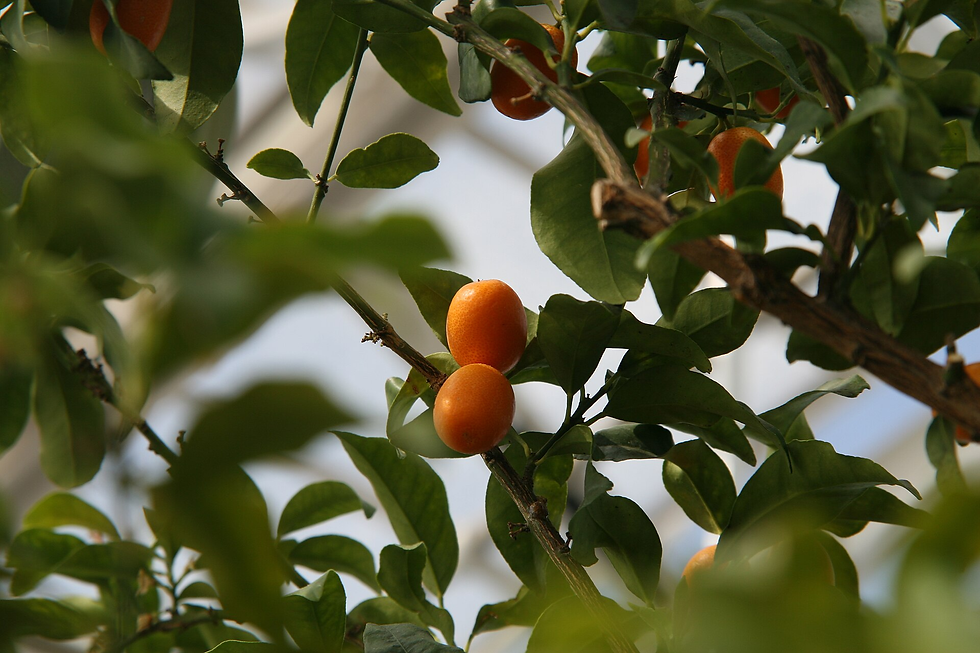
Characteristics: A compact, slow-growing, multi-stemmed evergreen shrub or small tree growing 2.5 to 4 meters in height (potted specimens stay under 1 to 1.5 meters) with a dense, rounded crown. Features small, leathery, dark glossy green lanceolate leaves (4 to 8 cm long) with subtle winged petioles and fine axillary thorns. In late spring to mid-summer, it produces heavily fragrant, 5-petaled pure white blossoms (1.5 to 2 cm wide) that smell richly of orange blossoms. By late autumn and winter, the flowers yield small, oval-to-spherical golden-orange fruits (2 to 4 cm long) that can be eaten whole—peel included. Key cultivar groups include 'Nagami' (oval fruit) and 'Marumi' (round fruit).
Pros & Cons
Pros
Edible Whole Fruit (Sweet Rind, Tart Pulp): Unlike standard citrus, the skin of the kumquat is sweet and aromatic while the inner flesh is tart, allowing the entire fruit to be eaten fresh off the tree.
Superior Cold Hardiness Among Citrus: One of the most frost-tolerant true citrus species, entering semi-dormancy in winter to survive temperatures down to -8°C (18°F) without wood damage.
Premier Container & Balcony Specimen: Maintains a compact size and dense fruiting habit, making it an ideal candidate for potted patio culture and indoor wintering.
High Ornamental & Fragrance Value: Offers glossy year-round evergreen foliage, intensely fragrant spring flowers, and bright golden winter fruit displays.
Self-Fertile: Does not require a second cross-pollinating tree to set a heavy crop of fruit.
Cons
Slow Growth Rate: Takes several seasons to develop a thick trunk framework compared to fast-growing sweet oranges or lemons.
Sensitive to Root-Zone Waterlogging: Susceptible to fungal root rot (Phytophthora) if planted in heavy, non-draining clay.
Requires Winter Protection in Severe Inland Freezes: Leaves and fruit suffer damage if sub-zero freezes persist without shelter.

Field Performance & Care Profile
Light Requirement: Full direct sunlight (6 to 8+ hours daily required). High solar radiation powers heavy flowering, dense foliage, and sweet rind sugar accumulation.
Cold Hardiness: Moderately cold-hardy citrus (USDA Hardiness Zones 8b–11b as an outdoor tree; Zones 3a–8a grown in containers moved indoors for winter). Mature trees handle short winter drops to -8°C (18°F); fruit ripens best when protected from hard freezing nights.
Heat & Humidity Tolerance: High. Thrives in warm, humid summer conditions as well as dry Mediterranean summer heat waves above 35°C (95°F).
Soil Requirement: Highly specific for drainage. Prefers rich, fertile, light, fast-draining loamy or sandy-clay substrates (pH 6.0 to 7.0, slightly acidic to neutral). Intolerant of heavy, water-retentive, or overly alkaline chalky soils.
Root Structure: Fibrous, surface-oriented root system that requires oxygen-rich, well-aerated topsoil.
Height & Spread: Grows 2.5 to 4 meters tall in open ground with a crown spread of 2 to 3 meters (1 to 1.5 meters in containers).
Watering: Moderate. Categorized in the Moderate Water Group. Deep, regular watering during active spring and summer growth; allow the top 3 to 5 cm of soil to dry out between waterings. Reduce frequency in winter.
Regional Adaptability:
Anatolia & Mediterranean: Outstanding performer across Mediterranean, Aegean, and Marmara coastal regions (Antalya, Bodrum, İzmir, Rize); thrives in sheltered urban courtyards and terrace pots across inland Anatolia.
Global: Highly prized fruit and ornamental tree across East Asia, Southern Europe, California, Florida, and greenhouse collections worldwide.
Lifespan: Long-lived evergreen tree (40+ years).
Fruit Color: Deep golden-orange to amber when fully ripe.
Blooming Period: Late spring to mid-summer (May to July). Fruit matures from November through March.
Foliage Status: Broadleaf evergreen.
Difficulty Level: Easy to Moderate (straightforward care; requires good drainage and seasonal citrus feeding).
Propagation Methods
Grafting / Budding (Primary Commercial Method): T-budding or whip grafting onto hardy citrus rootstocks such as Trifoliate Orange (Poncirus trifoliata) or 'Carrizo' citrange. Rootstocks provide enhanced cold tolerance, disease resistance, and dwarfing qualities.
Air Layering (Marcoltage): Performed on healthy woody branches in late spring for rapid clone production with original root tissues.
Semi-Hardwood Cuttings: Take 10 to 12 cm stem cuttings in mid-summer, treat with rooting hormone, and keep under high humidity with bottom heat (22°C–25°C).
Pro Care Tips & Secrets
Use Iron Chelate (Fe) to Prevent Chlorosis in High-pH Soils: Like most citrus, kumquats can struggle to absorb iron in slightly alkaline or lime-rich soils, causing new leaves to turn yellow with green veins. Apply a foliage spray or soil drench of iron chelate (Fe-EDDHA) twice a season (spring and mid-summer) to maintain deep green foliage.
Prune Sucker Shoots Below the Graft Union: If your tree is grafted, monitor the lower main trunk near the soil line. Prune off any thorny sucker shoots that emerge below the graft union immediately, as rootstock growth will siphon energy away from the fruiting canopy.
Harvest Fruits with Pruning Shears: Do not pull or twist ripe fruits off the branches by hand, as this can tear the thin stem bark. Always snip fruit stems cleanly with sharp pruning shears, leaving a small green button/calyx attached to prolong fresh storage life.
Tags: Evergreen | Fruit-Tree | Rutaceae | Cold-Hardy | Fragrant | Edible-Fruit | Container-Gardening | Mediterranean-Garden


Comments