


Late-Season Architectural Perennial: Autumn Joy Stonecrop (Hylotelephium 'Herbstfreude' / Sedum 'Autumn Joy')


An extraordinarily resilient, cold-hardy, drought-proof perennial succulent native to eastern Asia and perfected through European breeding, celebrated for its stout upright stems, broccoli-like floral heads that shift dynamically from soft dusty-pink to rich copper-bronze and deep ruby-red, winter persistence, and vital role in late-season pollinator support.
Alternative Names: Autumn Joy Stonecrop, Herbstfreude Stonecrop, Showy Stonecrop, Orpin d'Automne (French), Hohe Fetthenne 'Herbstfreude' (German), Sedo d'Otoño (Spanish), Sonbahar Sevinci Damkoruğu / Büyük Yapraklı Pembe Sedum / Kış Sedumu (Turkish) — (Note: Botanically reclassified from Sedum spectabile / Sedum telephium to Hylotelephium 'Herbstfreude').
Introduction
Botanical Name: Hylotelephium 'Herbstfreude' (syn. Sedum 'Autumn Joy', Hylotelephium telephium × Hylotelephium spectabile; Family Crassulaceae) — closely related to showy stonecrop (Hylotelephium spectabile), orpine (Hylotelephium telephium), and creeping stonecrops (Sedum album, Sedum spurium).
Native Habitat: Parent species originate from sunny rocky slopes, gravelly clearings, and mountain meadows of China, Korea, Japan, and Eastern Europe. Naturally adapted to high solar exposure, nutrient-poor soils, and extreme seasonal temperature swings.
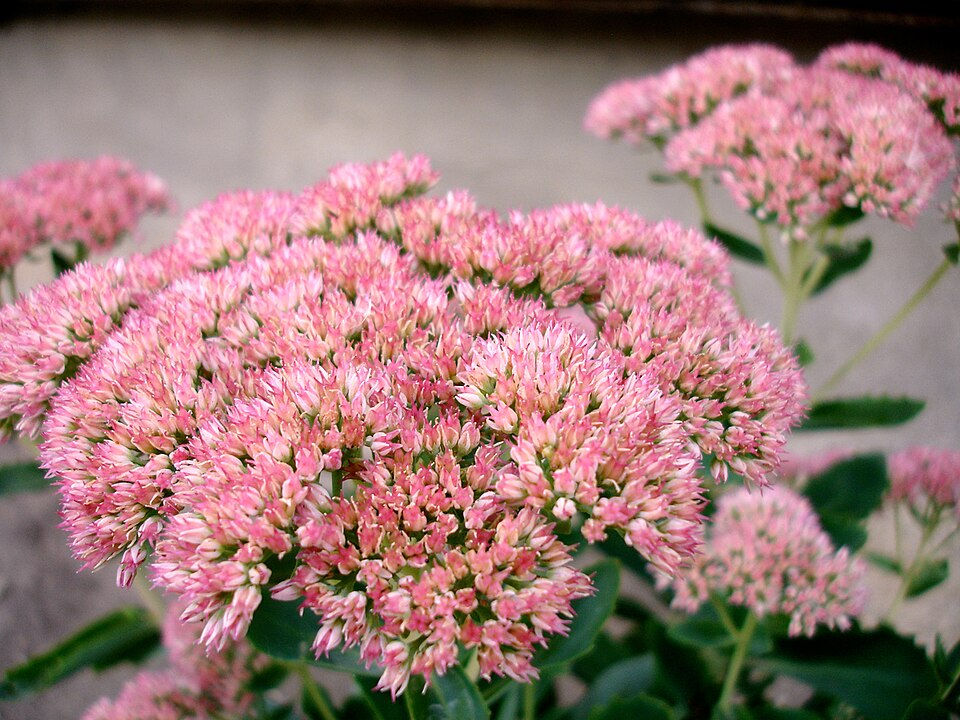
Characteristics: A clump-forming, upright, herbaceous succulent perennial growing 40 to 60 cm in height with a symmetrical, mounded spread of 40 to 60 cm. Features stout, succulent, unbranched gray-green stems clad in fleshy, oval-to-obovate, pale glaucous-green leaves (5 to 10 cm long) with lightly dentate margins. In mid-summer, tight broccoli-like flower buds form at stem tips, opening in late summer (August) into dense flat-topped compound cymes (10 to 15 cm wide) of star-shaped blossoms. The flowers undergo a dramatic color transformation: emerging pale greenish-pink, shifting to vivid salmon-pink in late summer, deepening to rich copper-bronze in autumn, and drying to dark mahogany-brown seed heads that persist throughout winter.
Pros & Cons
Pros
Multi-Season Dynamic Color Shifts: Delivers constant visual evolution from cool succulent foliage in spring to pink blooms in summer, copper tones in autumn, and architectural dried seed heads in winter.
Exceptional Cold & Freeze Hardiness: Withstands severe winter ground freezes down to -35°C (-31°F) without crown damage.
Superior Heat & Drought Immunity: Succulent stems and leaves store water reserves effortlessly, surviving long, dry summer spells with zero artificial irrigation once rooted.
Premier Late-Season Pollinator Magnet: Provides crucial nectar and pollen for honeybees, bumblebees, and migrating butterflies during late summer and autumn when other blooms fade.
Zero Soil Demands: Performs outstandingly in lean, gravelly, sandy, or nutrient-poor soils without requiring fertilizers.
Cons
Flops in High-Nitrogen or Overly Shaded Conditions: Excessive fertilizer, rich compost, or insufficient sunlight causes stems to grow tall, weak, and split open in the center.
Intolerant of Winter Waterlogging: Heavy, saturated clay soils in winter cause soft fungal crown rot (Phytophthora).
Susceptible to Deer & Rodent Browsing: Tender, succulent spring shoots can occasionally attract deer, rabbits, or voles.
Field Performance & Care Profile
Light Requirement: Full direct sunlight (6+ hours daily required). Maximum solar radiation maintains rigid, upright stems, dense floral heads, and intense autumn petal pigmentation; shade causes floppy, leggy growth.
Cold Hardiness: Extremely cold-hardy herbaceous perennial (USDA Hardiness Zones 3a–9b). Underground root crowns comfortably survive deep sub-zero winter ground freezes down to -35°C (-31°F).
Heat & Drought Tolerance: Exceptional. Enters high-efficiency water conservation mode during summer heatwaves exceeding 38°C (100°F).
Soil Requirement: Sharp drainage is essential. Prefers light, lean, gravelly, sandy loams, or gritty mineral soils (pH 6.0 to 7.8, neutral to slightly alkaline). Highly tolerant of low-fertility, rocky, or chalky substrates.
Root Structure: Thick, fleshy, tuberous root crown with fibrous secondary feeding roots.
Height & Spread: Grows 40 to 60 cm tall with an upright, mounded clump spread of 40 to 60 cm.
Watering: Very Low to Low. Categorized in the Low Water Group. Requires light moisture during spring establishment; mature clumps thrive strictly on seasonal rainfall and survive dry summers easily.
Regional Adaptability:
Anatolia & Mediterranean: Outstanding performer across all 81 provinces of Turkey—from harsh continental winter plateaus (Eskişehir, Ankara, Sivas, Erzurum) to Aegean, Mediterranean, and Marmara sunny borders; excels in xeriscapes, gravel gardens, and cottage borders.
Global: One of the most popular, award-winning landscape perennials across Europe, North America, Japan, and Australia (Recipient of the RHS Award of Garden Merit).
Lifespan: Long-lived herbaceous perennial (15+ years; easily divided to renew).
Flower Color: Color-shifting: Pale salmon-pink to copper-red, dark rusty-bronze, and mahogany.
Blooming Period: Late summer to late autumn (August to November); dried seed heads persist through winter.
Foliage Status: Deciduous succulent perennial (above-ground stems die back after hard winter freezes, re-emerging as tight blue-green rosettes in early spring).
Difficulty Level: Very Easy (virtually maintenance-free once planted in well-draining soil).

Propagation Methods
Clump Division (Primary & Easiest Method): Divide mature root crowns in early spring (March) just as fresh blue-green rosettes emerge from the soil. Dig up the root mass, slice into sections with a clean spade ensuring each division has healthy roots and shoots, and replant immediately into gritty soil.
Stem Cuttings: Take 8 to 12 cm leafy stem cuttings in late spring or early summer. Strip lower leaves, allow cut ends to callus for 24 hours, and press into a moist 50/50 mix of perlite and coarse sand. Roots establish within 10 to 14 days without rooting hormone.
Pro Care Tips & Secrets
Apply the "Chelsea Chop" in Late Spring to Prevent Flopping: If your soil is moderately rich or you want extra-bushy, compact plants with smaller, more numerous flower heads, trim back all stems by half in late spring (May/June). This "Chelsea Chop" lowers mature height, doubles flower density, and guarantees stems remain rock-solid without splitting open.
Leave Dried Seed Heads Standing All Winter: Do not cut back spent flower stalks in late autumn. The dark mahogany-brown heads catch winter snow beautifully, provide structural winter interest, and offer shelter for overwintering garden insects and seeds for small birds.
Clear Old Stems in Early Spring: Shear off the old, dry previous year's stems down to ground level (2 to 3 cm) in early spring (March) just as the fresh blue-green basal rosettes push through the soil surface.
Tags: Perennial | Succulent | Crassulaceae | Cold-Hardy | Drought-Tolerant | Heat-Tolerant | Autumn-Color | Pollinator-Friendly | Xeriscaping | Low-Maintenance


Comments