


Myrtle-leaf Milkwort (Polygala myrtifolia): The Violet-Purple Butterfly Bloom of the Mediterranean


Native to the sandy dunes, rocky hillslopes, and coastal fynbos scrublands of South Africa's Cape Region, Polygala myrtifolia—commonly known as Myrtle-leaf Milkwort or September Bush—is a highly valued broadleaf evergreen shrub. Renowned for its near year-round display of sweet pea- and orchid-like violet-purple blossoms, glossy olive-green leaves resembling true myrtle, and exceptional resilience to ocean winds and drought, it serves as a cornerstone ornamental for Mediterranean and coastal garden designs.
Alternative Names: Myrtle-leaf Milkwort, September Bush, Parrot Bush, Poligala, Mersin Yapraklı Süt Otu / Kelebek Çalısı (Turkish)
Introduction
Botanical Name: Polygala myrtifolia (Polygalaceae / Milkwort Family) — closely related to sweet peas and alpine milkworts. (The generic name "Polygala" derives from Ancient Greek for "much milk," based on the historic belief that cows grazing on these plants produced more milk).
Native Habitat: South Africa (Western and Eastern Cape). Naturally inhabits coastal dunes, rocky hillsides, and fynbos margins, exhibiting high natural adaptation to nutrient-poor, sandy, calcareous, and saline coastal soils.
Characteristics: A fast-growing, upright to rounded broadleaf evergreen shrub growing 1.5 to 2.5 meters tall with a spread of 1.5 to 2 meters. Leaves are oval, leathery, glossy dark green, strongly resembling myrtle (Myrtus communis). From early spring through late autumn (and year-round in mild, frost-free Mediterranean winter zones), branch tips produce dense clusters of 2-petaled, vibrant magenta, violet-purple, and magenta-pink flowers featuring a distinctive white-crested keel that mimics a butterfly or orchid.
Pros & Cons
Pros
Near Year-Round Flowering: Produces an exceptionally long bloom cycle, flushing heavily from spring through autumn and holding blooms during mild winters.
Coastal Wind & Salt spray Tolerance: Highly resistant to harsh ocean winds, sandy conditions, and airborne salt spray.
Excellent Heat & Drought Resistance: Thrives effortlessly through hot Mediterranean summers once root systems establish.
Highly Versatile & Formable: Responds exceptionally well to light pruning; easily trained into informal hedges, accent shrubs, or small patio standards.
Cons
Frost Sensitivity: Hard freezes below -5°C to -7°C (19°F–23°F) can cause significant leaf drop, stem dieback, or plant loss.
Susceptible to Root Rot in Wet Clay: Fails rapidly in heavy, poorly drained clay soil with standing winter water.
Self-Seeding Tendency: Can become mildly invasive in mild coastal microclimates due to self-sown seedlings.
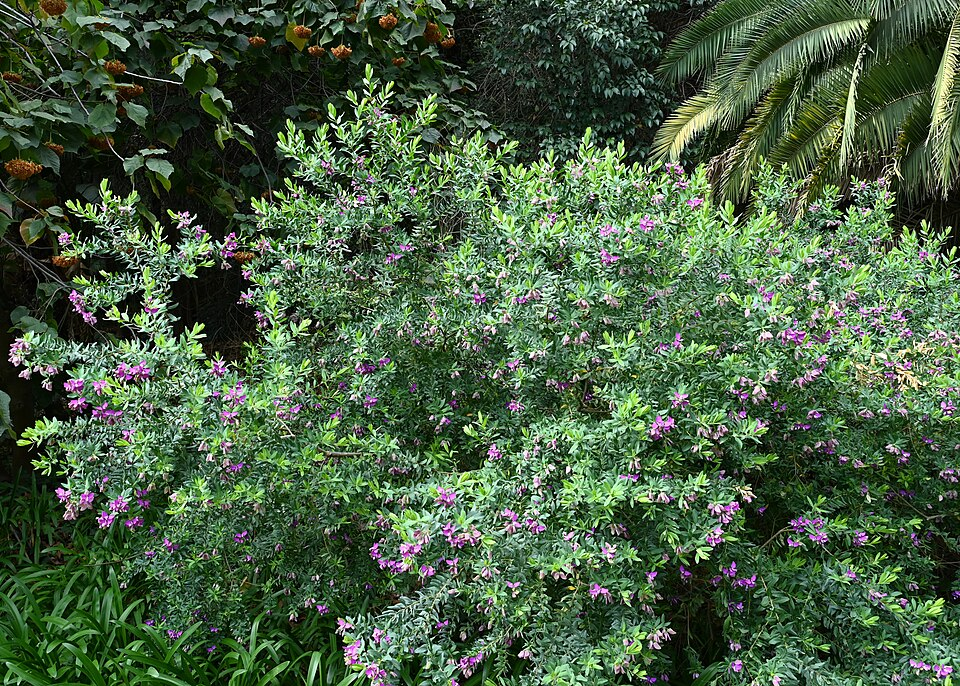
Polygala myrtifolia https://commons.wikimedia.org/wiki/User:Kenraiz
Field Performance & Care Profile
Light Requirement: Full Sun to Light Partial Shade (Requires 5–6+ hours of direct daily sunlight for maximum flower density).
Cold Hardiness: Moderate (USDA Hardiness Zones 9a–11b). Hardy down to -5°C (23°F). Requires winter protection or container overwintering in cold continental zones.
Heat & Drought Tolerance: High. Extremely resilient in hot summer climates; requires minimal supplemental watering once established.
Soil Requirement: Sharp drainage is essential. Adaptable to sandy, gravelly, loam, or slightly alkaline soils with a pH between 6.0 and 8.0. Unsuited for heavy, waterlogged clay.
Root Structure: Deep taproot combined with a wide fibrous feeder root network.
Height & Spread: 1.5 to 2.5 meters tall and 1.5 to 2 meters wide.
Watering: Low to Moderate. Water regularly during the first growing season; once established, allow the soil to dry out between waterings.
Regional Adaptability:
Mediterranean & Coastal Belts: Outstanding performer across coastal California, the Mediterranean Basin, South Africa, and Southern Australia.
Continental Interior: Cultivated in large patio containers moved to a bright, frost-free greenhouse or sunroom over winter.
Lifespan: Long-lived woody evergreen shrub (20+ years).
Flower Color: Vibrant violet-purple, magenta, rose-pink, or rarely white.
Bloom Period: Early Spring to Late Autumn (Year-round in warm coastal belts).
Difficulty Level: Very Easy (low-maintenance under full sun and fast-draining soil).

Populer Cultivars
Polygala myrtifolia 'Grandiflora': The most popular landscape selection, featuring noticeably larger, deeper magenta-purple flowers and lush foliage.
Polygala myrtifolia 'Bibi Pink' (syn. 'Little Bibi'): A superb dwarf cultivar growing just 80–100 cm tall, ideal for small garden borders and patio pots.
Polygala myrtifolia 'White Feathers': A rare and elegant cultivar producing snowy white butterfly blossoms at branch tips.
Propagation Methods
Semi-Hardwood Cuttings (Primary Method): Take 8–10 cm cuttings from semi-ripe summer growth (July–September). Remove lower leaves, dip in rooting hormone, and plant in a moist mix of 70% perlite and 30% peat. Roots establish in 3 to 4 weeks under high humidity.
Seed Propagation: Collect mature seeds in autumn, soak in warm water overnight, and sow on a sandy seed-starting mix in early spring.
Pro Care Tips & Secrets
Tip-Prune After Major Bloom Flushes: Lightly trim branch tips after peak spring flowering to encourage bushy branching and prompt a fresh wave of autumn blooms.
Pair with Yellow & Silver Mediterranean Plants: Create high-contrast visual interest by combining Polygala's rich purple flowers with silver or yellow species like Euryops pectinatus, Convolvulus cneorum, Salvia rosmarinus, or Lavandula.
Container Culture on Windy Terraces: Its structural resilience to strong winds makes it a candidate for large terracotta planters on exposed sunny balconies and rooftop terraces.
Tags: Shrub | Evergreen | Mediterranean Garden | Purple Flowers | Coastal Plant | Low-Maintenance


Comments