


Rose Mallow / Annual Mallow (Lavatera trimestris / Malva trimestris): Silky Pink Blossoms & Fast-Growing Mediterranean Annual


Native to the sunny coastal sands, fallow fields, and open brushlands of the Mediterranean basin, Lavatera trimestris (now botanically classified as Malva trimestris)—commonly known as Rose Mallow or Annual Mallow—is a cheerful, fast-growing annual. Celebrated for its large, funnel-shaped, silky pink and pure white blossoms, rapid development, prolifically long bloom cycle, and ability to quickly fill unmaintained garden spots with vibrant color, it serves as a staple for cottage gardens, xeric borders, and cut-flower cutting beds.
Alternative Names: Rose Mallow, Annual Mallow, Royal Mallow, Yıllık Ebegümeci / Gül Ebegümeci (Turkish)
Introduction
Botanical Name: Lavatera trimestris (Synonym: Malva trimestris) (Malvaceae / Mallow Family) — closely related to Tree Mallow (Lavatera arborea), Hollyhock (Alcea rosea), and Okra (Abelmoschus esculentus).
Native Habitat: Coastal sand dunes, roadsides, fallow fields, and sunny uncultivated meadows across Southern Europe and North Africa.
Characteristics: A fast-growing, bushy, upright annual reaching 60 to 120 cm in height and 40 to 60 cm in spread within a single season. Features heart-shaped or lobed, light green, slightly hairy leaves. From early summer to early autumn (June–September), upper leaf axils continuously produce large (8–10 cm wide), satiny, cup-shaped flowers in shades of bright rose-pink with dark veining, magenta, or clear white.
Pros & Cons
Pros
Rapid Growth & Same-Season Flowering: Blooms profusely just 8 to 10 weeks after sowing from seed.
Luminous Silky Flower Display: Large satiny petals create an immediate visual splash of summer color.
Excellent Cut Flower: Long, sturdy stems make it a reliable choice for floral arrangements and vases.
Tolerant of Lean Soils: Thrives in poor, sandy, gravelly, or moderately fertile garden soils.
Cons
Strictly Annual Lifespan: Completes its life cycle in one season and dies back with early winter frosts (relies on yearly sowing or self-seeding).
Prone to Flopping in Wind: Tall, flower-heavy stems can bend or blow over in windy sites without light staking or companion plant support.
Susceptible to Hollyhock Rust: Can develop rust fungus on lower leaves in excessively humid or damp summer conditions.
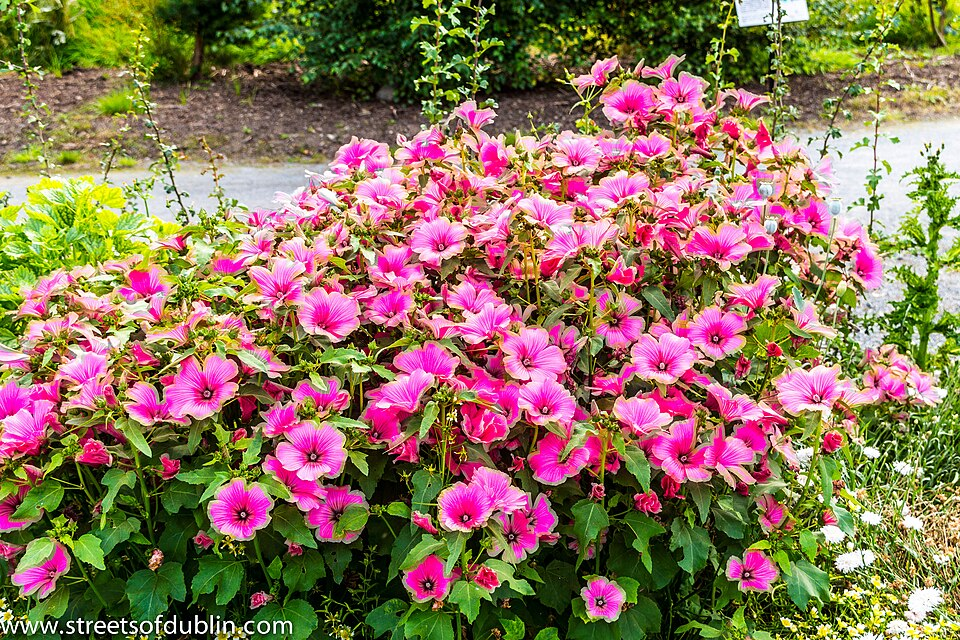
Rose Mallow-Pamuk Çiçeği-https://www.wikidata.org/wiki/Q130293227
Field Performance & Care Profile
Light Requirement: Full Sun (Requires a minimum of 6 hours of direct daily sunlight for maximum bloom count and sturdy stems).
Cold Hardiness: Tender Annual. Germinates after late spring frosts and completes its cycle by late autumn.
Heat & Drought Tolerance: High. Thrives in warm Mediterranean summers and copes well with moderate drought once established.
Soil Requirement: Well-draining, sandy, gravelly, or loamy soils (pH 6.0 - 7.5). Avoid high-nitrogen fertilizers, which promote leafy growth at the expense of flowers.
Root Structure: Deep, fast-developing taproot (does not tolerate root disturbance or transplantation well; best sown in place).
Height & Spread: 60 to 120 cm tall and 40 to 60 cm wide.
Watering: Low to Moderate. Keep moist during germination and seedling establishment; water infrequently once mature as soil dries.
Regional Adaptability:
Wide Climate Suitability: Performs reliably as a spring-sown summer annual across continental, coastal, and Mediterranean climate zones.
Lifespan: Annual.
Bloom Window: Early Summer to Early Autumn (June – September).
Difficulty Level: Very Easy (effortless to grow directly from seed).
Popular Cultivars
Lavatera trimestris 'Silver Cup': The most popular landscape cultivar, featuring rich salmon-pink blossoms with deep magenta veins on compact 60–70 cm plants.
Lavatera trimestris 'Mont Blanc': Outstanding selection producing large, satiny, pure white blossoms.
Lavatera trimestris 'Novella': An ultra-compact dwarf cultivar (35–40 cm) specifically bred for containers and tight garden borders.

Lavatera trimestris or annual mallow, rose mallow, royal mallow, and regal mallow https://commons.wikimedia.org/wiki/User:Acabashi
Propagation Methods
Direct Sowing in Place (Primary Method): Sow seeds directly in their permanent garden location in mid to late spring after frost danger has passed. Because taproots are sensitive to transplant shock, direct sowing yields the strongest plants. Seeds germinate in 10 to 14 days at 15°C–20°C (59°F–68°F).
Pro Care Tips & Secrets
Sow Directly in Garden Soil: Avoid indoor cell trays when possible. Scatter seeds directly over weed-free garden soil in spring and lightly rake in for maximum root strength.
Deadhead for Extended Blooming: Regularly remove faded flowers and developing green seed pods to encourage continuous bud production well into early autumn.
Pair with Blue & Purple Perennials: Combine the satiny pink flowers of Lavatera trimestris with Salvia microphylla, Lavandula, Convolvulus sabatius, or Nepeta (Catmint) for a striking cool-toned border arrangement.
Tags: Annual | Pink Flowers | Drought-Tolerant | Mediterranean Garden | Cottage Garden | Xeric Landscape | Low-Maintenance | Cut Flower


Comments