


The Architectural Umbrella: Dwarf Umbrella Tree (Schefflera arboricola)

Resilient evergreen woody shrubs engineered for palmate compound leaf clusters, flexible architectural shaping, high indoor air filtration, exceptional pruning tolerance, and versatile adaptation across low-intervention indoor spaces and sheltered Mediterranean patio zones.
Alternative Names: Dwarf Umbrella Tree, Hawaiian Schefflera, Dwarf Schefflera, Arboricola, Parasol Plant, Chaperon (French), Strahlenaralie (German), Cheflera (Spanish)
Introduction
Botanical Name: Schefflera arboricola (Family Araliaceae)
Native Habitat: Native to the subtropical forests, mountain valleys, and coastal scrublands of Taiwan and Hainan Island. It evolved under filtered canopy light, high ambient humidity, and well-draining, humus-rich forest soils. To adapt to variable canopy cover, it developed semi-epiphytic tendencies—often rooting in tree forks or rock crevices—along with flexible woody stems and dense, hand-shaped palmate leaves optimized for capturing dappled sunlight.
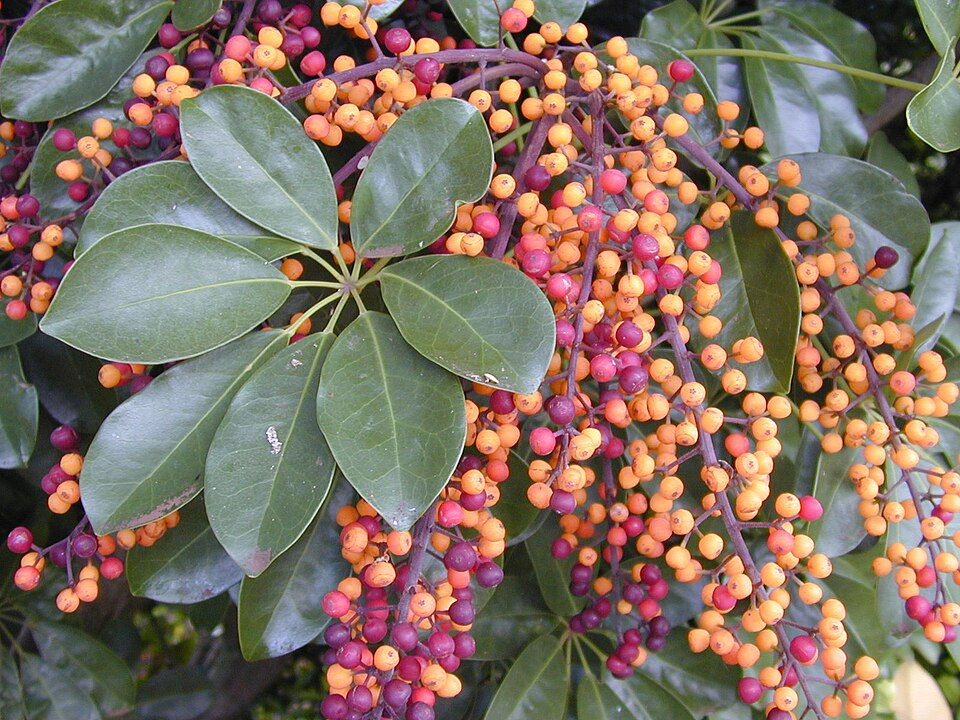
Characteristics: A broadleaf evergreen shrub growing 1.5 to 3.0 meters tall indoors (up to 4+ meters outdoors in mild climates) with an erect, multi-stemmed branching habit. Leaves are palmately compound, consisting of 7 to 9 obovate, leathery leaflets (8 to 15 cm long) radiating from a central petiole like umbrella ribs. Foliage is deep glossy green, with variegated cultivars displaying rich cream, gold, or emerald patterns. When mature and grown under optimal light, it produces compact terminal panicles of tiny greenish-yellow flowers followed by small, rounded orange-to-black berries.
Pros & Cons
Pros
Exceptional Pruning Tolerance: Responds remarkably well to hard structural pruning, enabling effortless size control, bushy canopy development, or formal indoor topiary shaping.
High Air Filtration Capacity: Highly effective at absorbing common indoor volatile organic compounds (VOCs), including formaldehyde, benzene, and toluene, from air-conditioned office environments.
Adaptable to Variable Light: Maintains structural leaf density under bright indirect sunlight, artificial fluorescent lighting, or filtered shade.
Low-Intervention Water Requirements: Possesses semi-succulent, water-storing woody stems that withstand occasional soil drying without immediate foliar drop.
Cons
Mild Ingestion Toxicity: Contains insoluble calcium oxalate crystals throughout its sap, causing oral irritation, drooling, and digestive distress if chewed by pets or children.
Scale Insect & Mealybug Magnet: Dense inner foliage can harbor scale insects, mealybugs, and spider mites if air circulation is stagnant or indoor air is dry.
Frost Sensitivity: Strictly tender shrub; suffers severe foliar damage below 4°C (39°F) and root death under hard freezes.
Leggy Growth in Deep Shade: Prolonged placement in low-light environments leads to stretched, weak stems and sparse leaflet spacing.
Field Performance & Care Profile
Light Requirement: Bright indirect solar radiation to dappled morning sun (4 to 6 hours daily). Thrives under bright, filtered light. Tolerates artificial office lighting, but variegated cultivars lose their golden patterns in deep shade.
Cold Hardiness: Tender evergreen shrub. Intolerant of frost 0°C. Growth stalls below 10°C (50°F). (USDA Hardiness Zones 10a–12 grown outdoors year-round; Zones 2–9b grown as an indoor houseplant or seasonal patio container subject).
Heat Tolerance: High. Handles warm indoor and outdoor summer temperatures up to 35°C (95°F) effortlessly, provided root humidity and indirect light are maintained.
Soil Requirement: Demands airy, porous, well-draining potting substrates. Thrives in a mix of peat/coarse compost, pumice or perlite, and pine bark chips across a slightly acidic to neutral pH range (6.0 to 7.0). Fails in heavy, waterlogged soils.
Root Structure: Tough, fibrous, semi-epiphytic root system that expands rapidly in well-aerated media; forms aerial roots in warm, humid conditions.
Height & Spread: Grows 1.5 to 3.0 meters tall with a spread of 0.8 to 1.5 meters when container-grown (can be kept under 1.0 meter with annual pinching).
Watering: Low to Moderate. Categorized in the Yellow Group on the Water Scorecard. Water thoroughly when the top 3 to 5 cm of potting substrate dries out completely. Reduce watering significantly during winter months.
Regional Adaptability: Essential architectural indoor plant, office foyer anchor, shaded Mediterranean terrace container shrub, and tropical patio filler across temperate and warm regions.
Lifespan: Long-lived woody perennial (20+ years indoors with periodic repotting and root pruning).
Foliage Color: Deep glossy green, or variegated combinations of emerald green, buttery yellow, cream, and ivory.
Blooming Period: Rare indoors; outdoors in warm climates, blooms appear in late summer to autumn.
Foliage Status: Broadleaf evergreen (retains foliage year-round).
Difficulty Level: Extremely Easy (highly forgiving for beginners and busy indoor growers).
Propagation Methods
Semi-Ripe Stem Cuttings (Recommended Method): Take 10 to 15 cm tip cuttings from healthy woody stems in spring or early summer. Strip lower leaflets, dip the cut end in organic rooting powder, and plant into a moist 50/50 mix of pumice and coco coir. Keep under warm (21°C–25°C), bright indirect light. Roots establish within 3 to 4 weeks.
Air Layering: For tall, leggy plants, execute air layering on mature woody stems in spring. Wrap a wounded stem section in damp sphagnum moss and seal with clear plastic. Once dense white roots fill the moss (6 to 8 weeks), sever below the roots and pot up as a new tree.
Water Propagation: Fresh stem cuttings root readily when placed in clean water under bright indirect light, provided water is refreshed weekly.
Pro Care Tips & Secrets
To achieve "Dense Bushy Canopies & Compact Multi-Stem Form," enforce the "Apical Tip Pinching Rule." When young plants reach your desired height, pinch off the soft central growing tip. Breaking apical dominance forces dormant lateral buds along lower stem nodes to break, transforming a single leggy stem into a full, multi-branched tree canopy.
To prevent "Root Rot & Leaf Drop Syndrome," execute the "Dry-To-Touch Substrate Protocol." Overwatering in heavy pots starves roots of oxygen, causing lower leaflets to turn black and drop prematurely. Always check subsoil moisture before watering; if the substrate feels cold and damp 5 cm deep, defer irrigation for another 3 to 5 days.
To eliminate "Scale Insects & Mealybug Infestations," apply the "Neem & Potassium Soap Foliage Wipe." Periodically wipe the upper and lower surfaces of the glossy palmate leaves with a soft cloth dipped in diluted potassium soft soap (K-soap) and neem oil. This removes dust buildup, restores leaf shine, and smothers soft-bodied scale insects before colonies establish inside stem crotches.
Tags: Houseplant | Evergreen | Architectural | Air-Purifying | Drought-Tolerant | Pruning-Resistant | Araliaceae


Comments