


The Armed Sentry: Japanese Barberry (Berberis thunbergii)


Dense, spine-laden deciduous shrubs engineered for harsh continental freezes, lean mineral gravels, and intense, high-contrast crimson foliage screens.
Alternative Names: Japanese Barberry, Thunberg's Barberry, Red Barberry
Introduction
Botanical Name: Berberis thunbergii (Family Berberidaceae)
Native Habitat: Native to the dry mountain slopes, woodland edges, and rocky thickets of Japan. It evolved to thrive across rugged, exposed terrain characterized by heavy winter snow blankets, lean topsoils, and intense seasonal temperature shifts. This high-exposure heritage hardwires its absolute immunity to freezing winter winds, its indifference to lean soil profiles, and its sharp mechanical defenses designed to deter heavy grazing pressure.
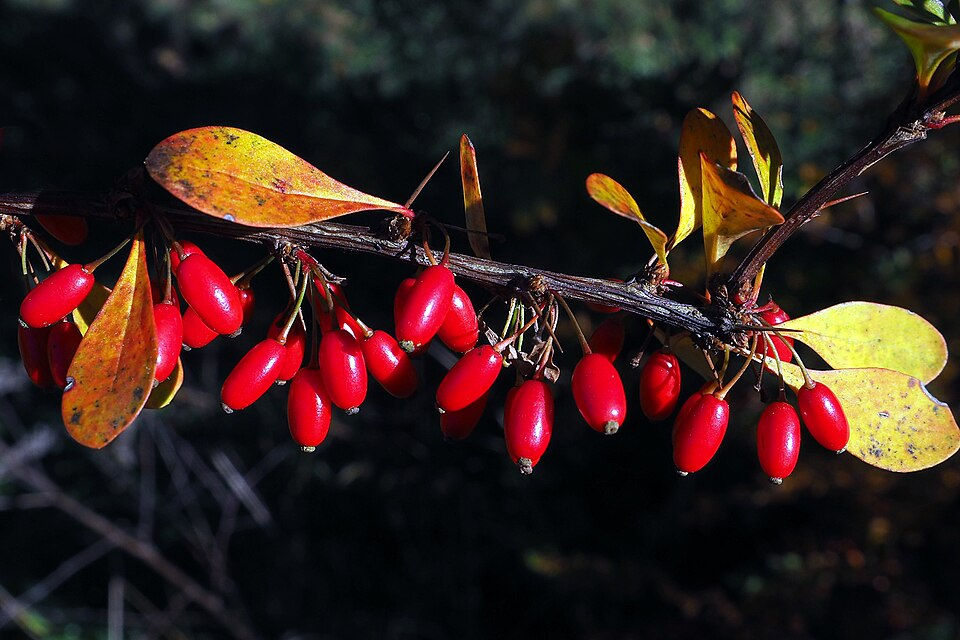
Characteristics: This is a fast-growing, multi-stemmed, heavily branched deciduous shrub that forms a deeply compact, rounded, and interlocking barrier. Its fine, deeply grooved woody branches are armed with sharp, single, needle-like spines at every leaf joint. The small, simple leaves are spoon-shaped (obovate) and arranged in tight, whorl-like clusters along the stems. While wild forms open soft green, modern cultivated strains offer spectacular foliage color paths—including deep velvet-burgundy, blazing orange-red, and high-contrast gold. In mid-spring, it produces small, nodding, pale-yellow flowers hanging beneath the leaves, which age into bright, glossy oblong red berries that persist long into winter.
Pros
Impenetrable Security Framework: The dense mesh of interlocking branches combined with sharp spines creates an exceptional structural barrier or defensive hedge.
Blinding Foliage Color Depth: Delivers some of the most stable, intense, and high-contrast burgundy, orange, and purple pigments available in temperate zones.
Outstanding Cold and Wind Defiance: Shrugs off biting sub-zero winter winds, heavy ice loads, and severe temperature drops without suffering twig dieback.
High Resilience to Urban Pollution: Thrives perfectly along high-traffic roadsides, commercial parking lots, and urban boundaries, resisting salt spray and heavy exhaust.
Cons
Sharp Mechanical Maintenance Friction: The needle-sharp spines puncture standard leather gloves easily, requiring extreme care and heavy-duty armor during routine pruning.
Highly Invasive Potential in Select Eco-Zones: Escapes cultivation readily via bird-dropped seeds, aggressively invading native woodland understories in parts of North America.
Intense Canopy Leaf Litter: Drops thousands of small, tough leaves and persistent berries in late autumn, creating dense surface litter directly beneath the branch footprint.
Field Performance & Care Profile
Light Requirement: Full sun. It demands a minimum of six to eight hours of direct, unfiltered daily solar radiation. While it easily survives in partial shade, purple, burgundy, and orange cultivars lose their brilliant pigmentation, rapidly fading back to a dull, plain greenish-grey hue in low-light environments.
Cold Hardiness: Extraordinary. The fully lignified (mature woody) framework effortlessly withstands severe continental winter freezes down to minus 30°C to minus 35°C (minus 22°F to minus 31°F) without showing signs of cambium damage or bud loss. (RHS Hardiness Rating H7 / WHZ 4a-8b).
Heat Tolerance: High. Comfortably endures intense ambient summer air temperatures climbing up to 38°C (100°F) without showing signs of leaf scorch, provided its established root network holds a baseline of hydration.
Soil Requirement: Remarkably non-fussy. Thrives in poor sands, gravelly silts, heavy clays, and unamended limestone matrices. It tolerates a wide pH spectrum from 5.5 to 8.0, requiring only that the site doesn't hold stagnant, swampy water during the winter freeze.
Root Structure: A powerful, highly branched, and shallowly spreading network of tough, bright-yellow structural roots supported by a dense, fibrous capillary matrix.
Height & Spread: Variable by cultivar selection. Standard hedging varieties reach a mature vertical height of 1.5 to 2.4 meters (5 to 8 feet) with an equal horizontal spread, while dwarf bedding selections stay tight at 60 to 90 cm (2 to 3 feet) wide.
Watering: Low water needs once established. Newly planted spring plugs require regular deep watering for the first two months to lock in their root radius. Once established, they survive long dry spells perfectly on natural seasonal rainfall alone.
Regional Adaptability: Exceptionally successful across Northern, Central, and Eastern Europe (RHS Hardiness Rating H7) and across the northeastern, midwestern, and mountain states of the United States (USDA Hardiness Zones 4 through 8).
Lifespan: Long-lived woody perennial shrub. When established in a sunny, well-aerated site, a healthy barberry clump will maintain high structural density and annual leaf cycles for 20 to 35+ years.
Flower Color: Inconspicuous, small, cup-shaped pale-yellow or cream flowers, often tinged with soft red on the outer sepals.
Blooming Period: Mid-to-late spring (typically appearing sequentially along the branches from April through May).
Foliage Status: Deciduous. The small, smooth leaves remain highly active throughout the hot months, transforming into a brilliant bonfire of scarlet, orange, and gold in October before dropping cleanly.
Difficulty Level: Beginner. It is a completely self-sufficient, low-input plant that demands near-zero specialized soil management or chemical intervention once positioned.

Propagation Methods
Early-Summer Softwood Cuttings (The Fast Clone Route): Multiplying specific elite burgundy or gold cultivars is highly successful via vegetative cuttings in early summer (June). Select firm, current-season terminal shoots about 10 cm long. Use a razor to make a clean slice directly below a leaf joint and strip away the lower leaf clusters carefully to avoid the spines. Insert the cutting into a highly porous, damp substrate composed of seventy percent perlite and thirty percent peat sand. Keep under a clear humi-dome in bright, indirect light; roots will lock into the matrix within 3 to 4 weeks.
Late-Autumn Hardwood Cuttings (The Dormant Field Route): During late autumn dormancy (November), cut straight 15 cm segments of mature, pencil-thick current-season wood. Insert them deeply into an outdoor nursery bed filled with gritty sand, leaving only the top two bud clusters exposed. They will leaf out and root slowly by the following spring.

Pro Care Tips & Secrets
To prevent your compact barberry hedges from developing a loose, leggy, and floppy branch structure that sags open under heavy winter snow loads, you must master the "Early-Summer Box Shear" routine. While barberry handles hard cuts well, pruning it in late winter or early spring will stimulate long, watery vegetative sprouts that lack structural density. Instead, wait until the primary spring growth sprint ends in June, then use long-handled shears to clip the outer 10 cm of the canopy. This timed trim forces an immediate explosion of short, tight, heavily spine-laden lateral twigs right below the cut, resulting in a highly compressed, self-supporting outer shell that shruggs off heavy ice and snow easily.
If you are cultivating deep-burgundy or bright-gold barberry cultivars (such as 'Crimson Pygmy' or 'Aurea') and want to eliminate the frustrating problem of "Foliage Bleaching"—where the vibrant leaves suddenly turn a pale, washed-out translucent white in July—you must completely banish synthetic chemical nitrogen fertilizers from their root zone. High levels of chemical nitrogen force the cells inside the small leaves to expand rapidly with water, thinning out the protective waxy leaf cuticle. This thin cuticle leaves the delicate colored leaf tissue completely unprotected against midday UV radiation, burning the foliage. Keep the ground poor and lean, mulching exclusively with coarse gravel or clean river sand to preserve leaf color density.
To completely prevent the common issue of "Stem-Base Canker"—a fungal disease that causes whole structural canes of an established barberry bush to suddenly turn brown, die, and break off at the soil line during damp autumn transitions—you must implement an exclusive "Air-Clearance Crown Radius." Barberry bushes form an incredibly dense canopy that naturally traps humidity underneath. If organic mulch, fallen leaves, or wet compost are piled directly against the woody base of the stems, it creates an ideal environment for wood-rotting fungi to breach the bark. Always clear a 10 cm circle around the central trunk cluster, leaving the soil bare or capping it strictly with crushed stone grit to ensure the woody collar stays perfectly dry and aerated.
Tags: Deciduous-Shrub | Temperate-Asset | Full-Sun | Barrier-Plant | Colorful-Foliage | Autumn-Color


Comments