


The Bee Balm & Vibrant Pollinator Magnet: Bee Balm / Bergamot (Monarda)


An extraordinarily showy, aromatic herbaceous perennial native to the sunny prairies, moist meadow margins, and open woodlands of North America, celebrated for its unique tiered crown blossoms, intensely fragrant citrus-mint foliage, rich history in traditional herbal teas (Oswego tea), and unrivaled ability to attract hummingbirds, bees, and butterflies to summer gardens.
Alternative Names: Bee Balm, Bergamot, Wild Bergamot, Oswego Tea, Horse-Mint, Monarde (French), Indianernessel (German), Monarda (Spanish), Arı Nanesi / Bergamot Çiçeği / Kızılderili Çayı / Monarda (Turkish)
Introduction
Botanical Name: Monarda species & hybrids (notably Monarda didyma [Scarlet Bee Balm], Monarda fistulosa [Wild Bergamot], and hybrids like 'Jacob Cline', 'Raspberry Wine', and 'Gardenview Scarlet'; Family Lamiaceae) — closely related to mint (Mentha), sage (Salvia), oregano (Origanum), and catmint (Nepeta).
Native Habitat: Native to Eastern and Central North America. Naturally inhabits damp sunny meadows, stream banks, forest clearings, open prairies, and rich woodland margins from lowlands to mid-elevation mountains.
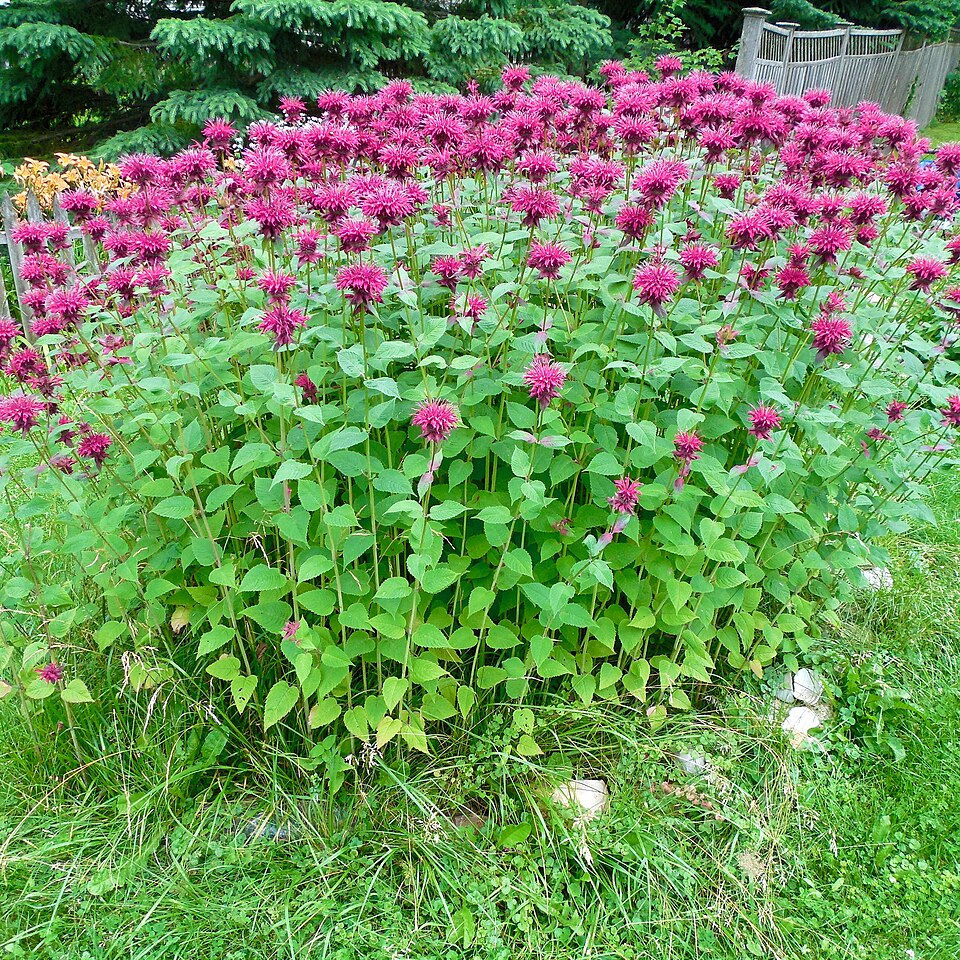
Characteristics: A clump-forming, fast-growing herbaceous perennial growing 60 to 120 cm in height with a lateral spread of 45 to 90 cm. Features classic square stems clad in opposite, lanceolate-to-ovate, dark green leaves (6 to 15 cm long) with serrated margins that emit a rich citrus, thyme, and oregano aroma when crushed. From mid-summer through early autumn (July to September), terminal stem ends produce striking, globular, tiered whorls (5 to 8 cm wide) of tubular, two-lipped flowers anchored by colorful leafy bracts. Flower colors span electric scarlet-red, deep crimson, pink, purple, lavender, and pure white.
Pros & Cons
Pros
Premier Pollinator & Hummingbird Magnet: One of the absolute best summer perennials for attracting bumblebees, honeybees, butterflies, hawkmoths, and hummingbirds.
Intensely Fragrant Foliage & Blooms: Leaves and flowers release a invigorating spicy-citrus mint aroma, historically brewed into refreshing Oswego herbal tea.
Exceptional Cold & Winter Hardiness: Underground root crowns easily survive severe winter freezes across continental climates down to -30°C (-22°F).
Deer & Rabbit Resistance: Rich aromatic essential oils (thymol and carvacrol) naturally repel grazing deer, rabbits, and leaf-eating pests.
Vivid Summer Floral Architecture: Unique tiered "ragged crown" flower form adds dramatic texture and height to summer cottage borders and prairie plantings.
Cons
Susceptible to Powdery Mildew in Stagnant Air: Foliage can develop a dusty white fungal coating (Erysiphe cichoracearum) during hot, humid summer spells if air circulation is poor or soil dries out.
Requires Consistent Root Moisture: Unlike desert succulents, Monarda didyma types suffer leaf scorching and wilt under prolonged, severe drought in thin dry soils.
Spreads Steadily via Underground Rhizomes: Fast-growing clumps expand outward rapidly, requiring division every 3 to 4 years to prevent overcrowding neighbor plants.
Field Performance & Care Profile
Light Requirement: Full direct sunlight to light partial shade (4 to 6+ hours daily). Full sun produces maximum bloom quantity, sturdy upright stems, and strong disease resistance; partial shade is beneficial in hot inland climates.
Cold Hardiness: Extremely cold-hardy herbaceous perennial (USDA Hardiness Zones 3a–9b). Root crowns safely survive severe winter ground freezes down to -30°C (-22°F).
Heat & Moisture Tolerance: Moderate to High Heat / Moderate Water Requirement. Handles summer heatwaves comfortably provided soil moisture remains available at the root zone.
Soil Requirement: Prefers rich, fertile, humus-heavy, moist, well-draining loams or sandy clay soils (pH 6.0 to 7.5, neutral to slightly acidic). Tolerates heavier clay soils better than most herbs, provided stagnant water does not pool in winter.
Root Structure: Fibrous root system combined with creeping shallow underground rhizomes that form expanding clumps over time.
Height & Spread: Grows 60 to 120 cm tall with a clump spread of 45 to 90 cm. (Dwarf cultivars like 'Pardon My Pink' stay around 25 to 35 cm).
Watering: Moderate to High. Categorized in the Moderate Water Group. Requires baseline moisture during active spring and summer growth; perform deep soakings during dry summer spells to keep foliage lush and powdery mildew-free.
Regional Adaptability:
Anatolia & Mediterranean: Performs excellently across Marmara, Black Sea (Trabzon, Rize), Aegean, and Mediterranean sheltered gardens, as well as Central/Eastern Anatolian urban landscapes; thrives in moist, mulched beds.
Global: Broadly cultivated landscape staple across North America, Europe, Japan, and temperate gardens worldwide.
Lifespan: Long-lived herbaceous perennial (10+ years; renewed continuously via rhizomes and clump division).
Flower Color: Scarlet-red, crimson, magenta, violet, lavender-pink, purple, and white.
Blooming Period: Mid-summer to early autumn (July to September).
Foliage Status: Deciduous perennial (above-ground stems die back completely after hard autumn frosts; re-emerges vigorously in early spring).
Difficulty Level: Easy (straightforward care; benefits from good air circulation and summer moisture).

Propagation Methods
Clump Division (Primary & Easiest Method): Divide mature clumps every 3 to 4 years in early spring (March) as fresh shoots emerge. Lift the root mass, discard the older woody center, and replant vigorous outer rhizome divisions into refreshed soil amended with compost.
Stem Cuttings: Take 8 to 10 cm softwood stem tip cuttings in late spring before flower buds form. Dip in rooting hormone and insert into a moist 50/50 perlite-peat mix; roots form in 2 weeks under humid conditions.
Pro Care Tips & Secrets
Select Mildew-Resistant Cultivars for Hot Climates: If powdery mildew is common in your garden, select modern resistant cultivars such as Monarda 'Jacob Cline' (intense scarlet-red), 'Raspberry Wine' (wine-red), or 'Violet Queen'.
Water at Soil Level & Space for Air Circulation: Avoid overhead sprinkler watering during warm humid evenings. Irrigate directly at the root zone with drip lines or hoses, and space plants 45 to 60 cm apart to ensure airflow around leaves.
Deadhead Spent Flower Heads to Extend Bloom Window: Snip off fading central flower heads down to the next leaf node. This prevents premature seed setting and triggers lateral shoots to push secondary flower clusters through late summer.
Tags: Perennial | Herb | Lamiaceae | Cold-Hardy | Native-Plant | Fragrant | Pollinator-Friendly | Cottage-Garden | Medicinal-Tea | Low-Maintenance


Comments