


The Carpet Combatant: Two-Row Stonecrop (Sedum spurium)

Weaving an indestructible, low-profile mat of fleshy rosettes that shrugs off foot traffic and sun-baked droughts
Alternative Names: Caucasian Stonecrop, Two-Row Sedum, Phedimus spurius, False Stonecrop, Dragon's Blood Sedum
Introduction
Botanical Name: Sedum spurium (syn. Phedimus spurius)
Native Habitat: Native to the rocky slopes, subalpine meadows, and high-limestone cliffs of the Caucasus region, northern Iran, and Asia Minor. This rugged mountain ancestry equips the plant to anchor into minimal soil pockets, withstand freezing alpine winters, and survive intense, unshaded solar radiation with absolute ease.
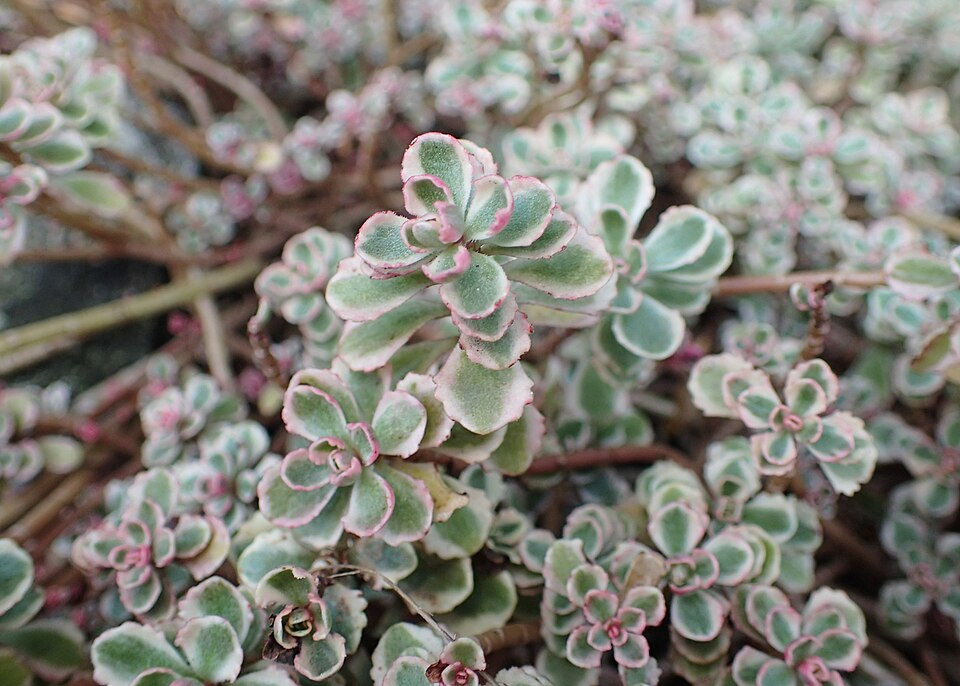
Characteristics: This is an exceptionally tough, mat-forming succulent perennial belonging to the Stonecrop family (Crassulaceae). It forms a low, interlocking carpet of creeping stems heavily laden with wedge-shaped, scalloped green or bronze leaves arranged in neat, opposite rows that look like miniature green roses. In mid to late summer, the low mat is completely blanketed by flat, star-shaped flower clusters held on short, sturdy stems. The creeping stems naturally root at every node, allowing the plant to colonize open ground efficiently.
Pros
Elite Foot-Traffic Resilience: Unlike many fragile, brittle succulents, this dwarf species possesses tough, flexible stems that can comfortably tolerate light, casual foot traffic along path margins.
Outstanding Winter Hardiness: Shrugs off intense, sub-zero continental freezes without losing its root structure or evergreen crown.
Flawless Erosion Control: The creeping stem network locks into the tiniest soil crevices, making it a master at anchoring steep, dry, sun-baked slopes.
Near-Zero Maintenance: Once established in its sunny pocket, it requires zero routine pruning, mowing, or chemical inputs to look flawless.
Cons
Vulnerable to Winter Wet: Standing water or heavy, clay-clogged soil profiles during cold seasonal transitions will rapidly cause the root crown to rot and melt.
Slow Vertical Impact: Stays strictly low and ground-hugging; it cannot be used if you are seeking a plant to fill vertical volume or height in the border.
Aggressive Lateral Creep: In ideal, free-draining conditions, it will steadily expand its carpet, occasionally crowding out very delicate, slow-growing alpine neighbors.

The Field Performance Profile
Light Requirement
Absolute full sun to very light partial afternoon shade. It requires a minimum of six hours of direct daily solar radiation to maintain its tight, dense rosette spacing and deep foliage colors. In deep shade, the stems will stretch out, become weak, and lose their compact mat form.
Cold Hardiness
Down to minus 30 to minus 34 degrees Celsius (minus 22 to minus 30 degrees Fahrenheit). It is an incredibly cold-hardy succulent, thriving comfortably down to USDA Zone 3 with zero winter protection required.
Heat Tolerance
Up to 40 to 42 degrees Celsius (104 to 108 degrees Fahrenheit). It possesses elite heat resistance, easily handling hot summer stretches, baking pavement margins, and low atmospheric humidity without showing signs of leaf scorch.
Soil Requirement
Demands sharp, rapid drainage. It absolute thrives in poor, lean, sandy, or gravelly loams with a neutral to highly alkaline pH. It is highly adapted to chalky, limestone-rich soil profiles. Rich, organic-heavy, or clay soils must be strictly avoided to prevent rot.
Root Structure
A very shallow, highly branched, and tenacious fibrous root network that emerges from every trailing stem node that makes contact with the earth.
Height & Spread
Maintains an ultra-low profile, reaching a vertical vegetative height of only 7 to 15 cm (3 to 6 inches), while spreading horizontally to cover a mature lateral width of 30 to 60 cm (12 to 24 inches) per plant.
Watering
Low water needs. Water sparingly during the first few weeks to help the fresh rosettes anchor into the surrounding soil. Once established, it is highly drought-resilient, surviving comfortably entirely on natural rainfall. Always allow the soil profile to dry out completely before providing supplemental water.
Lifespan
Long-lived evergreen perennial. The mat naturally self-renews and expands over the years, maintaining a permanent structural presence in the landscape.
Flower Color
A warm palette ranging from soft baby pink and vibrant rose-pink to deep, intense purplish-crimson (especially in dark-leafed cultivars like 'Dragon's Blood').
Blooming Period
Mid-summer to late summer (typically running from late June through August).
Foliage Status
Semi-evergreen to strictly evergreen. The thick, leathery rosettes persist through the winter, often taking on beautiful coppery, red, or bronze tones as the cold weather sets in.
Difficulty Level
Beginner. It is one of the most self-sufficient, bulletproof ground covers available, making it completely immune to novice gardening mistakes.
Propagation Methods
1. Simple Node Division (The Fastest & Easiest Method)
When: Early spring or early autumn when the weather is naturally cool and soils are damp.
How: Because the creeping stems root themselves constantly as they expand, propagation is completely effortless. Simply use a sharp trowel to slice a small section of the mat away from the main plant, ensuring it has a few rooted nodes attached. Lift the plug and tuck it directly into a new sunny gravel pocket or path margin. It will anchor and start spreading within days.
2. Stem Shrapnel Scattering
When: Late spring or early summer.
How: Snip several healthy stems into small 3 cm pieces. Scatter this stem "shrapnel" directly onto a prepared bed of damp, sandy soil and press them down gently so they make firm contact. Keep the surface lightly misted; almost every single piece will throw out roots from its nodes and form a new rosette canopy.
Pro Care Tips & Secrets
Landscape Vision
Sedum spurium represents the absolute peak of functional efficiency and structural durability in modern, low-maintenance garden layouts. It completely redefines how we manage hot retaining walls, gravel pathways, and limestone rockeries, delivering an indestructible carpet of rich foliage and summer color that delicate turf grass or thirsty annuals can never match. When positioned in full sun, provided with poor, rocky soil, and protected from standing winter wet, this resilient Mediterranean-fringe native rewards the grower with a permanent, trouble-free tapestry of emerald and bronze warmth.
Tags: Perennial | Drought-Tolerant | Full-Sun | Ground-Cover | Rock-Garden | Evergreen


Comments