


The Creeping Woodsorrel & Clover-Like Groundcover: Procumbent Yellow Sorrel (Oxalis corniculata)


A hyper-resilient, creeping perennial herbaceous groundcover characterized by delicate clover-like heart leaves, bright yellow blossoms, and explosive seed dispersal. Highly adaptable across diverse microclimates, container ecosystems, and low-maintenance landscape spaces.
Alternative Names: Creeping Woodsorrel, Procumbent Yellow Sorrel, Creeping Oxalis, Yellow Woodsorrel, Oxalis Rampante / Pain de Coucou (French), Horn-Sauerklee (German), Vinagrillo / Acederilla (Spanish), Sarı Ekşi Ot / Ekşilik / Yayılıcı Ekşi Yonca (Turkish)
Introduction
Botanical Name: Oxalis corniculata (Family Oxalidaceae).
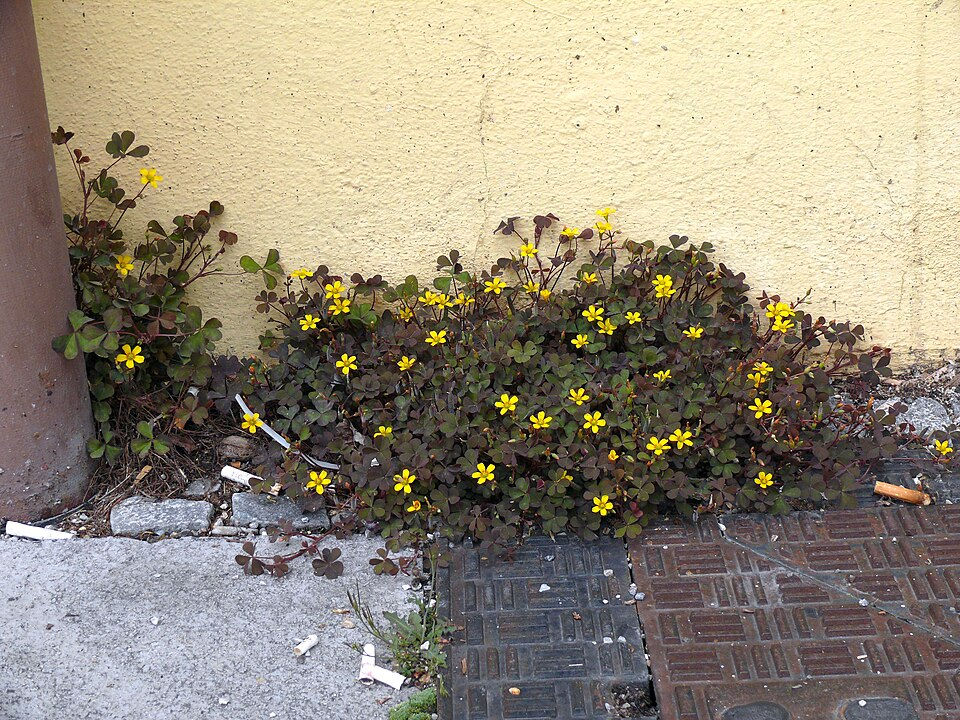
Native Habitat: Cosmopolitan with uncertain exact geographic origins, likely native to tropical and warm temperate parts of Southern Europe and Asia. Now fully naturalized globally. Naturally inhabits open lawns, rocky ledges, disturbed field margins, greenhouse benches, container pots, and garden borders.
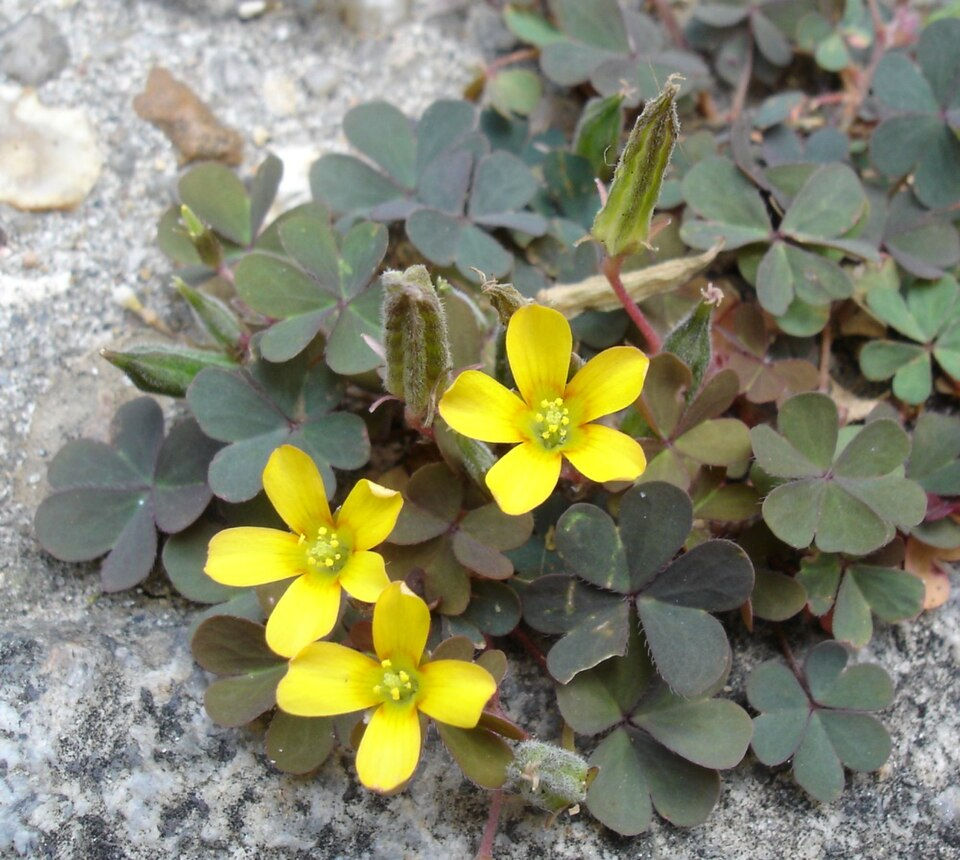
Characteristics: A low-growing, mat-forming herbaceous perennial reaching only 2 to 10 cm in height, but spreading horizontally via slender, creeping stems that root easily at every node. Features trifoliate, heart-shaped (cordate) leaves (0.5 to 1.5 cm wide) arranged on thin stems. Leaf color ranges from vibrant apple-green to distinct dark reddish-purple or bronze cultivars (Oxalis corniculata var. atropurpurea). Leaves exhibit nyctinasty—folding downward at night or during heavy rainfall. Throughout spring to late autumn, it produces small, 5-petaled, star-shaped bright yellow flowers.
Pros & Cons
Pros
Rapid Ground-Covering Habit: Creeping runners root continuously at nodes, quickly filling bare spots and creating a fine-textured foliage carpet.
Extreme Environmental Adaptability: Thrives effortlessly in poor, stony, low-nitrogen, or acidic-to-alkaline soils where conventional turf or delicate groundcovers struggle.
Edible Acidic Foliage: Leaves contain a pleasant, sour, lemon-like flavor due to oxalic acid; often used sparingly in salads or garnishes.
Shade & Sun Flexibility: Performs reliably across a full spectrum of lighting—from intense direct sun to dry, partial shade under mature shrub canopies.
Edible & Medicinal Value: Rich in Vitamin C and historically utilized in herbal medicine for digestive support and cooling teas.
Cons
Aggressive Invasive Potential: Features explosive seed capsules (ballochory) that blast hundreds of sticky seeds up to 2 meters away when touched or dried, making it difficult to contain in refined beds.
Competitor in Lawns & Containers: Deep, creeping taproot network and node-rooting stems make manual eradication labor-intensive once established.
Toxity in Large Quantities: High oxalic acid content can cause digestive upset or kidney issues in livestock or small pets if consumed in large volumes.
Field Performance & Care Profile
Light Requirement: Full sun to partial shade (3 to 8+ hours of light daily). Foliage becomes richer and denser in full sun, while deep shade causes looser, slightly leggy growth.
Cold Hardiness: Perennial in mild winter regions; acts as a self-seeding annual in freezing zones (USDA Hardiness Zones 5a–11b outdoor perennial).
Heat Tolerance: High. Retains green/purple foliage through intense mid-summer heat up to 38°C (100°F) if given occasional moisture.
Soil Requirement: Highly versatile. Tolerates sand, gravel, lean soil, and clay (pH 5.0 to 7.8). Prefers light, fast-draining moist soils high in organic matter.
Root Structure: Fine taproot combined with an extensive network of slender, node-rooting stolons.
Height & Spread: Grows 2 to 10 cm tall with an unlimited creeping horizontal spread (30 to 60+ cm per runner annually).
Watering: Low to Moderate. Highly drought-tolerant once established due to fleshy root reserves, but thrives and spreads fastest with consistent baseline soil moisture.
Regional Adaptability:
North America: Common lawn weed, garden groundcover, and container companion across temperate and subtropical zones (USDA Zones 5–11).
Europe: Widespread across Mediterranean, Atlantic, and Central Europe along paved paths, dry-stone walls, garden beds, and wild pastures.
Lifespan: Herbaceous perennial (renews constantly via creeping runners and prolific self-seeding).
Flower Color: Bright canary yellow.
Blooming Period: Early spring to late autumn (April to October).
Foliage Status: Evergreen in frost-free regions; semi-evergreen or deciduous in cold, freezing climates.
Difficulty Level: Extremely Easy (near zero maintenance required).
Propagation Methods
Stem Cuttings & Node Rooting (Primary Method): Simply sever rooted creeping stems along the node lines and plant directly into moist soil; roots establish within 3 to 5 days.
Self-Seeding / Seed Sowing: Scatter seeds onto bare topsoil in spring or early autumn. Seeds germinate rapidly under mild temperatures and light moisture.
Pro Care Tips & Secrets
To Prevent Unwanted Spread in Flower Beds: Apply a thick layer of organic mulch (such as wood chips or crushed bark) 5–7 cm deep over open soil. Mulch blocks the light required for explosive seed germination and makes creeping nodes easier to lift.
To Enhance Deep Red/Purple Leaf Pigmentation: Plant the bronze-leaved variant (var. atropurpurea) in full, unfiltered direct sunlight. High solar exposure boosts anthocyanin levels, turning the foliage dark burgundy.
To Control Overgrowth in Lawns: Keep lawn grass mowed slightly higher (6–8 cm) to shade out Oxalis rosettes, reducing its competitive advantage over turf grasses.
Tags: Perennial | Groundcover | Oxalidaceae | Edible-Foliage | Low-Maintenance | Self-Seeding | Shade-Tolerant


Comments