


The Evergreen Arborvitae & Living Barrier: Arborvitae / Thuja (Thuja)

A dense, cold-hardy, aromatic evergreen conifer engineered for tall privacy screens, formal windbreaks, microclimate shelterbelts, year-round green structure, and reliable erosion control across temperate, Mediterranean, and cold steppe landscapes.
Alternative Names: Arborvitae, Tree of Life, Cedar (informal), Thuya (French), Lebensbaum (German), Tuya (Spanish), Mazı / Mazı Ağacı / Tuya (Turkish)
Introduction
Botanical Name: Thuja genus (Family Cupressaceae) — primarily including Thuja occidentalis (Eastern Arborvitae / American Arborvitae, e.g., 'Smaragd' / 'Emerald Green'), Thuja plicata (Western Red Cedar / Giant Arborvitae), and Thuja orientalis (syn. Platycladus orientalis, Oriental Arborvitae / Doğu Mazısı).
Native Habitat: Native to North America and East Asia. Thuja occidentalis inhabits moist, cold swamp margins, limestone cliffs, and riverbanks in eastern North America, while Thuja orientalis originates from dry, rocky hillsides and mountain valleys across China, Korea, and Eastern Asia. They evolved to withstand harsh freezing winters, heavy snow, and variable soil conditions.
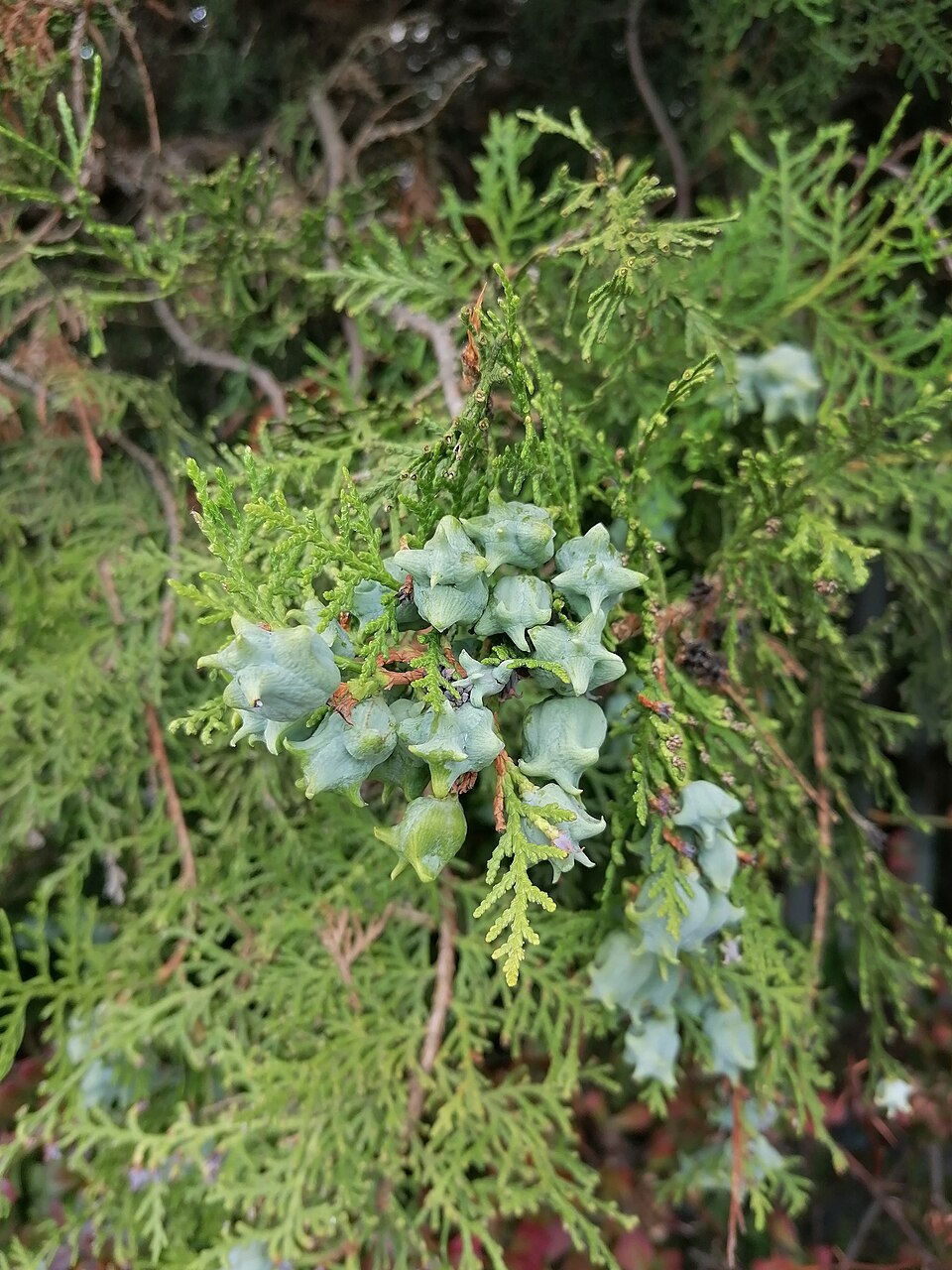
Characteristics: Medium-to-large evergreen conifers ranging from 2 to 6 meters in garden/hedge cultivars ('Smaragd') to over 15 to 20+ meters in wild species (Thuja plicata). The foliage consists of soft, flat, fan-like spray branchlets covered in small, overlapping scale-like leaves that release a pleasant, resinous, sweet-apple or cedar aroma when crushed. Growth habits range from neat narrow pyramids to broad, upright cones. Small, egg-shaped woody cones (1 to 1.5 cm) mature from yellowish-green to warm reddish-brown. They develop a dense, fibrous, wind-firm root system that binds surface topsoil effectively.
Pros & Cons
Pros
Exceptional Cold & Snow Hardiness: Outstanding resistance to deep winter freezes and heavy snow loads; maintains rich green structure down to -30°C (-22°F) without freeze damage.
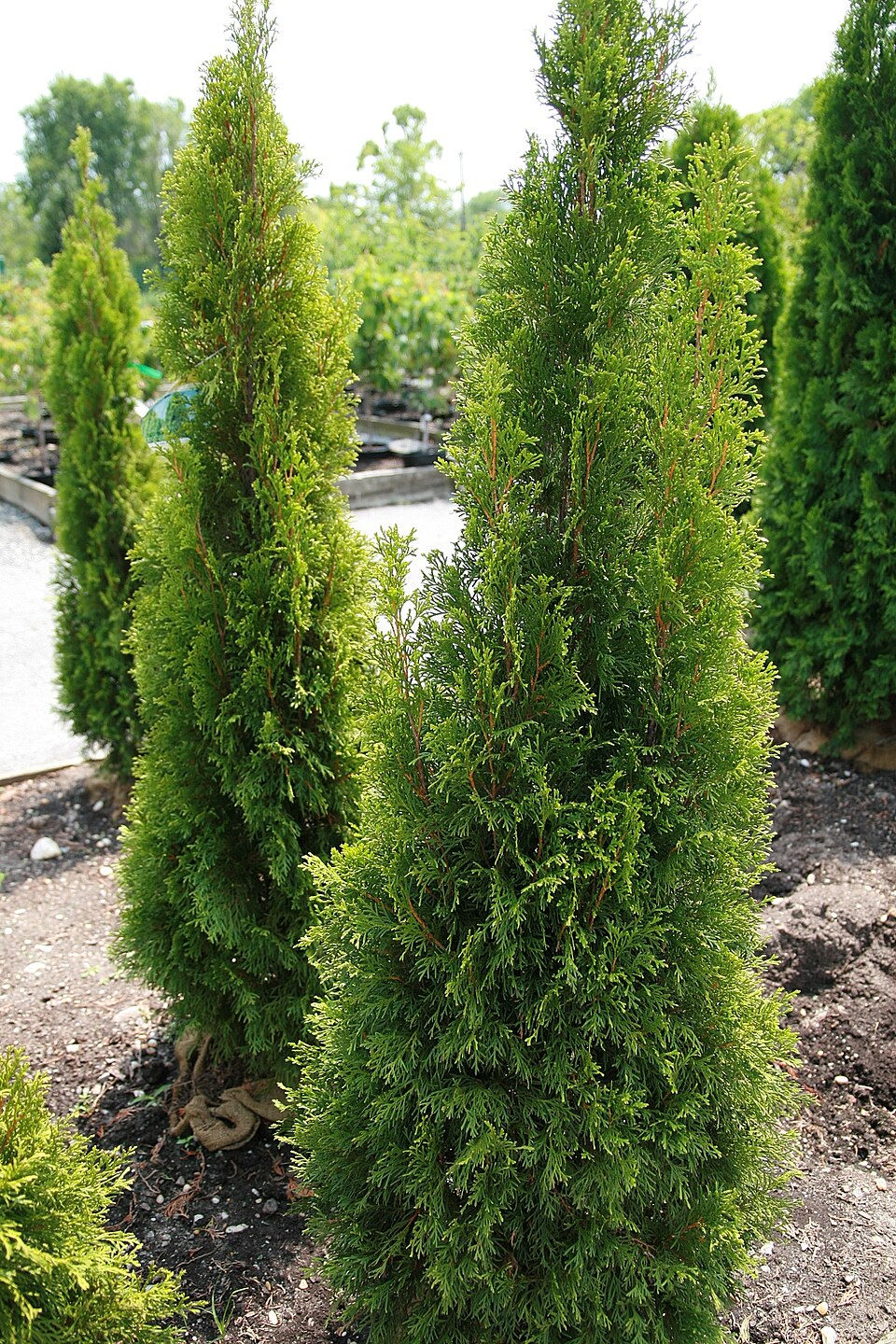
Ideal Dense Privacy Screen: Branching extends all the way to ground level, creating an opaque green barrier that blocks wind, street noise, and unwanted views year-round.
Non-Invasive Root System: Dense, compact, fibrous root ball stays near the surface without disrupting nearby paved pathways, garden beds, or stone walls.
High Response to Shearing: Excellent tolerance for formal hedging, topiary shaping, and height control.
Wide Adaptability: Handles varied soil conditions, from neutral-to-alkaline loams to damp clays, far better than sensitive coastal conifers.
Cons
Vulnerable to Red Spider Mites & Heat Stress: Extreme dry summer heat combined with stagnant air can encourage red spider mites (Tetranychidae), causing interior foliage browning.
Requires Regular Moisture: Less drought-immune than Cupressus arizonica or Cupressus sempervirens; requires periodic deep watering during prolonged dry summer months.
Wildlife / Livestock Browsing: Young, tender foliage can be browsed by livestock or wild deer during late winter if left unprotected in rural boundaries.
Field Performance & Care Profile
Light Requirement: Full sun to partial shade (4 to 8 hours of direct sunlight daily). Thrives in full sun for tightest foliage density; tolerates partial shade with slightly looser branching.
Cold Hardiness: Exceptionally cold-hardy conifer. Withstands deep winter freezes from -25°C down to -35°C (-13°F to -31°F) depending on species (Thuja occidentalis being the most frost-hardy). (USDA Hardiness Zones 3a–8b).
Heat Tolerance: Moderate to High. Oriental species (Thuja orientalis / Platycladus) handle dry inland summer heat (35°C–40°C) far better than American varieties (Thuja occidentalis).
Soil Requirement: Prefers moist, well-drained, fertile loams or clay-loams rich in organic matter (pH 6.0 to 8.0). Highly tolerant of alkaline limestone soils.
Root Structure: Dense, shallow-to-medium fibrous root system that spreads widely beneath the drip line.
Height & Spread: Cultivar dependent; popular hedging varieties ('Smaragd') reach 3.0 to 5.0 meters in height with a spread of 1.0 to 1.5 meters.
Watering: Moderate. Categorized in the Yellow Group on the Water Scorecard. Requires regular watering during early establishment and supplemental deep soakings during rainless summer periods.
Regional Adaptability: Ideal for Inner Anatolian, Marmara, and Black Sea climate zones; windbreak screening, property boundaries, formal garden framing, and sound barriers.
Lifespan: Long-lived perennial conifer (50 to 100+ years).
Flower / Cone Color: Inconspicuous small catkins; tiny, leathery, upright cones maturing from yellow-green to reddish-brown.
Blooming / Pollen Period: Early spring (March to April).
Foliage Status: Evergreen (retains dense green foliage year-round; some varieties take on a slight bronze-green winter tint).
Difficulty Level: Easy (low maintenance when provided adequate summer moisture).
Propagation Methods
Semi-Ripe Cuttings (Recommended Method): Take 10–15 cm semi-hardwood heel cuttings in late summer or autumn. Treat with IBA rooting hormone and insert into a moist sand/perlite/peat mixture. Keep under high humidity in a shaded greenhouse until roots establish (8–12 weeks).
Seed Sowing (Thuja orientalis): Collect mature brown cones in autumn, extract seeds, and cold stratify at 4°C for 30 days before sowing in spring seedbeds.
Pro Care Tips & Secrets
To plant a Dense Living Privacy Screen, space columnar cultivars ('Smaragd') 60 to 80 cm apart center-to-center in a straight line. For broader species (Thuja orientalis), space 1.0 to 1.2 meters apart.
To prevent Spider Mite Outbreaks during Hot Summers, spray the interior foliage with a strong stream of fresh water during early morning hours once or twice a week. This dislodges dust and mites while boosting humidity inside the dense inner canopy.
To optimize Mulching & Root Protection, apply a generous 8 to 10 cm organic mulch ring (shredded bark, compost, or wood chips) extending to the outer drip line. This keeps the shallow fibrous root system cool, retains topsoil moisture, and suppresses weed competition.

Editor's Note: The Silent Guardian of Your Garden
Arborvitae (Thuja) is the silent guardian of your landscape. It demands very little while protecting you from harsh winds, road dust, and prying eyes. If you are struggling with heavy clay soil and want to establish a dense living green wall quickly, arborvitae will be your most loyal ally.
The species that resists bronzing in winter—maintaining its vibrant green hue across all four seasons—is the American Arborvitae (Thuja occidentalis). Its most celebrated cultivar, 'Smaragd', is widely known as the Emerald Green Arborvitae.
While 'Smaragd' is undoubtedly the most refined and popular member of the arborvitae family, it is not an all-around champion across every environmental stressor. Here is how it performs in the field:
1. Cold Hardiness: Outstanding (10 / 10)
Cold tolerance is where 'Smaragd' truly excels:
Extreme Limits: Unfazed by severe freezing temperatures down to -35°C to -40°C (-31°F to -40°F).
The Emerald Advantage: While many other arborvitae varieties take on a dull reddish-brown or bronze cast in winter, 'Smaragd' holds its noble, bright emerald-green color right through deep freezes. It also features exceptional branch flexibility to carry heavy snow loads without snapping.
2. Heat Tolerance: Moderate (6 / 10)
This is where careful placement becomes critical:
Climate Origins: 'Smaragd' is native to cool, humid North American regions and begins to experience physiological stress when temperatures consistently exceed 35°C (95°F).
The Vulnerability: Under excessively hot, dry atmospheric conditions (such as dry Aegean or Mediterranean summer winds), if the plant loses moisture through transpiration faster than its root system can absorb it, tip scorch and browning begin at the branch ends.
The Solution: In arid or high-heat microclimates, plant 'Smaragd' where it receives gentle afternoon shade or shelter from drying desiccant winds, rather than placing it in full, unshaded sun.
3. Drought Tolerance: Low to Moderate (4 / 10)
Drought is the plant's main weakness:
Not a "Set-and-Forget" Conifer: Unlike Arizona Cypress (Cupressus arizonica), 'Smaragd' cannot survive long stretches of neglected drought.
Soil Moisture Needs: It requires a cool, consistently moist root zone. Allowing its topsoil to dry out completely into hard, bone-dry crust will trigger root stress and foliage decline.
"For heavy clay soils in cold climates, few hedging conifers match the year-round emerald brilliance of 'Smaragd'—provided its root zone remains mulched and cool through peak summer heat."
Tags: Evergreen | Conifer | Hedging | Cold-Hardy | Privacy-Screen | Aromatic-Foliage | Windbreak | Cupressaceae


Comments