


The Falling Star: Italian Bellflower (Campanula isophylla)


The Reflection of the Sky on Earth: Star of Bethlehem
Heat-sensitive trailing perennials engineered for star-shaped salverform inflorescences, delicate prostrate cascading habits, dense late-summer to autumn bloom coverage, high pollinator attraction, and decorative cliffside or container adaptation.
Alternative Names: Italian Bellflower, Falling Stars, Star of Bethlehem, Ligurian Bellflower, Campanule à Feuilles Egales (French), Stern-Glockenblume (German)
Introduction
Botanical Name: Campanula isophylla (Family Campanulaceae)
Native Habitat: Endemic to a narrow coastal strip of limestone cliffs, rocky bluffs, and ravine walls in the Liguria region of Northern Italy. It evolved in cool, well-ventilated maritime microclimates characterized by bright indirect light, moderate relative humidity, sharp mineral drainage, and mild, frost-free winter periods. To survive on sheer rock faces, it developed flexible trailing stems, compact heart-shaped leaves, and root systems specialized in anchoring within narrow calcareous rock fissures.
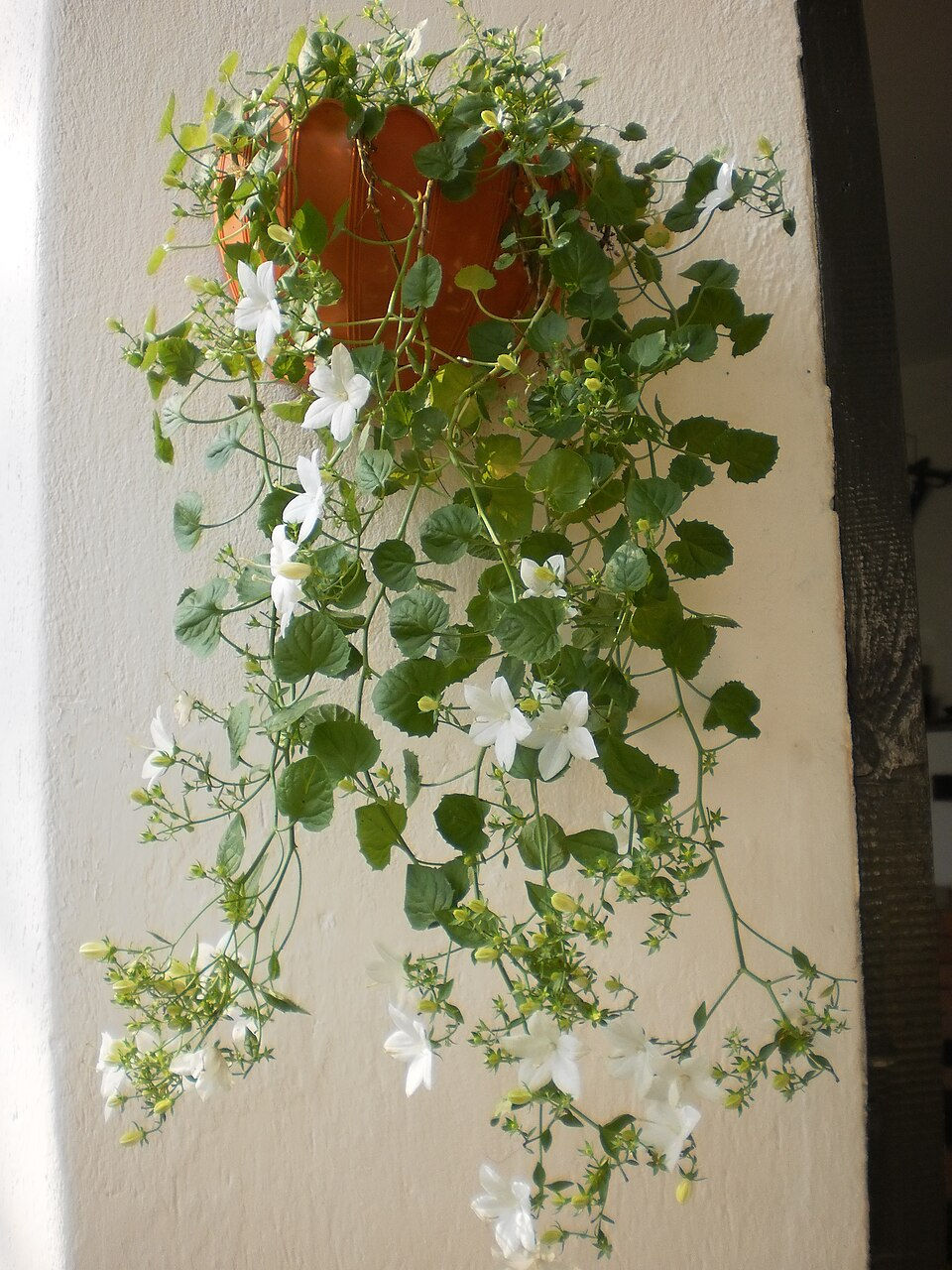
Characteristics: A tender, trailing perennial growing 0.15 to 0.2 meter tall with a cascading spread of 0.3 to 0.5 meter. Stems are brittle, prostrate to pendulous, swollen at nodes, and produce a milky white sap when broken. Leaves are small, light green, heart-shaped (cordate) to ovate (2 to 3.5 cm long), with finely serrated margins and thin, delicate petioles. From mid-summer through mid-autumn, the plant is completely blanketed by abundant, short-stalked, 5-lobed open star-shaped flowers (3 to 4 cm in diameter). Petal colors range from vibrant sky blue and violet-purple to pure porcelain white ('Alba').
Pros & Cons
Pros
Premier Cascading Ornament: Outstanding trailing growth habit that creates a solid carpet of star-shaped blossoms over hanging baskets, retaining walls, and high planters.
Extended Late-Season Bloom: Flowers continuously from mid-summer through autumn when many spring-blooming perennials have faded.
High Shade & Cool-Zone Compatibility: Thrives in bright indirect light and cool morning sun where heat-loving plants scorch.
Nectar Source for Small Pollinators: Open floral structure provides easy access to nectar for hoverflies, native wild bees, and small butterflies.
Cons
Intolerant of Extreme Heat & Stagnant Air: Stalls, scorches, or succumbs to fungal decline under intense midsummer sun combined with high humidity and poor ventilation.
Fragile Stem Architecture: Brittle stems snap easily when handled roughly or exposed to harsh, buffeting winds.
Frost Sensitivity: Tender perennial; top growth freezes at 0°C (32°F), and root crowns suffer irreversible damage below -3°C (26°F).
High Snail & Slug Vulnerability: Soft, tender foliage is a primary target for gastropods in damp, shaded garden locations.
Field Performance & Care Profile
Light Requirement: Bright indirect light or soft morning sun (4 to 6 hours of filtered light daily). Protection from harsh, direct midday solar radiation is mandatory to prevent flower fading and foliage scorch.
Cold Hardiness: Tender perennial. Intolerant of hard frosts. Growth stalls completely below 8°C (46°F). Requires a cool winter dormancy period at 5°C to 10°C (41°F to 50°F). (USDA Hardiness Zones 8b–11 grown as a perennial in sheltered microclimates; Zones 2–8a grown as a potted patio subject or indoor wintered plant).
Heat Tolerance: Moderate to Low. Performs best in temperate, coastal, or cool mountain environments (18°C to 24°C). Requires shaded root zones and atmospheric air movement during high summer heatwaves.
Soil Requirement: Demands exceptionally porous, light, mineral-rich growing substrates. Thrives in mixes of leaf mold, mature compost, pumice, and coarse sand or crushed limestone across a neutral to slightly alkaline pH range (6.5 to 7.5). Fails rapidly in heavy, waterlogged clay.
Root Structure: Fine, fibrous, shallow root network that spreads laterally through rock crevices and porous soil mixtures.
Height & Spread: Grows 0.15 to 0.2 meter tall with a trailing stem length of 0.3 to 0.5 meter.
Watering: Moderate. Categorized in the Yellow Group on the Water Scorecard. Keep soil evenly moist during active growth and flowering, but never soggy. Allow the top 1 to 2 cm of soil mix to dry out slightly between waterings.
Regional Adaptability: Outstanding hanging basket subject, rock wall trailer, alpine house plant, terrace container accent, and sheltered shade-garden filler across temperate and Mediterranean zones.
Lifespan: Tender perennial (3 to 5+ years when given proper cool winter dormancy).
Flower Color: Sky blue, light violet, lilac, lavender, and pure porcelain white ('Alba' and 'Mayi').
Blooming Period: Mid-summer to mid-autumn (July to October/November).
Foliage Status: Semi-evergreen in frost-free, cool winter conditions; dormant in cold winter setups.
Difficulty Level: Moderate (requires attention to ventilation, drainage, and morning sun exposure).
Propagation Methods
Softwood Stiff Cuttings (Recommended Method): Take 5 to 8 cm non-flowering stem tips in late spring or early summer. Dip base in rooting powder and insert into a moist mix of 50% perlite/pumice and 50% peat/coarse sand. Keep under warm, bright indirect light with high ambient humidity. Roots establish within 14 to 21 days.
Crown Division: Carefully divide mature, multi-stemmed root crowns during early spring repotting just as new green shoots break dormancy at the base.
Indoor Seed Sowing: Sow fine seeds on the surface of moist seed-starting mix in early spring. Press seeds lightly into the medium without covering, as germination requires light. Maintain temperature at 15°C–18°C (59°F–64°F). Germination occurs in 14 to 21 days.
Pro Care Tips & Secrets
To achieve "Continuous Autumn Blooming & Prevailing Bud Production," execute the "Precise Deadheading & Stem Trimming Protocol." Snip or pinch off individual spent star blooms along with their thin pedicels every few days. Deadheading prevents energy leakage into seed capsule development, stimulating secondary flower buds along lateral nodes well into late autumn.
To guarantee "Profuse Spring Floral Induction," enforce the "Cool Winter Resting Period." During late autumn and winter, place container plants in a cool, bright space maintained strictly at 5°C to 10°C (41°F to 50°F) with reduced watering. This cool winter rest mimics its native Ligurian cliff environment, triggering heavy floral bud differentiation for the following summer.
To prevent "Botrytis Blight & Crown Decay," execute the "Morning Irrigation & Aeration Rule." Never water Campanula isophylla late in the evening or over the top of dense foliage. Water exclusively at the soil level during early morning hours, allowing excess moisture on stems to evaporate before mid-day. Ensure containers are elevated or suspended to maintain active airflow around trailing foliage.
Tags: Perennial | Trailing | Hanging-Basket | Rock-Garden | Moderate-Water | Partial-Shade | Campanulaceae


Comments