


The Forest Jewel: Common Primrose (Primula vulgaris)


Low-profile, shade-welding evergreen pillows built for moisture-locked humus, crisp alpine springs, and non-stop early-season jewel clusters.
Alternative Names: Common Primrose, English Primrose, Primrose,
Introduction
Botanical Name: Primula vulgaris (Family Primulaceae)
Native Habitat: Native extensively across western and southern Europe, North Africa, and Southwest Asia (including the cool, damp forest floors and shaded mountain ravines of northern and western Anatolia). It evolved as a classic understory resident of ancient oak and beech woodlands, hedgerows, and mossy stream banks. This specialized habitat hardwires its complete reliance on canopy shade, its demand for continuously damp, organic-rich humus, and its biological drive to bloom during the earliest, cool days of spring before the overhead trees push out their leaves.
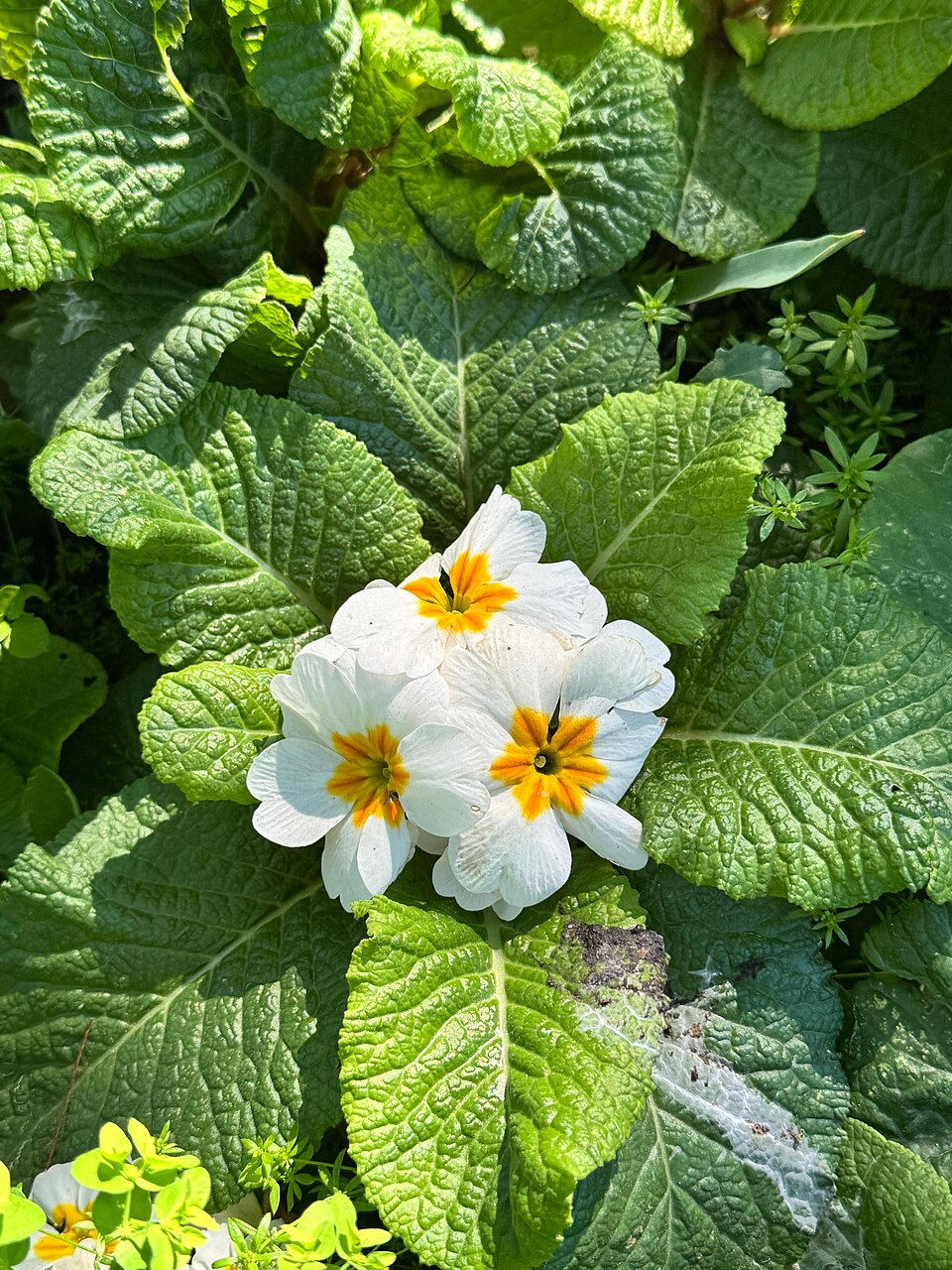
Characteristics: This is a low-growing, compact, clump-forming evergreen perennial that creates a lush, low-profile tufted cushion in the landscape. From a short, stout, fleshy rhizomatous rootstock, it pushes out a beautiful, radiating rosette of obovate-oblong leaves. The leaves feature a highly distinctive crinkled, heavily wrinkled (rugose) surface, prominent veins, and softly hairy undersides that channel morning dew directly down into the root crown. In late winter and early spring, the center of the rosette erupts with countless solitary flowers, each held on a slender, hairy stalk. The flat-faced, five-petaled blossoms feature notched tips and a sweet, delicate herbal scent, completely blanketing the foliage carpet.
Pros
Elite Early-Season Shade Color: Lights up dark, shaded woodland corners and north-facing borders in late winter when most garden plants are fully dormant.
Superb Clay and Humus Affiliation: Thrives effortlessly in heavy, moisture-retentive, organic-rich soils that cause root decline in Mediterranean subshrubs.
Excellent Edible and Wildlife Asset: The flowers and young leaves are completely edible (excellent for gourmet garnishes), while providing an essential nectar source for early-waking queen bees.
Compact Non-Invasive Framework: Sits politely in well-defined clumps that expand predictably via short rhizomes without throwing out wild, aggressive runners.
Cons
Absolute Vulnerability to Topsoil Drought: The shallow, fibrous root network has zero tolerance for dry, baking conditions; even brief summer drying triggers rapid wilting and leaf scorch.
Severe Snail and Slug Attraction: The soft, juicy, low-lying leaves act as an absolute magnet for snails and slugs, requiring attentive management during damp spring spells.
High Sensitivity to Intense Afternoon Sun: Direct midday solar radiation burns the waxy leaf tissues, causing immediate yellowing, collapsing, and premature dormancy.
Field Performance & Care Profile
Light Requirement: Dappled partial shade to deep, full shade. It achieves its absolute tightest rosette form, longest-lasting flower colors, and healthiest leaf texture when grown in north-facing borders or beneath the canopy of deciduous trees. Avoid any exposure to hot, direct afternoon sun.
Cold Hardiness: Supreme. The tough, low-profile evergreen rosettes handle severe winter freezes and heavy snow insulation down to minus 15°C to minus 20°C (5°F to minus 4°F) flawlessly, keeping their green core intact under the frost. (RHS Hardiness Rating H6 / WHZ 5a-8b).
Heat Tolerance: Moderate to low. It struggles sharply under intense, dry ambient summer air temperatures crossing above 30°C to 32°C (86°F to 90°F). It uses high summer heat as a biological cue to shut down growth, entering a quiet survival phase that requires deep shade and damp soil.
Soil Requirement: Highly selective. Demands deep, heavy, moisture-retentive soils packed with organic matter, such as leaf mold, composted bark, or rich forest loam. It prefers a neutral to slightly acidic pH range of 5.5 to 7.0, failing rapidly on dry, rocky, high-pH limestone screes.
Root Structure: A short, thick, creeping perennial rhizomatous root crown supported by a dense, shallow network of fleshy, moisture-seeking fibrous capillary roots.
Height & Spread: Maintains a low, tidy profile. The foliage rosette rests at 10 to 15 cm (4 to 6 inches) in vertical height, expanding horizontally to cover a uniform, compact clump footprint of 15 to 20 cm (6 to 8 inches) wide.
Watering: High and highly consistent water needs. The shallow, fleshy roots cannot tolerate drying out or soil cracking. The substrate must remain continuously damp—resembling a wrung-out sponge—throughout the active spring growing and summer heat windows. Provide a deep, gentle soaking twice a week if summer rains fail.
Regional Adaptability: Exceptionally successful throughout Northern, Central, and Atlantic Europe (RHS Hardiness Rating H6) and across the Pacific Northwest, mid-Atlantic, and northern United States (USDA Hardiness Zones 5 through 8). It struggles in hot, arid southwestern states or low-chill subtropical plains.
Lifespan: Long-lived perennial asset. When established in a proper, uncompromised cool shade matrix, a healthy primrose clump can self-renew, expand via offsets, and persist in the landscape for 10 to 15+ years.
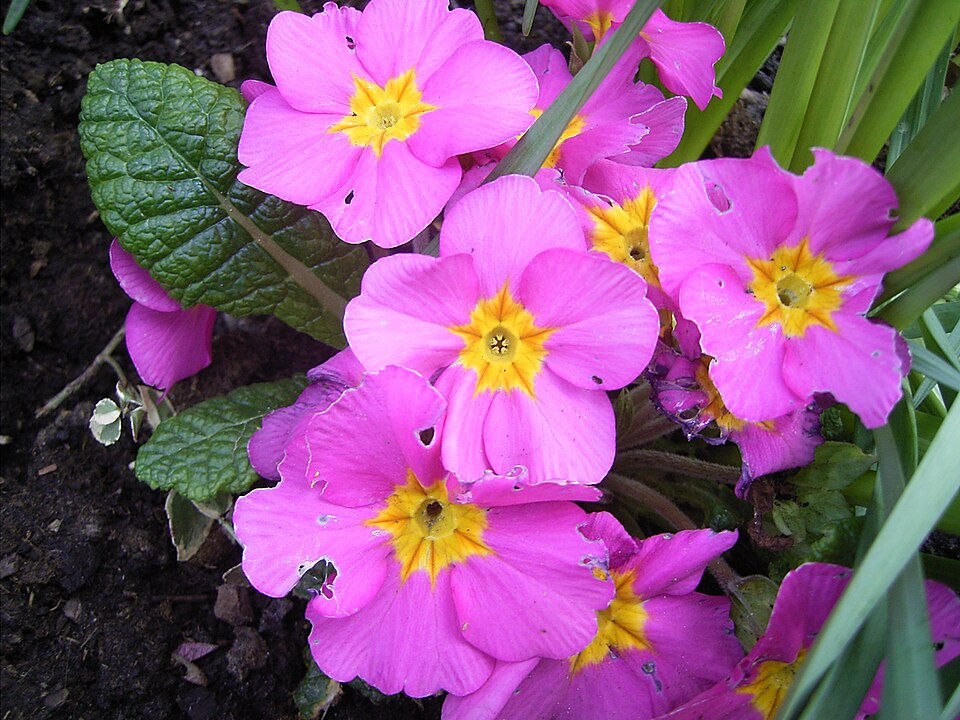
Flower Color: Classic wild forms display a beautiful, soft sulfur-yellow with a deeper orange-yellow central eye. Cultivated varieties (Polyanthus types) offer an extraordinary, vivid jewel-toned spectrum including royal blue, velvet crimson, hot magenta, terracotta, and pure white.
Blooming Period: Extended early-season window. Typically runs continuously from late winter through mid-spring (February to May depending heavily on regional spring warming trends).
Foliage Status: Strictly evergreen to semi-evergreen. The wrinkled, tongue-shaped green leaves remain active and visually constant through all twelve months of the year in moist, temperate shade zones.
Difficulty Level: Beginner to Intermediate. It is incredibly easy and self-sufficient to maintain if your garden possesses natural shade and moisture; it becomes advanced only if you attempt to force it into dry, sunny, high-pH soils.
Propagation Methods
Post-Bloom Mechanical Crown Division (The Ultimate Rejuvenation Route): Because primroses expand by building small offsets around a creeping rhizome, dividing the clumps every 2 to 3 years keeps the crown productive and prevents the center from dying out. In late spring (May), directly after the final flowers fade and while the plant is in an active growth flush, dig up the entire clump with a trowel. Gently wash the soil away to expose the root joints. Use your fingers or a sharp knife to pull the rosettes apart, ensuring each individual crownlet retains a healthy cluster of thick white roots. Replant them 15 cm apart in a shaded, humus-rich bed and keep them deeply watered.
Autumn Cold-Frame Seeding (The Mass-Naturalization Route): To establish a massive woodland carpet, sow fresh seeds in late summer or early autumn into flats filled with damp leaf-mold compost. Primrose seeds require a brief period of cold stratification to break dormancy. Lightly press the seeds onto the surface (they require light to germinate) and cover with a paper-thin layer of fine grit. Keep the flats inside an unheated cold frame over winter; a uniform, dense forest of green sprouts will erupt the following spring as temperatures rise.
Pro Care Tips & Secrets
To prevent your primroses from falling victim to devastating crown rot (Botrytis cinerea) or root asphyxiation during heavy winter rains, you must understand the distinction between "moisture-loving" and "waterlogged." While Primula vulgaris demands damp soil, it cannot survive sitting in stagnant, airless puddles that collect over compacted clay floors. If your shade garden has heavy clay, your ultimate professional secret is to build a raised woodland planting bank or a terraced rockery pocket, amending the top 20 cm of soil with a massive volume of coarse leaf mold and sharp river sand. This ensures that while gravity pulls excess standing water away from the leaf joints instantly, the high organic matter holds a thick layer of healthy, aerated moisture for the shallow capillary roots.
Never apply thick layers of heavy organic wood chips, fresh animal manures, or high-nitrogen synthetic crop fertilizers directly over the top of the primrose leaf rosettes in early spring. High nitrogen forces a sudden explosion of soft, watery, oversized leaves that lack cell-wall density, making them incredibly fragile and highly attractive to sap-sucking spider mites. More critically, packing dense wood mulch over the center of the rosette blocks vital air circulation around the short rhizome, trapping moisture against the crown and triggering rapid rot. Instead, mulch your primrose beds exclusively with a 3 cm layer of clean, decomposed autumn leaf mold or shredded pine needles drawn right up to the outer edge of the leaves, maintaining a clean, well-ventilated crown center.
To maximize individual flower size, prolong the early spring blooming window, and prevent your plants from wasting their valuable starch reserves, you must practice a strict "Deep-Canopy Deadheading" routine. Do not just yank the faded petals off the top of the stem. When a flower begins to turn brown, follow its slender stalk all the way down to the absolute base of the plant where it connects to the hidden underground rhizome crown and clip it off cleanly with fine-tipped snips. This deep, clean cut forces the rhizome to instantly halt seed development hormones, redirecting its internal sap pressure into breaking open the next cluster of latent flower buds sitting deep inside the center of the leaf rosette.
Tags: Evergreen-Perennial | Shade-Lover | Moisture-Lover | Cold-Hardy | Woodland-Anchor | Early-Spring-Bloom


Comments