


The Green Sentinel: Japanese Privet (Ligustrum japonicum)
Creating an absolute wall of thick, leather-like emerald leaves to wrap your garden in year-round privacy and deep calm
Alternative Names: Wax Leaf Privet, Glossy Privet, Ligustrum texanum, Japanese Privet Tree, Evergreen Privet
Introduction
Botanical Name: Ligustrum japonicum
Native Habitat: Native to the coastal areas, thickets, and low mountain woodlands of central and southern Japan, as well as Korea. Its coastal evolutionary background allows it to handle maritime drafts, salty environments, and a wide variety of soil structures with impressive resilience.
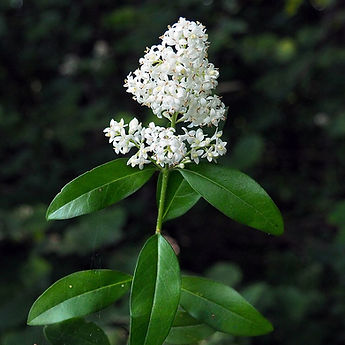
Characteristics: This is an exceptionally fast-growing, densely branched, and heavily textured evergreen large shrub or small tree belonging to the Olive family (Oleaceae). It develops a clean, upright, and naturally rounded crown tightly packed with broad, ovate, leathery leaves that display a deep glossy-green top and a pale matte underside. In late spring to early summer, it pushes out large, terminal, pyramidal clusters of tiny, creamy-white flowers that emit a heavy, sweet fragrance. These blossoms later develop into large bunches of small, oval, glossy blue-black berries that persist through winter.
Pros
Elite Year-Round Privacy Barrier: The massive, thick, leathery leaves remain densely packed on the branches 12 months a year, providing an outstanding visual shield.
Incredible Pruning Versatility: Handles aggressive clipping with manual or electric tools flawlessly, making it a global favorite for clean formal hedges, topiary shapes, and patio standards.
Supreme Adaptability to Soil Varieties: Shrugs off tough, compacted ground, poor urban soils, and high-limestone pH levels without dropping a single leaf.
High Resilience to Pollution & Salt: Functions beautifully as a protective windbreak or street hedge because it effortlessly filters harsh dust and road exhaust.
Cons
Heavy Inflorescence & Fruit Mess: The massive drops of spent flower clusters and deep blue-black berries can heavily stain clean gravel paths, stone terraces, or patio tiles beneath the canopy.
Aggressive Lateral Root Footprint: Develops a dense, shallow root carpet that competes fiercely for water and nutrients, making it tricky to plant delicate, slow-growing perennials right under its base.
Allergenic Pollen Output: The intense, musky perfume of the heavy spring blooms can trigger seasonal allergies in sensitive gardeners.

The Field Performance Profile
Light Requirement
Full sun to partial shade. It achieves its absolute tightest branching structure, heaviest leaf density, and maximum glossy sheen when grown in at least five to six hours of direct daily sunlight. While it adapts comfortably to dense ambient shade, its growth pattern will loosen slightly, creating a more open crown.
Cold Hardiness
Down to minus 12 to minus 15 degrees Celsius (10 to 5 degrees Fahrenheit). It is an incredibly reliable evergreen throughout Mediterranean and mild temperate climate zones (USDA Zones 7b through 11). If hit by brief, unprecedented winter drops beyond this, it may drop its large leaves but will recover quickly in spring.
Heat Tolerance
Up to 40 to 42 degrees Celsius (104 to 108 degrees Fahrenheit). It exhibits superb heat resistance, shrugging off hot summer dry spells, intense afternoon solar baking, and low ambient humidity without showing signs of leaf curl.
Soil Requirement
Extremely adaptable. It thrives in clay, loam, sandy, or rocky gravel profiles. It is highly adapted to chalky, alkaline, limestone-rich soils with a high pH, never showing signs of iron deficiency. The only critical requirement is basic drainage; it detests sitting in swampy, oxygen-deprived water.
Root Structure
A shallow, highly branched, and aggressive fibrous root network that spreads widely to rapidly lock down loose soil and claim surface nutrients.
Height & Spread
Highly controllable. Left completely unpruned, it can slowly reach a mature height of 3 to 5 meters (10 to 16 feet) with a lateral width of 2.5 to 3.5 meters (8 to 11 feet). However, as a managed garden hedge or screen, it is easily maintained at any desired height from 1.5 to 3 meters.
Watering
Low to moderate water needs. Provide regular, deep watering during its first growing season to anchor the root network. Once fully established, its leathery leaf structure holds moisture brilliantly, giving it outstanding drought resilience. It can easily survive hot summer stretches entirely on natural rainfall.
Lifespan
Long-lived woody perennial shrub or tree. It maintains its structural density and privacy utility for decades with minimal maintenance.
Flower Color
Creamy white to ivory white, arranged in large, fluffy, cone-shaped terminal panicles.
Blooming Period
Late spring to early summer (typically peaking from May through June).
Foliage Status
Strictly evergreen. The broad, leathery, wax-coated leaves stay deep green and active through all four seasons.
Difficulty Level
Beginner. It is virtually bulletproof, self-sufficient, and immune to heavy pruning mistakes.

Propagation Methods
1. Semi-Ripe Stem Cuttings (The Fastest Method)
When: Mid to late summer when the vigorous new spring growth begins to firm up and mature at the base.
How: Snip a 15 cm long cutting from a healthy branch tip. Strip the large leaves off the lower half to reduce moisture loss. Insert the base into a free-draining mix of sand and perlite. Keep the tray in a warm, bright, indirect-light spot and keep the medium lightly moist. Roots will anchor within 4 to 6 weeks.
2. Hardwood Cuttings
When: Late autumn to early winter when the shrub is semi-dormant.
How: Take a 20 cm long cutting of mature, pencil-thick wood from the current year’s growth. Plant it deeply into an outdoor nursery bed or large pot filled with sandy loam, leaving only the top two buds exposed. It will slowly push roots over the winter and sprout eagerly by spring.
Pro Care Tips & Secrets
Landscape Vision
Ligustrum japonicum represents the absolute definition of permanent structural reliability and green security in sustainable landscape design. It completely redefines how we manage exposed boundaries, harsh wind tunnels, and busy street lines, providing a solid, glossy wall of thick emerald warmth that delicate or deciduous shrubs can never match. When given direct sun, planted in free-draining alkaline ground, and shaped with strategic seasonal shearing, this resilient native rewards the gardener with a trouble-free, elegant framework that anchors the privacy of the garden for decades.
Tags: Evergreen | Drought-Tolerant | Full-Sun | Privacy-Screen | Topiary-Asset | Windbreak

Pro Care Tips & Secrets
Landscape Vision
Ligustrum japonicum represents the absolute definition of permanent structural reliability and green security in sustainable landscape design. It completely redefines how we manage exposed boundaries, harsh wind tunnels, and busy street lines, providing a solid, glossy wall of thick emerald warmth that delicate or deciduous shrubs can never match. When given direct sun, planted in free-draining alkaline ground, and shaped with strategic seasonal shearing, this resilient native rewards the gardener with a trouble-free, elegant framework that anchors the privacy of the garden for decades.
Tags: Evergreen | Drought-Tolerant | Full-Sun | Privacy-Screen | Topiary-Asset | Windbreak


Comments