


The Hardy Spiderwort & Damp-Soil Perennial: Virginia Spiderwort (Tradescantia virginiana)

A highly adaptable, cold-hardy herbaceous perennial engineered for long-season floral displays, moisture-retentive ground coverage, pollinator support, and low-maintenance naturalizing across temperate, woodland, and rain garden microclimates.
Alternative Names: Virginia Spiderwort, Common Spiderwort, Widow's Tears, Trinity Flower, Ephemerum (historical), Tradescantie de Virginie (French), Virginische Dreimasterblume (German), Efímera de Virginia / Tradescantia (Spanish), Telgraf Çiçeği / Örümcek Otualtı (Turkish)
Introduction
Botanical Name: Tradescantia virginiana (Family Commelinaceae) — a foundational species of native North American spiderworts and a primary parent of many garden hybrids (Tradescantia Andersoniana Group).
Native Habitat: Native to eastern and central North America, ranging from Maine down to Georgia and west to Missouri and Wisconsin. Naturally inhabits rich open woods, moist meadows, rocky hillsides, stream banks, and shaded road verges.
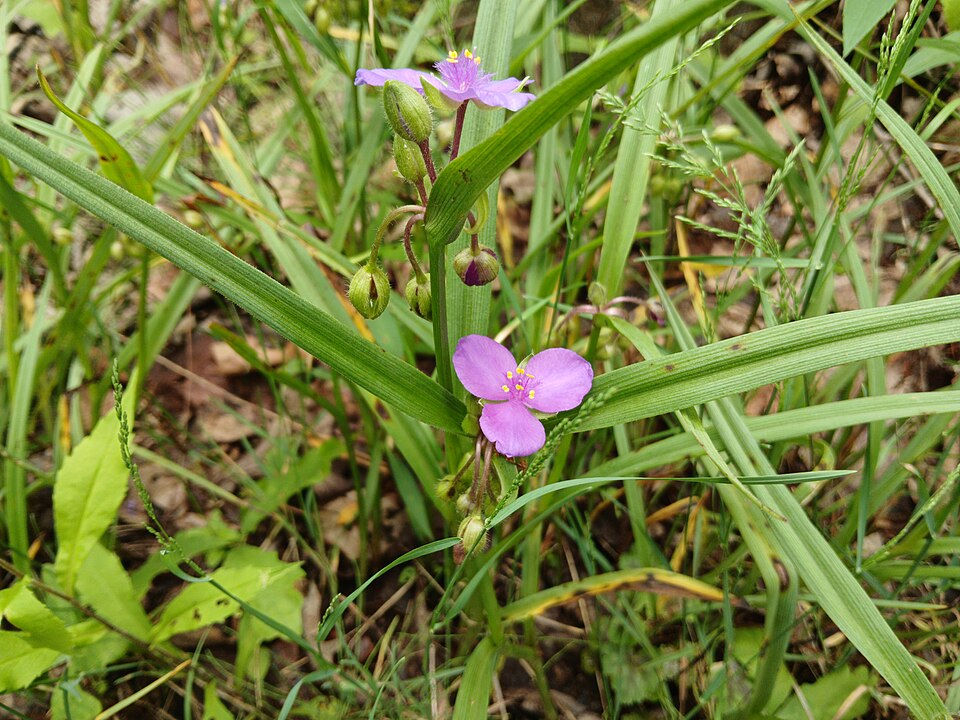
Characteristics: A clump-forming herbaceous perennial growing 30 to 60 cm tall with a spread of 30 to 45 cm. It features arching, dark green, grass-like or iris-like leaves that clasp the fleshy, succulent stems. Clusters of terminal buds open into distinct 3-petaled flowers (1.5 to 2.5 cm wide) featuring bright yellow stamens. Flower colors typically range from royal blue and violet-purple to magenta, pink, and pure white. Individual blossoms open in the morning and close by mid-afternoon, but plants produce a continuous succession of new blooms daily over 6 to 8 weeks in early-to-mid summer. When stems are cut or broken, they exude a clear, thread-like viscous sap resembling a spider's web.
Pros & Cons
Pros
Extended Blooming Cycle: Delivers continuous daily floral succession from early summer into mid-summer, providing consistent forage for native bees and pollinators.
Exceptional Cold Hardiness: Extremely resilient to deep winter freezes down to -35°C (-31°F) without needing winter protection.
Thrives in Damp & Clay Soils: Excellent candidate for rain gardens, pond edges, and heavy, moisture-retentive clay soils where drought-intolerant plants struggle.
Shade & Sun Versatility: Adapts smoothly from full sun exposure in cooler climates to partial woodland shade in hot summer zones.
Easy Naturalizer: Clumps expand steadily without becoming aggressively invasive, offering simple division and propagation.
Cons
Mid-Summer Foliage Collapse: After the peak bloom period in high heat, older foliage often becomes straggly, floppy, or brown-tipped.
Flowers Close in Afternoon Heat: Individual blossoms melt or close by midday under high heat or intense direct sunlight.
Self-Seeding Hybridization: Self-sown seedlings can spread around garden borders and may not breed true to the parent cultivar's color.

Field Performance & Care Profile
Light Requirement: Full sun to partial shade (4 to 8 hours of light daily). Full sun produces maximum bloom density in moist soils; partial shade preserves foliage health in hot summer regions.
Cold Hardiness: Exceptionally cold-hardy perennial. Withstands deep winter freezes down to -35°C (-31°F). (USDA Hardiness Zones 3a–9b).
Heat Tolerance: Moderate. Handles summer temperatures up to 32°C–35°C (90°F–95°F) well if soil moisture remains high; foliage goes semi-dormant under hot, dry conditions.
Soil Requirement: Prefers fertile, moist, organically rich loams or clay-loams (pH 5.8 to 7.2). Highly tolerant of heavy clay and damp, poorly drained spots.
Root Structure: Fleshy, fibrous root system that forms tight, expanding perennial clumps.
Height & Spread: Grows 30 to 60 cm in height with a clump spread of 30 to 45 cm.
Watering: Moderate to High. Categorized in the Yellow Group on the Water Scorecard. Prefers consistently moist soils; handles occasional brief wet feet near water edges.
Regional Adaptability:
North America: Native across Eastern Woodlands, Midwest Prairies, Great Lakes, and Pacific Northwest rain gardens (USDA Zones 3–9).
Europe: Widely naturalized across Atlantic, Central European, and Maritime cottage gardens, woodland borders, and pond margins (UK, France, Germany, Netherlands).
Lifespan: Long-lived herbaceous perennial (renews reliably every spring for decades).
Flower Color: Royal blue, violet-purple, magenta, rose-pink, and white.
Blooming Period: Late spring to mid-summer (May to July), with potential autumn rebloom after cutbacks.
Foliage Status: Deciduous (dies back completely to root crown in late autumn).
Difficulty Level: Very Easy (low maintenance; responds quickly to mid-season rejuvenation).
Propagation Methods
Division (Primary & Best Method): In early spring (as new shoots emerge) or mid-autumn, lift established root clumps with a fork. Slice or pull the fleshy root mass into smaller sections containing 3 to 5 active shoots and replant immediately into moist soil.
Stem Cuttings: Take 8–10 cm non-flowering stem cuttings in early summer. Insert into a moist peat/perlite or potting mix; roots establish rapidly in 2 to 3 weeks.
Seed Sowing: Sow seeds outdoors in autumn for natural winter stratification. Germination occurs in spring as temperatures warm to 15°C–20°C (59°F–68°F).
Pro Care Tips & Secrets
To trigger a Late-Summer Foliage Rejuvenation & Second Bloom, cut the entire plant back down to 5 to 10 cm above ground level in mid-summer when peak flowering ends and foliage begins to look tired or floppy. Water deeply and apply a thin layer of compost; fresh, neat grass-like leaves will flush within 2 weeks, followed by a secondary burst of flowers in early autumn.
To optimize Rain Garden & Pond Margin Placement, plant Tradescantia virginiana along low-lying swale contours, rain garden basins, or pond perimeters where runoff collects naturally. Pair it with water-loving perennials like Siberian Iris (Iris sibirica), Hostas, and Ferns.
To prevent Excessive Self-Seeding, shear or deadhead spent flower clusters before seed capsules mature if you wish to keep cultivars true to type.
Tags: Perennial | Cold-Hardy | Rain-Garden | Pollinator-Attractor | Clay-Tolerant | Moisture-Loving | Native-Plant | Commelinaceae


Comments