


The Inulin Engine: Jerusalem Artichoke (Helianthus tuberosus)

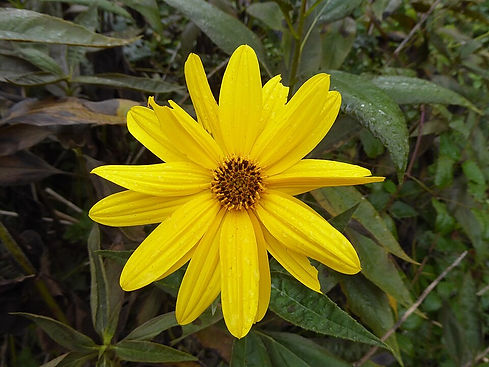
Indestructible, deep-rooted herbaceous perennials engineered for severe soil neglect, rapid biomass generation, extreme cold hardiness, and an abundant winter harvest of inulin-rich edible tubers.
Alternative Names: Jerusalem Artichoke, Sunroot, Sunchoke, Earth Apple
Introduction
Botanical Name: Helianthus tuberosus (Family Asteraceae)
Native Habitat: Native extensively across central and eastern North America, where it adapted to open river valleys, moist thickets, prairie margins, and disturbed rich woodlands. It was cultivated by Indigenous peoples long before European contact and has since naturalized across Europe and Asia. Its evolutionary lineage hardwires an incredible ecological vigor, an ability to thrive in low-nitrogen soils, and a survival strategy centered on storing energy underground in knobby, frost-proof stem tubers rather than relying on seed reproduction.
Characteristics: This is a towering, highly competitive herbaceous perennial capable of shooting up 2 to 3.5 meters in height during a single summer. The stems are stout, fibrous, rough-hairy, and branched toward the upper canopy. The leaves are large, opposite on the lower stem and alternate above, ovate to lanceolate, measuring 10 to 25 cm long, with a coarse, sandpapery texture and serrated edges. In late summer and early autumn, the tops carry bright yellow, daisy-like flower heads measuring 5 to 8 cm across that release a faint, sweet vanilla-chocolate fragrance. Underground, the plant produces an extensive network of rhizomes that swell at the tips into highly knobby, irregular, thick-skinned tubers ranging in color from tan and pale yellow to reddish-purple. The tubers store carbohydrates in the form of inulin—a fructose polymer—rather than starch.
Pros
Extreme Inulin-Rich Culinary Yield: Produces heavy clusters of crisp, nutty-flavored tubers ideal for low-glycemic diets, storing energy as prebiotic inulin that does not spike blood sugar levels.
Indestructible Winter Food Reserve: The tubers are completely frost-proof and store perfectly directly in the frozen soil, allowing for continuous, fresh winter harvesting as needed.
Massive Biomass and Living Screen: Creates a dense, 3-meter-tall living privacy hedge or windbreak within 90 days, producing high volumes of green carbon material for compost or livestock fodder.
Zero-Input Field Performance: Requires zero fertilization, pesticides, or specialized maintenance once established, effortlessly outcompeting wild weeds.
Cons
Aggressive Garden Spread: Any fragment of tuber left in the ground will sprout the following spring, making it notoriously difficult to eradicate once planted in a specific bed.
High Digestive Gas Potential: The high concentration of prebiotic inulin can cause severe flatulence and digestive discomfort if consumed in large quantities by unaccustomed digestive systems.
Thin Skin Water Loss: Once harvested from the earth, the tubers have a paper-thin skin that loses moisture rapidly in dry ambient air, causing them to shrivel within days unless stored properly.

Field Performance & Care Profile
Light Requirement: Absolute full sun to light partial shade. It achieves its maximum vertical height and heavy tuber density under direct, unshaded solar exposure. While it survives in partial shade, tuber size drops significantly under dense tree canopies.
Cold Hardiness: Supreme cold hardiness. The underground tubers easily survive sub-zero soil freezes down to minus 30°C to minus 40°C (-22°F to -40°F) without cell damage, maintaining perfect crispness through winter. (RHS Hardiness Rating H7 / WHZ 3a-9b).
Heat Tolerance: High. The tough, hairy leaves maintain turgor pressure through intense summer heat spikes up to 38°C (100°F), provided the deep root network can access subsoil moisture.
Soil Requirement: Unbelievably adaptable. Thrives in poor sands, gravelly loams, and heavy, compacted alkaline clays. It performs best in loose, well-drained soils with a pH between 6.0 and 7.5, where tuber expansion and winter digging are physically easier.
Root Structure: Forms a dual underground system: a wide-spreading network of lateral fibrous roots that extract minerals, paired with a creeping rhizome system that swells into dozens of fleshy storage tubers around the stem base.
Height & Spread: Grows 2.0 to 3.5 meters (6.5 to 11.5 feet) in vertical height, expanding horizontally via root runners into a dense, solid colony if left uncontained.
Watering: Low to moderate water needs. Highly drought-tolerant once established due to its deep root reach. Supplemental watering during prolonged dry spells in mid-summer increases final tuber mass, but it survives easily on natural seasonal rainfall alone.
Regional Adaptability: Exceptionally successful across temperate, continental, and Mediterranean climate zones. It is a premier selection for permaculture zones, low-input food forests, soil stabilization, and marginal land utilization.
Lifespan: Long-lived perennial via subterranean tuber cloning; individual above-ground stems die back completely each autumn.
Flower Color: Bright golden-yellow ray petals surrounding a yellow or pale brown central disk.
Blooming Period: Late summer to mid-autumn (typically September to October, triggered by short day-length photo-periods).
Foliage Status: Herbaceous perennial. Above-ground foliage turns deep brown and dies back to the ground after the first hard autumn freeze, while the tubers remain alive beneath the soil line.
Difficulty Level: Beginner. Virtually impossible to kill; requires management to control its physical boundary rather than effort to keep it alive.

Propagation Methods
Spring or Autumn Tuber Planting (The Primary Route): Seed propagation is rarely used because many strains bloom too late to set viable seed before frost. Instead, plant whole, intact tubers or large pieces (ensuring each piece carries at least 2 to 3 prominent growth buds or "eyes"). Plant tubers 7 to 10 cm deep, spaced 30 to 45 cm apart in rows or dedicated beds. Autumn planting (October to November) allows the tubers to settle naturally through winter for early spring emergence. Spring planting should be executed as soon as the soil can be worked in March or April.
Early-Summer Rhizome Stem Cuttings: If expanding stock rapidly in mid-season, snip 15 cm long lateral vegetative shoots from the upper main stems in June. Strip the lower leaves and insert into a moist mix of equal parts perlite and sand. Keep under a humidity dome; roots will establish within 10 to 14 days, forming small seed tubers by late autumn.

Pro Care Tips & Secrets
To prevent Helianthus tuberosus from becoming an "Uncontrollable Garden Weed" that invades neighboring vegetable beds and chokes out sensitive perennial crops, you must implement the "Root Barrier Enclosure or Trench Isolation" strategy. Never plant tubers directly into open, uncontained garden soil unless you intend for the patch to remain permanent forever. Always establish them inside dedicated, raised containment boxes lined with a continuous 60 cm deep root-barrier membrane, or grow them in isolated perimeter zones surrounded by mown lawn paths. Running a lawnmower weekly along the boundary clips off any creeping runners, starving the underground tubers and holding the colony strictly to its assigned footprint.
If you want to maximize the size and sweetness of your underground tubers while eliminating the risk of late-summer wind lodging, you must execute the "Mid-Summer Height Pruning & Flower Pinch" protocol. When the stems reach a height of 1.8 to 2.0 meters in mid-July, use hedge shears to prune off the top 30 to 40 cm of vertical growth. This physical intervention limits top-heavy wind resistance, stops unnecessary vertical stem building, and forces the plant to channel its photosynthetic energy downward into expanding the underground tubers weeks earlier than normal.
To completely solve the issue of "Harvest Storage Shriveling" without taking up valuable refrigerator space, you must adopt the "In-Ground Living Storage & High-Mulch Freeze Defense" technique. The thin, delicate skins of Jerusalem artichokes cause them to dry out and soften rapidly when stored in standard air-filled cellars. Instead of digging up the entire crop in autumn, leave the tubers buried in the earth where they stay perfectly crisp, sweet, and firm. Before the ground freezes solid in late November, apply a 20 cm thick blanket of loose straw or wood chips directly over the bed. This insulating blanket keeps the topsoil soft and unfrozen beneath the snow, allowing you to pull back the straw and dig up fresh, sweet tubers with a garden fork anytime throughout the winter.
Tags: Herbaceous-Perennial | Root-Vegetable | Inulin-Yield | Full-Sun | Cold-Hardy | Zero-Input


Comments