


The Pink Shamrock: Annual Pink Sorrel (Oxalis rosea)


Low-slung, moisture-locked seasonal mats engineered for cool woodland margins, high-humus gravel beds, and an explosive morning canopy of soft neon-pink chalices.
Alternative Names: Annual Pink Sorrel, Pink Wood Sorrel, Rosy Wood Sorrel
Introduction
Botanical Name: Oxalis rosea (Family Oxalidaceae)
Native Habitat: Native extensively across the cool, damp, temperate forest floors, shaded ravine banks, and moist maritime cliffs of Chile and parts of southern Argentina. It evolved under dappled forest canopies where the soil remains rich in organic leaf debris and highly insulated from intense solar heat. This high-moisture Southern Andean heritage wires its reliance on consistent ambient moisture, its absolute preference for afternoon shade, and its rapid daily sleep movements where leaves fold downward at dusk.
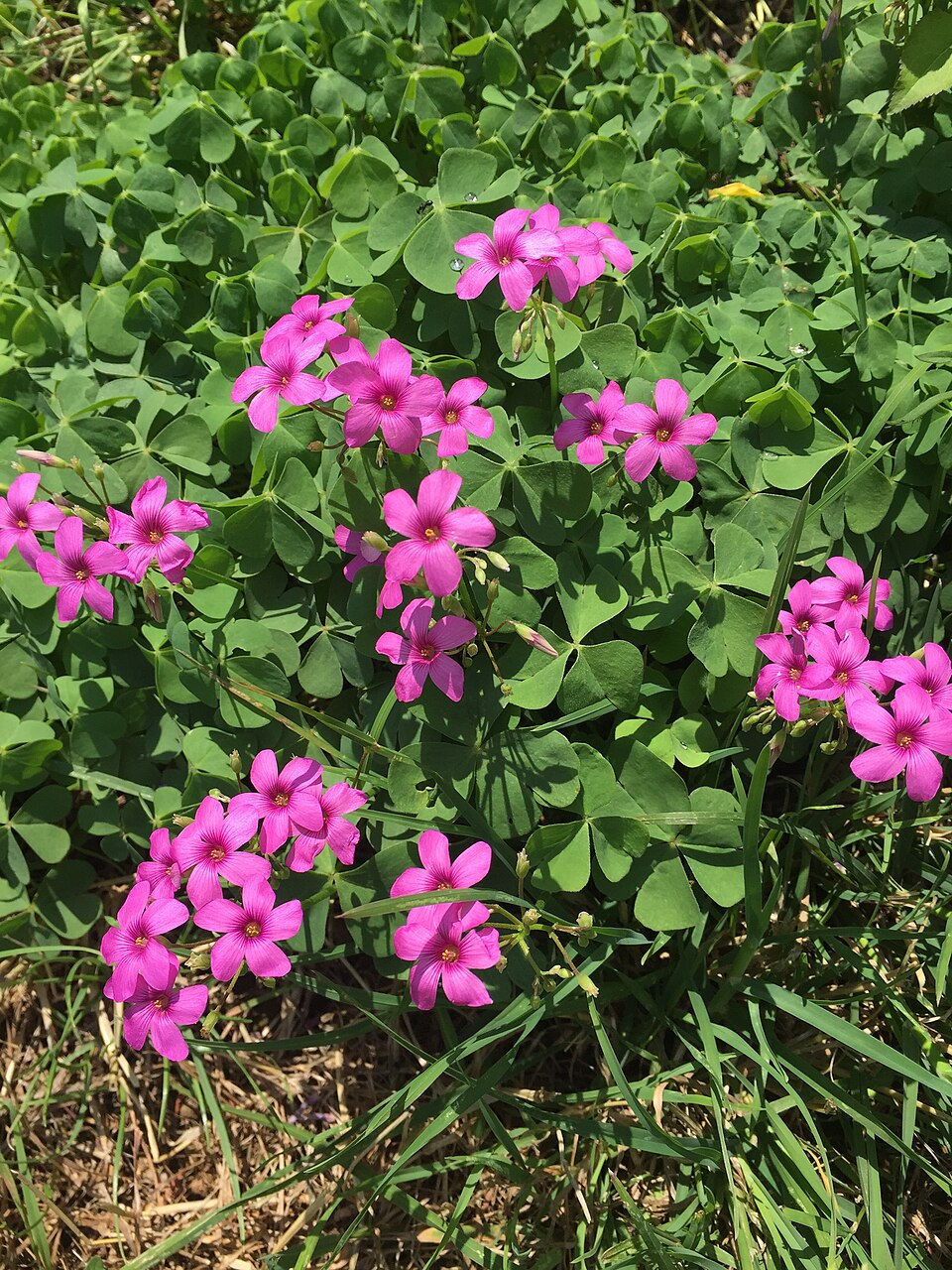
Characteristics: This is a fast-growing, multi-branched, sprawling or mounding annual or short-lived tender perennial herb. It forms a lush, juicy, emerald-green cushion from soft, fleshy translucent stems that contain a high concentration of oxalic acid. The alternate leaves display the classic shamrock structure, composed of three heart-shaped (obcordate) leaflets attached to long, delicate petioles. From mid-spring through early autumn, the upper leaf axils produce loose, branched clusters of wide, five-petaled flowers. The satiny petals are a clean rosy-pink with fine, deep crimson veining radiating from a luminous chartreuse central throat.
Pros
Brilliant Soft-Shade Carpet: Blanket-covers low garden borders and shaded stone steps in a vibrant pink-and-emerald layer where sun-loving plants fail.
Fascinating Daily Sleep Movements: Displays high-velocity photonastic leaf movement—folding its shamrock leaves neatly downward like tiny umbrellas at night or during heavy rain.
Non-Aggressive Clumping Architecture: Unlike its notorious vining bulbous relatives (Oxalis corniculata), this species forms a well-behaved mound that presents zero threat of invasive choking weeds.
Rapid Early-Season Infill: Establishes a fully mature, blooming cover within just a few weeks of spring direct-sowing.
Cons
Total Midday Heat Collapsing: The soft, water-packed succulent stems lose turgor pressure rapidly under intense direct afternoon sun, flagging into flat mush if not shaded.
Strict High-Oxalate Toxicity Profile: Every part of the juicy tissue contains dense levels of oxalic acid, which can cause severe kidney stress in domestic pets if consumed in volume.
Explosive Autumn Seed Capsule Launching: Utilizes a high-pressure ballistic seed dispersal mechanism that fires seeds up to two meters away, naturalizing heavily in neighboring damp pots if not monitored.

Field Performance & Care Profile
Light Requirement: Dappled partial shade to bright, indirect morning sun. It achieves its absolute tightest, most leaf-dense mound geometry and richest pink petal depth when protected from intense direct midday solar radiation. Avoid high-exposure southern boundaries, which scorch the soft leaves into papery white spots within hours.
Cold Hardiness: Tender perennial frequently grown as a high-performance spring-sown annual. While it handles crisp autumn night drops down to 5°C (41°F) safely, it possesses zero internal resistance to freezing. The entire vegetative canopy undergoes complete cellular death at 0°C (32°F). (RHS Hardiness Rating H2 / WHZ 9a-11b as a seasonal annual).
Heat Tolerance: Low to moderate. It prefers cool, damp summer transitions. It struggles sharply when ambient summer day temperatures consistently climb above 30°C (86°F), using high heat as a biological signal to drop its flower buds to conserve internal starches.
Soil Requirement: Demands deep, light, highly porous, and moisture-locked substrates rich in organic matter, such as leaf-mold compost, decomposed wood humus, or rich forest silt mixed with fine perlite. It prefers a slightly acidic to neutral pH range of 5.8 to 6.8, requiring sharp internal drainage to protect its soft crowns.
Root Structure: A delicate, highly sensitive, and shallowly spreading network of fine fibrous capillary roots that anchor the succulent crown base close to the surface.
Height & Spread: Maintains a neat, low, compact mounded cushion profile, reaching 20 to 30 cm (8 to 12 inches) in vertical height, while its flexible succulent stems spread horizontally to cover a lush footprint of 30 to 45 cm (12 to 18 inches) wide.
Watering: High and highly consistent water needs. The water-packed succulent cells have zero biological tolerance for soil baking, cracking, or dry-down cycles. The soil matrix should remain continuously damp—resembling a thoroughly wrung-out sponge. Provide a gentle soaking at the base twice a week during dry summer stretches.
Regional Adaptability: Exceptionally successful as a summer seasonal asset throughout Central and Western Europe (RHS Hardiness Rating H2) and across the Pacific Northwest and northern states of the United States (USDA Hardiness Zones 4 through 9 as a spring annual). It thrives with unmatched vigor in cool, maritime, or mountainous microclimates.
Lifespan: Strictly seasonal annual in northern temperate zones; behaves as a short-lived perennial asset in completely frost-free, high-humidity winter zones.
Flower Color: Clear candy-pink, soft rose-magenta, or pastel fuchsia, highlighted by fine crimson veins and a small, glowing chartreuse-green eye.
Blooming Period: Mid-spring through early autumn (typically running continuously from May through September if the soil is kept cool and moist).
Foliage Status: Seasonal. The smooth, juicy emerald-green clover leaves remain highly active throughout the warm months, disintegrating completely with the first true freeze.
Difficulty Level: Beginner. It is a completely straightforward, low-input plant that demands zero specialized chemical pruning, requiring only a shady spot and regular moisture.
Propagation Methods
Direct Mid-Spring Sowing (The Ultimate Success Route): Because Oxalis rosea forms highly delicate, water-packed root fibers that experience intense transplant shock when moved mechanically, direct-sowing seeds straight into their final shaded garden home in mid-spring (late April) yields the strongest mounds. Once the soil reaches a steady 12°C (54°F), press the tiny seeds a mere 0.2 cm deep into loose, damp, humus-rich earth. Keep the surface misted; robust green cotyledons will erupt uniformly within 6 to 10 days.
Late-Summer Seed Collection (The Ballistic Catch): To secure next year's crop, monitor the green seed capsules in September. The moment the pods turn a translucent tan color, gently place a small paper bag over the branch cluster before touching it, as the ripe pods will burst open violently at the slightest touch, launching their seeds away. Store the dry seeds in a cool envelope over winter.

Pro Care Tips & Secrets
To completely bypass the frustrating problem of "Mid-Summer Stem Flopping"—where your perfectly dome-shaped pink shamrock cushion suddenly sags open in July, splitting down the middle and exposing a bare, ugly center—you must execute the "Basal Charcoal Dust Capping" strategy. Because Oxalis rosea produces watery, translucent succulent stems that lack heavy structural lignin wood, the high humidity of summer shade can easily trap stagnant moisture around the root collar, allowing Botrytis mold to soften the outer stem walls until they collapse under their own weight. In early June, clear away any organic wood mulches from a 5 cm radius around the central crown and backfill it with a 1 cm layer of pure, crushed horticultural charcoal dust mixed with coarse volcanic grit. This highly porous, sterile mineral barrier filters out fungal spores, absorbs organic odors, keeps the crown collar dry, and forces the succulent stems to break out strong, self-supporting side branches that hold the dome shape perfectly erect.
If you are cultivating Oxalis rosea along the edges of shaded stone terraces or inside decorative container pots and want to eliminate the common issue of "Midday Leaf Collapse"—where the beautiful shamrock leaves fold down tightly and stall their growth at 2 PM even though the soil is soaking wet—you must manage your root-zone thermal threshold. While the top foliage can handle warm ambient air, the shallow capillary roots are biologically hardwired to remain buried in cool forest leaf litter that rarely crosses 18°C (64°F). When warm summer heat waves bake the top of the soil, the roots enter an emergency heat-lock, cutting off sap flow to the leaves. Always dress the topsoil surface with a thick, 3 cm layer of light-colored blanched river pebbles or white quartz grit to act as a thermal mirror, reflecting the midday UV radiation away and keeping the shallow root zone cool.
To ensure your pink sorrel mounds maintain an uninterrupted sheet of large, flat pink chalices rather than shifting prematurely into seed production by late July, you must understand the "Explosive Pod Stripping" technique. Do not waste your time trying to clip off individual spent flower stems with scissors. Once a week during peak summer, gently cup your open hand around the lower perimeter of the green foliage mound and lightly squeeze the trailing branches upward. This simple hand motion will detonate any hidden, ripe green seed capsules early, discharging their seeds into your palm before they can siphon off the plant's carbohydrate reserves. The plant responds to this rapid mechanical seed release by launching a secondary wave of vibrant lateral flower buds that carries color straight into autumn.
Tags: Seasonal-Annual | Shade-Lover | Moisture-Lover | Shamrock-Foliage | Non-Invasive | Summer-Bloom


Comments