


The Regal Emblem: Tulip (Tulipa)


Brilliant, geometrically perfect spring chalices built for high-contrast seasonal borders.
Alternative Names: Tulip, Tulipe, Botanical Tulip
Introduction
Botanical Name: Tulipa (Genus)
Native Habitat: Originally native to the harsh mountain ranges of Central Asia, specifically the Tien Shan and Pamir mountains, before spreading through Persia and Anatolia. They evolved in cold, rocky alpine limestone screes, windswept meadows, and regions characterized by freezing winters and bone-dry, baking hot summers. This extreme climate hardwires their requirement for winter chilling and excellent gravel drainage.
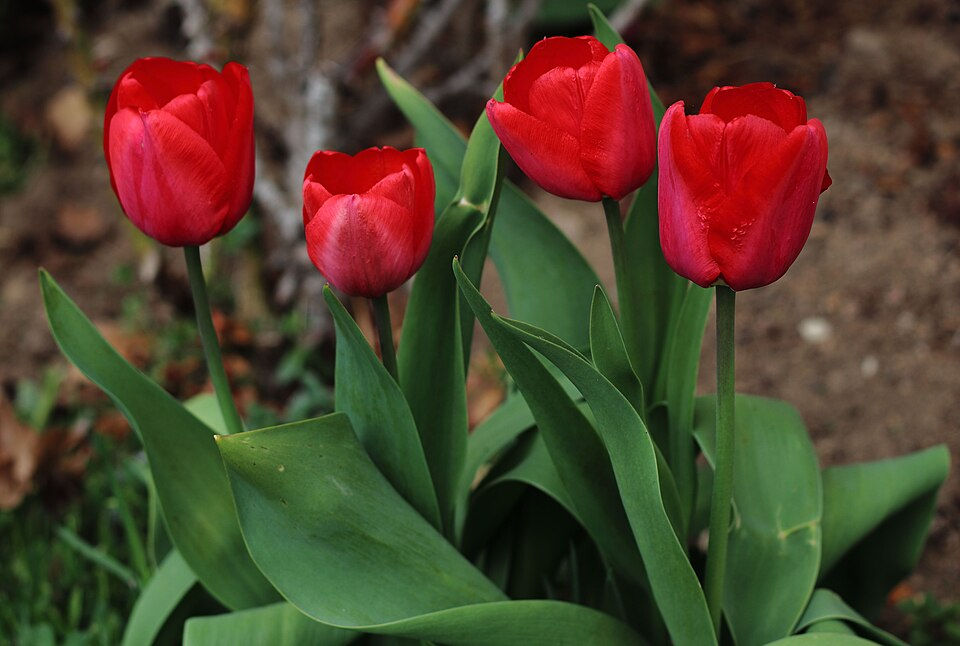
Characteristics: This is an iconic genus of spring-flowering, bulbous herbaceous perennials belonging to the Lily family (Liliaceae). They grow from a true, tunicated underground bulb wrapped in a protective, papery brown skin. In early spring, they push out a few fleshy, glaucous, bluish-green leaves with a prominent waxy coating. From the center of the rosette, a single, smooth vertical stem rises to support a single cup-, bowl-, or star-shaped blossom composed of six distinct petals (tepals). While heavily hybridized modern types focus on perfect form, many wild species and historical variants release a subtle, sweet honey scent during warm spring mornings.
Pros
Pure Geometric Color Impact: Delivers the most saturated, clean, and architecturally perfect cup forms available in the spring landscape.
Elite Limestone Performance: Wild species and botanical tulips are naturally adapted to lean, stony, high-pH limestone profiles and scree gardens.
Excellent Winter Hardiness: Shrugs off deep winter freezes with ease, requiring cold soil temperatures to stretch their flower stalks properly.
Premium Cut Flower: Sturdy stems and waxy petals hold their form beautifully in water, continuing to grow and turn toward the light inside a vase.
Cons
Short-Lived Hybrid Longevity: Large-flowered hybrid tulips (like Darwin Hybrids) act like annuals, often declining significantly or failing to bloom after their first season.
Zero Moisture-Stagnation Tolerance: Saturated winter clay or excessive summer watering will rapidly trigger bulb rot and fungal decline.
High Wildlife Vulnerability: Unlike pest-resistant daffodils, tulip bulbs are a favorite food source for mice, voles, moles, and porcupines.

The Field Performance Profile
Light Requirement
Full, unrestricted sun. They require at least six hours of direct daily solar radiation during their late winter and spring growing phase to keep stems strong, straight, and prevent them from bending or flopping.
Cold Hardiness
Down to minus 25 to minus 35 degrees Celsius (minus 13 to minus 31 degrees Fahrenheit). They require a sustained winter chilling period (at least 12 to 14 weeks below 7 degrees Celsius) to break internal bulb dormancy and trigger proper flower development.
Heat Tolerance
Highly resilient in summer. Because the entire top-growth dies back and disappears by early June, the underground bulbs sleep safely through intense 40 degrees Celsius dry summer stretches without taking any structural damage.
Soil Requirement
Demands excellent, immediate internal drainage. It thrives in lean, sandy, porous mineral loams with a neutral to highly alkaline pH (6.5 to 8.0). Highly compatible with limestone grit, gravel beds, and rocky slopes. Heavy clay matrices must be heavily modified with sand and grit.
Root Structure
A temporary seasonal cluster of fine, fibrous white roots that emerge from the bottom basal plate of the bulb in late autumn to absorb winter moisture.
Height & Spread
Varies by type: Dwarf botanical or wild species stay compact at 10 to 20 cm (4 to 8 inches); standard hybrid tulips push clean vertical lines up to 45 to 60 cm (18 to 24 inches). Lateral spread is highly compact at 10 to 15 cm (4 to 6 inches) per stem.
Watering
Moderate water needs from autumn planting through spring bloom. Natural winter snow and spring rain are typically sufficient. Once the petals fall and the foliage browns, stop watering completely; the bulbs require a hot, bone-dry soil matrix during summer dormancy.
Lifespan
Variable. Wild botanical tulips are long-lived perennials that naturalize and multiply over time. Large modern hybrids are best treated as annuals or short-lived perennials (1 to 3 seasons) due to rapid bulb splitting.
Flower Color
An infinite spectrum excluding pure blue—encompassing stark white, sunshine yellow, soft pink, deep orange, rich violet, near-black maroon, and complex feathered or flamed bi-colors.
Blooming Period
Early spring to late spring (running sequentially from March through May depending on early, mid, or late-season varieties).
Foliage Status
Strictly ephemeral spring growth. The thick, waxy green leaves remain active for a short window post-bloom, turn completely yellow by early summer, and dry up as the plant retreats into the earth.
Difficulty Level
Beginner to Intermediate. Planting the bulbs in autumn is simple, but ensuring perfect summer drainage and protecting them from soil pests requires basic strategic care.

Propagation Methods
Separation of Daughter Bulblets (The Standard Method): After a hybrid tulip finishes blooming, the main mother bulb naturally splits and expends its energy to create several smaller daughter bulblets around the basal plate. In early summer, once the foliage turns completely brown, carefully dig up the cluster. Gently snap the small daughter bulbs away from the exhausted parent shell. Replant the largest bulblets immediately into a dedicated, sandy nursery bed or gravel border at three times their height. They will grow foliage for 1 to 2 seasons before gaining enough mass to push their first full flower chalice.
True Seed Sowing (The Wild Species Method): Highly reliable for wild botanical species (like Tulipa sylvestris or Tulipa humilis). Collect flat, papery seeds from dry pods in mid-summer. Surface-sow them into a gritty, well-draining limestone sand and compost mix in autumn. The seeds require winter freezing to germinate in spring. This is a slow, patient process—seedlings look like thin blades of grass for the first few seasons and take 4 to 6 years to form a mature bulb capable of blooming.
Pro Care Tips & Secrets
Wild and botanical tulips require a hot, bone-dry baking period during their summer dormancy to properly set their internal flower buds for the next spring. If planted in borders with automated summer irrigation, the bulbs will quickly rot or fail to bloom. Always place your long-term tulips in dry gravel pockets, south-facing stone walls, or orchard margins that receive zero summer watering.
If you want to keep your large hybrid tulips blooming for more than one season, ignore the standard shallow planting rules. Dig your holes deep—planting the bulbs 20 to 25 cm down from the soil surface to the base plate, provided the soil drains well. This deep burial keeps the bulb cool in spring, preventing it from prematurely splitting into dozens of tiny, non-blooming daughter bulbs and forcing the main bulb to stay intact for next year.
Since tulip bulbs are sweet and highly prized by digging rodents, never plant them unprotected in areas with heavy vole or mole activity. Line your planting trench with a simple cage of 1 cm galvanized wire mesh, place a layer of limestone grit at the bottom, set the bulbs, and close the sides. This allows roots and stems to pass through effortlessly while creating an impenetrable physical barrier against underground pests.
Tags: Perennial | Drought-Tolerant | Full-Sun | Bulbous-Asset | Spring-Bloom | Cut-Flower


Comments