


The Sapphire Field: Cornflower (Centaurea cyanus)
- Athena

- Jul 6
- 5 min read

Brilliant, geometric azure discs built for sun-baked gravel and continuous edible flushes.
Alternative Names: Cornflower, Bachelor's Button, Bluebottle, Peygamber Çiçeği, Gökbaş
Introduction
Botanical Name: Centaurea cyanus (Family Asteraceae)
Native Habitat: Originally native to the Mediterranean basin, temperate Europe, and Western Asia (including Anatolia). It evolved as a resilient pioneer annual colonizing sunny grain fields, rocky limestone slopes, disturbed grasslands, and open, gravelly steppes. This evolutionary background hardwires its elite capacity to thrive in nutrient-lean, high-pH mineral profiles under intense solar radiation.
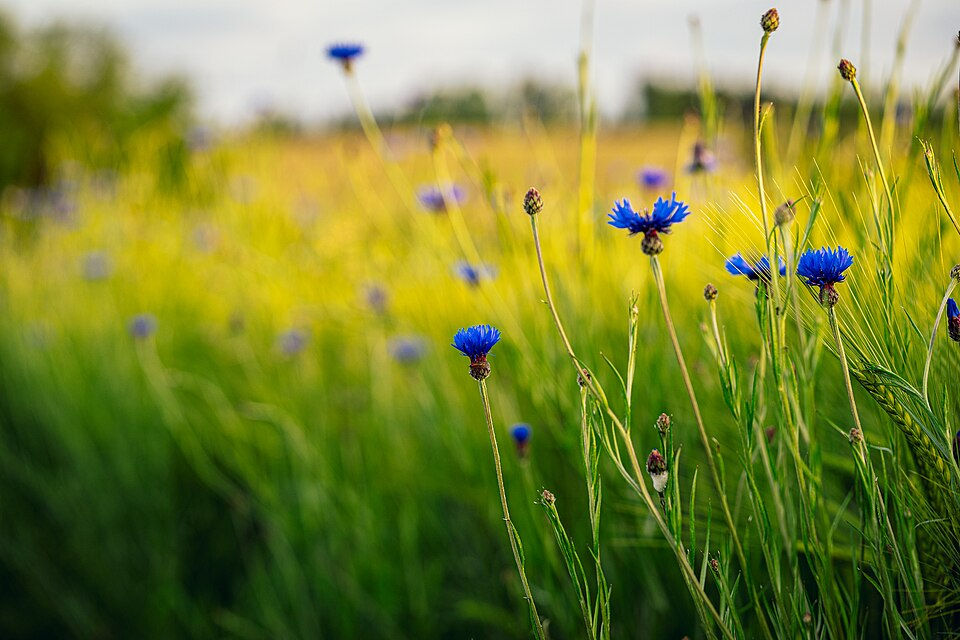
Characteristics: This is a slender, upright, fast-growing annual herbaceous plant that forms an airy, wire-like structural matrix. From a lean, fibrous taproot, it pushes out narrow, lance-shaped, greyish-green leaves covered in fine, cobweb-like hairs that give the foliage a soft silvery sheen. Throughout late spring and summer, the rigid, branched stems are topped by distinctive, geometrically complex flower heads. Each head features a tight rosette of intense, ruffled, outer ray florets surrounding a darker cluster of central disk florets. The blossoms lack a strong scent but possess an exceptionally deep, saturated pigment that stands out starkly in dry landscapes.
Pros
Elite Saturated Azure Pigment: Delivers one of the truest, most intense sapphire-blue shades available in the temperate plant kingdom.
Superb Self-Seeding Integration: Drops seeds efficiently in autumn and spring, maintaining a permanent, self-renewing colony in gravelly borders year after year.
High-Value Edible Confetti: Yields a heavy, continuous harvest of crisp, colorful flower petals that hold their rich hue exceptionally well when dried or fresh.
Excellent Limestone Grit Performance: Thrives flawlessly in dry, chalky, high-pH soil profiles that cause chlorosis or failure in more delicate annuals.
Cons
Floppy Growth in Rich Substrates: If given high moisture or rich organic composts, the thin stems grow soft and top-heavy, causing the plant to lodge flat against the earth.
Brief Individual Maturity Window: Individual plants complete their lifecycle quickly once the mid-summer heat peaks, turning dry and straw-like by August.
Susceptibility to Powdery Mildew: If trapped in stagnant, humid air pockets without sufficient breeze, the silvery foliage can become coated in fungal mildew late in the season.

The Field Performance Profile
Light Requirement
Absolute full, unrestricted sun. It demands a minimum of six to eight hours of direct daily solar radiation. Any amount of sustained shade causes the slender stems to stretch weakly, twist sideways, and drastically drops bud production.
Cold Hardiness
Extremely hardy annual. The dropped seeds and young overwintering rosettes easily survive severe winter freezes down to minus 20 degrees Celsius (minus 4 degrees Fahrenheit), bursting into explosive growth as soon as the early spring ground thaws.
Heat Tolerance
Moderate to high. Bakes comfortably in warm spring and early summer sun, but its lifecycle accelerates rapidly toward drying and seed-setting once sustained mid-summer temperatures consistently cross 35 degrees Celsius (95 degrees Fahrenheit).
Soil Requirement
Extremely adaptable but prefers lean, well-drained, sandy loams or gravelly limestone matrices. It has a stellar affinity for high-pH, alkaline mineral soils with a pH range of 6.5 to 8.5, and struggles significantly in heavy, waterlogged winter clay.
Root Structure
A slender, tough vertical taproot supported by a lean framework of lateral fibrous roots designed to anchor the plant efficiently in loose, disturbed, or gravelly topsoil.
Height & Spread
Pushes an airy, vertical presence. Stems rise anywhere from 40 to 90 cm (16 to 36 inches) in height, while a single plant maintains a compact horizontal footprint of 20 to 30 cm (8 to 12 inches) wide.
Watering
Low water needs. Once the young seedlings establish their rosettes, they are highly drought-tolerant. Natural winter snows and spring rains are typically sufficient; only provide a light soaking during exceptionally dry spring stretches. Overwatering triggers soft, weak stems.
Lifespan
Strict annual. Completes its entire lifecycle from seed germination to seed drop within a 3 to 5-month window, relying on its permanent underground seed bank to return annually.
Flower Color
Historically a brilliant, deep sapphire blue; however, hybridized garden strains also offer soft pastel pink, deep maroon, white, and lavender variations.
Blooming Period
Late spring into mid-summer (typically peak blooming runs continuously from May through July, with occasional late flushes if deadheaded regularly).
Foliage Status
Deciduous annual. The narrow grey-green leaves remain active during the spring growing and blooming window, turning brown and drying out post-seed drop.
Difficulty Level
Beginner. It is one of the easiest, most self-sufficient annuals to cultivate from seed, requiring zero specialized maintenance once scattered.
Propagation Methods
Direct Autumn Broadcast Seeding (The Ultimate Natural Route): Because cornflowers produce highly viable seeds and a sensitive taproot that hates being moved, direct sowing in autumn is exceptionally successful. Lightly scratch the surface of a lean, weed-free gravel or sandy limestone bed. Scatter the small, brush-topped seeds thinly across the soil surface. Press the ground firmly using a flat board or your palms so they make solid contact with the mineral matrix. They will germinate and form flat, frosty-green winter rosettes that overwinter flawlessly, ensuring much stronger, earlier-blooming plants the following May.
Early Spring Succession Sowing (For Extended Harvesting): To stretch your flower harvesting window into late summer, scatter a second wave of seeds directly into the open gravel patches in March as soon as the winter ground thaws. Keep the surface lightly damp until early spring temperatures spark germination.
Pro Care Tips & Secrets
To double your total petal harvest and prevent your cornflower patch from going to seed prematurely, you must practice aggressive weekly deadheading. Pick the flowers when they are fully expanded and the blue color is at its peak saturation. Use sharp snips to cut the flower stem all the way back to the nearest leaf junction. Preventing the plant from forming its hard, brush-topped green seed pods tricks its internal hormonal system into continuously pushing out fresh lateral branches and a new wave of flower buds, extending the season by up to a month.
Never apply high-nitrogen organic fertilizers, rich compost blankets, or fresh animal manures to a cornflower bed. Excessive nitrogen forces the plant to build long, soft, watery stems that cannot support their own weight, causing the airy framework to flop flat against the ground during early summer thunderstorms. Keeping the soil lean, sterile, and strictly mineral-dominant forces the plant to build tight, ultra-wiry, self-supporting vertical stems that hold their bright heads high without requiring staking.
When your cornflower patch finishes its main July bloom and turns dry and straw-like, use the "Cut-and-Drop" technique to secure next year's crop and clean the border instantly. Grab the dry stalks by the handful and shake them vigorously across your bare gravel matrix to distribute the mature seeds. Then, use hedge shears to cut the spent stalks right at the soil line, leaving the roots to decay naturally and open up channels in the soil. Within a few weeks of the first autumn rains, a dense, perfect carpet of new green winter rosettes will emerge automatically.
Tags: Annual | Drought-Tolerant | Full-Sun | Edible-Yield | Self-Seeding | Spring-Bloom


Comments