


The Scarlet Beacon: Scarlet Sage (Salvia splendens)


Erect, high-contrast structural spires built for intense ambient warmth, moisture-locked humus, and explosive, neon-saturated autumn focal displays.
Alternative Names: Scarlet Sage, Tropical Sage
Introduction
Botanical Name: Salvia splendens (Family Lamiaceae)
Native Habitat: Native to the warm, high-humidity mountain woods, shaded clearing margins, and humid slopes of Brazil. Unlike its drought-touched Mediterranean or desert scrub cousins, this species evolved under a tropical forest regime marked by regular rainfall, ambient warmth, and deep floor leaf mold. This evolutionary history hardwires its complete reliance on consistent root moisture, its affinity for organic-rich loams, and its brilliant metabolic capacity to build intense flower pigment under high solar energy.
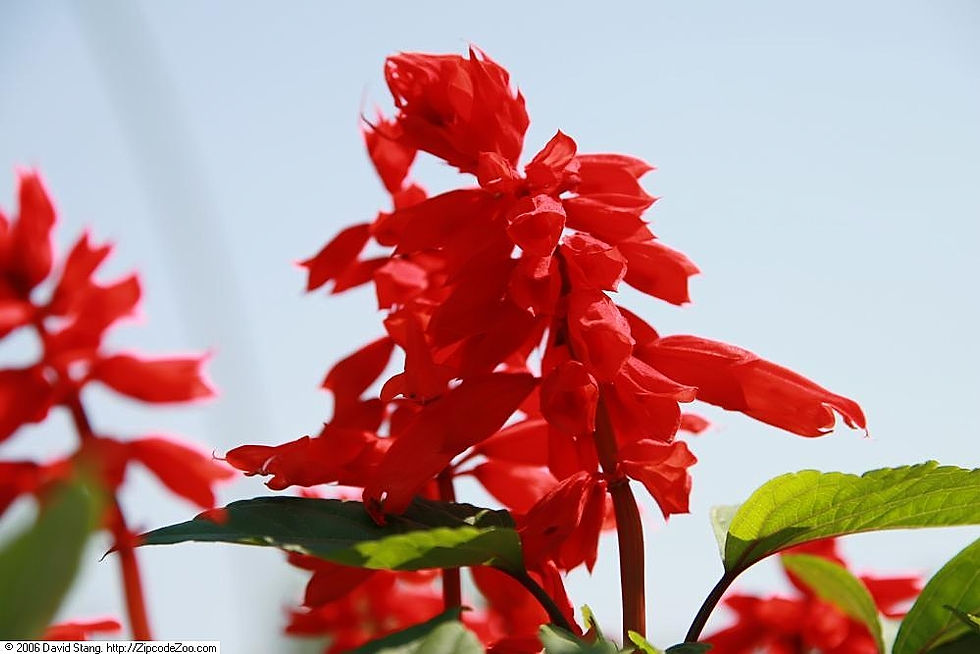
Characteristics: This is a fast-growing, upright, densely branched herbaceous perennial (grown strictly as a high-performance seasonal annual across temperate zones). It features rigid, square-angled, heavily branched green stems lined with opposite, heart-shaped (cordate), sharply serrated leaves that show a rich, deep green hue and a clean, pointed tip. From early summer straight through the onset of late-autumn freezes, the apex of every single vertical branch produces an immense, crowded, spike-like raceme. The large, tubular, two-lipped blossoms are held within matching, hyper-saturated colorful calyces, creating a blinding, solid pillar of color that stands completely clear of the dark leaf canopy.
Pros
Blinding, High-Contrast Color Density: Delivers one of the most visually dramatic, pure, and intensely saturated red displays available in the plant kingdom.
Extended Multi-Month Floral Finale: Pushes out a continuous sequence of fresh flowering spires from June until the first true winter frost drops.
Elite Architectural Bedding Geometry: The crisp, vertical spire architecture provides exceptional structure, depth, and clean borders in formal landscape layouts.
High Pollinator Drawing Capacity: Actively functions as an elite landing strip for long-tongued butterflies, honeybees, and specialized clearwing moths.
Cons
Absolute Topsoil Drought Vulnerability: The lush foliage and succulent stems lack water-storage adaptations, wilting and collapsing rapidly if the root zone dries or bakes.
Complete Systemic Frost Mortality: Possesses zero internal cold-hardiness; the entire soft tissue frame liquefies and undergoes complete cellular death at 0°C (32°F).
Heavy Snail and Slug Attraction: The soft, juicy lower leaves and young spring shoots act as a premier target for local gastropods during damp morning transitions.

Field Performance & Care Profile
Light Requirement: Full sun to partial shade. In northern or maritime temperate zones, it achieves its tightest, most self-supporting stem structure and heaviest spire density when exposed to a minimum of six to eight hours of direct daily solar radiation. In scorching interior regions with intense summer heat waves, it performs significantly better with dappled afternoon shade to prevent its soft leaf margins from drying or bleaching.
Cold Hardiness: Tender annual / subtropical perennial. It handles cool autumn night drops down to 5°C (41°F) beautifully—which actively triggers deeper, more intense petal pigmentation—but undergoes complete systemic mortality at the first touch of frost. (RHS Hardiness Rating H1c / WHZ 10-11 as a seasonal annual).
Heat Tolerance: High. Comfortably endures intense ambient summer air temperatures climbing up to 35°C to 38°C (95°F to 100°F), provided its shallow root footprint is kept continuously insulated and damp.
Soil Requirement: Prefers deep, rich, highly porous, and well-aerated substrates, including fertile silts, sandy loams, and premium potting matrices rich in leaf mold. It displays an outstanding affinity for a neutral to slightly acidic pH range of 6.0 to 7.0, demanding a high percentage of organic matter combined with clean internal drainage.
Root Structure: A dense, shallow, and highly branched network of fibrous capillary roots that concentrates heavily in the top 20 to 25 cm of soil to mine topsoil nutrients.
Height & Spread: Depending heavily on the chosen cultivar group, modern dwarf bedding varieties stay tight at 25 to 35 cm (10 to 14 inches) high, while classic cutting-grade heirloom types tower at 60 to 90 cm (24 to 36 inches) in vertical height. The plant expands horizontally to form a bushy, mounding footprint of 30 to 45 cm (12 to 18 inches) wide.
Watering: High and highly consistent water needs. The shallow capillary roots cannot tolerate soil cracking or erratic wet-and-dry cycles. The soil matrix should remain continuously damp—resembling a thoroughly wrung-out sponge. Provide a deep, gentle soaking at the base twice a week during dry summer stretches. Never use cold, overhead municipal water during peak midday heat.
Regional Adaptability: Exceptionally successful as a summer seasonal asset throughout temperate Europe (RHS Hardiness Rating H1c) and across the entire United States (USDA Hardiness Zones 2 through 11 as a spring-sown annual). It thrives with extreme vigor in regions with warm, bright days and damp, humid air.
Lifespan: Strictly seasonal annual in temperate landscapes, completing its entire vegetative sprint, flowering climax, and seed maturation within a tight 5 to 7-month window before dying naturally.
Flower Color: Classic forms display a blinding, neon scarlet-red. Modern cultivated selections offer a broad, diverse color spectrum including royal purple, deep burgundy, salmon-pink, pastel lavender, soft cream-ivory, and high-contrast bi-colors.
Blooming Period: Uninterrupted warm-season frame. Typically runs continuously from early summer straight through late autumn (June to November depending entirely on regional frost timelines).
Foliage Status: Seasonal. The smooth, light-to-deep green serrated leaves remain active and lush throughout the hot months, collapsing cleanly as winter sets in.
Difficulty Level: Beginner to Intermediate. It is remarkably simple to grow for baseline color, but requires attentive watering schedules, heavy organic mulching, and routine deadheading to maintain a pristine, non-leggy shape.
Propagation Methods
Indoor Early-Spring Sowing (The High-Volume Border Route): To secure early June blooms, sow seeds indoors 6 to 8 weeks before your region's last expected spring frost. Fill sterile cellular plug trays with a light, peat-based seed-starting loam. Press the seeds gently into the medium, covering them with a paper-thin, 0.2 cm layer of fine vermiculite, as scarlet sage seeds require a balance of filtered light and steady humidity to break dormancy. Maintain a steady room temperature of 21°C to 23°C (70°F to 73°F) and keep the soil uniformly damp. Green sprouts will erupt within 10 to 14 days. Move to bright grow lights immediately and plant out once all frost danger vanishes.
Late-Spring Softwood Cuttings (The Instant Clone Route): Multiplying specific, high-performance color selections is exceptionally fast via vegetative means. In late spring, slice away an 8 cm non-flowering green terminal shoot from a robust plant. Cut cleanly directly beneath a leaf node and strip away the lower heart-shaped leaves. Insert the cutting into a damp, porous mix of sixty percent perlite and forty percent peat sand. Keep the tray under bright, indirect light in a warm spot; a completely independent root network will lock into the matrix within 10 to 12 days without requiring rooting powders.
Pro Care Tips & Secrets
To prevent your scarlet sage borders from stalling out by mid-August and turning into a tired, leggy display of faded, pale green seed stalks, you must practice a precise "Base-Directed Spire Deadheading" routine. Do not just pluck the drying red tubular petals off the top. The secret lies in tracking the thick flower stem all the way down into the canopy to the point where it meets the first pair of fully developed, dark green leaves, and slicing it off cleanly with sharp snips. This deep, redirective cut completely halts the plant's seed-maturation hormones, forcing the nodes directly below to instantly break dormancy and throw out two fresh, vigorous lateral flower spires, effectively doubling your late-autumn color volume.
To completely insulate the shallow, hairless root network of your scarlet sage from the devastating effects of summer soil baking and mid-day root-zone overheating—which causes the lower leaves to yellow, dry, and drop off cleanly—you must implement an exclusive "Organic Forest Floor" mulching strategy. Never leave the soil bare around these plants. Directly after planting your spring plugs, apply a deep, 5 cm layer of thoroughly composted autumn leaf mold, shredded pine bark, or well-rotted forest humus drawn right up to the outer radius of the foliage canopy. This thick organic blanket mimics the damp Brazilian understory, locking in uniform topsoil moisture, keeping root zone temperatures a full 5°C cooler than the ambient air, and entirely preventing topsoil cracking.
Tags: Seasonal-Annual | Moisture-Lover | Full-Sun | Humus-Lover | Hummingbird-Magnet | Autumn-Bloom


Comments