


The Summer Kaleidoscope: Garden Verbena (Verbena × hybrida / Verbena hortensis)


Vigorous, multi-branched mounding showstoppers built for intense heat radiation, highly porous mineral loams, and non-stop saturated floral shields.
Alternative Names: Garden Verbena, Florist's Verbena, Common Verbena
Introduction
Botanical Name: Verbena × hybrida (syn. Verbena hortensis) (Family Verbenaceae)
Native Habitat: This is a classic, high-performance interspecific horticultural hybrid created by crossing multiple wild species native to the sun-drenched, rocky hillsides and open pampas grasslands of South America (including Verbena peruviana and Verbena phlogiflora). This genetic lineage hardwires its absolute biological craving for intense, direct solar radiation, its excellent resilience to baking stone heat reflection, and its capacity to flower continuously through the hottest weeks of summer when other perennials stall.
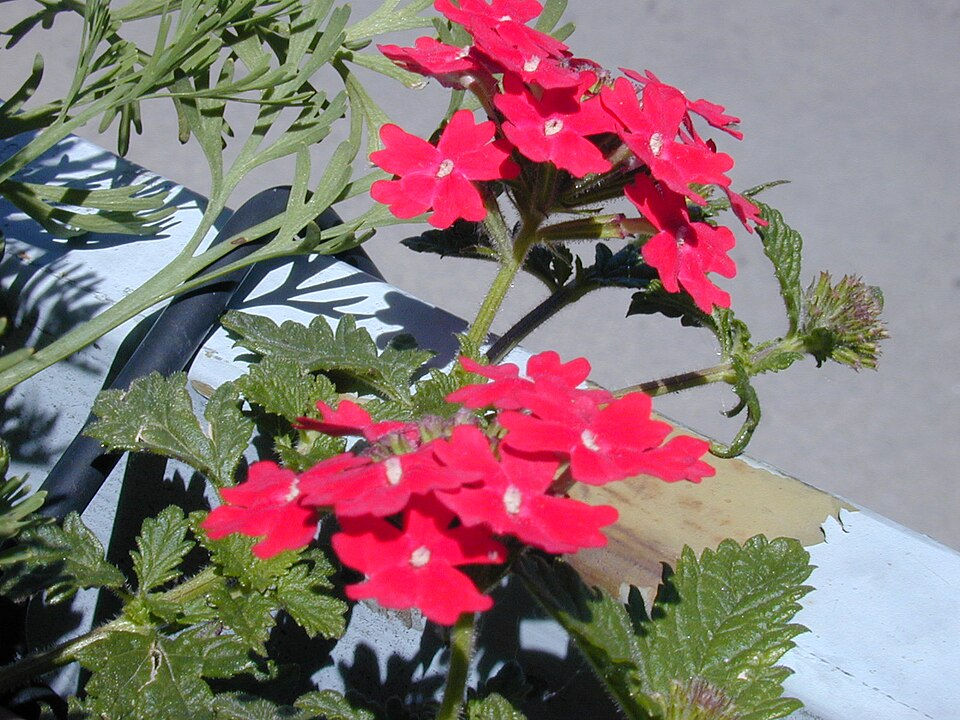
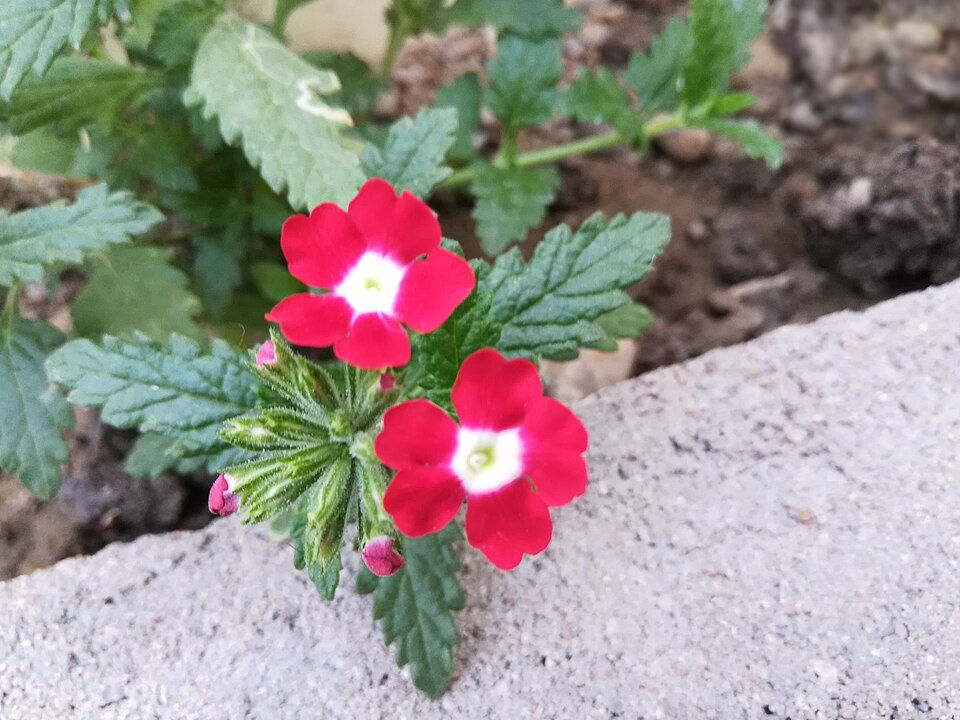
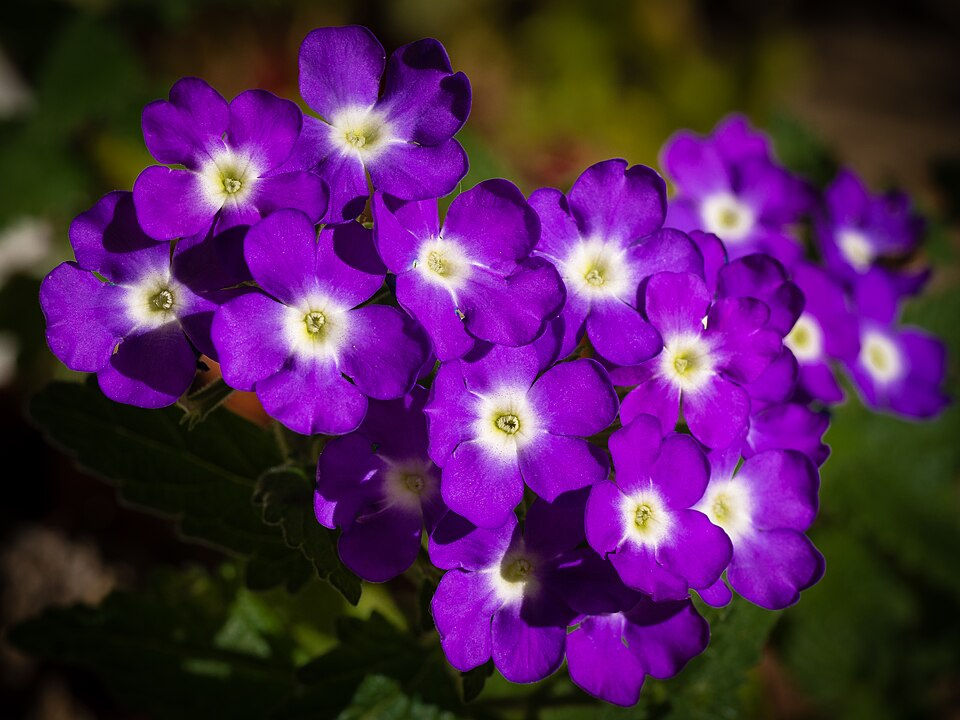
Characteristics: This is a fast-growing, multi-branched, mounding to semi-trailing herbaceous perennial (typically grown as a high-performance seasonal annual in temperate zones). It features rigid, square-angled, heavily branched stems lined with opposite, oblong-lanceolate leaves. The leaves are a rich dark green, distinctively crinkled, coarsely toothed, and covered in rough, bristly hairs that minimize wind-driven water loss. From late spring straight through the onset of late-autumn frosts, the branch tips produce countless large, dense, domed or flat-topped flower clusters (corymbs). The individual tubular, five-petaled blossoms flare out dramatically, often showcasing a prominent, contrasting white or cream center eye.
Pros
Unrivaled Bloom Intensity: Pumps out a dense, continuous shield of saturated, brilliant colors for up to six months straight.
Elite Versatility in Layout: Performs flawlessly as an front-border color anchor, a sprawling ground infill, or a cascading element in hanging baskets.
Supreme Summer Heat Resilience: Thrives comfortably in intense microclimates, such as concrete-rimmed walkways, stone terraces, and southern borders.
High Beneficial Pollinator Magnet: Actively draws in migrating swallowtail butterflies, honeybees, and specialized clearwing hawkmoths.
Cons
Severe Saturated Wet-Soil Vulnerability: The delicate fibrous root system experiences rapid cellular collapse and rot if trapped in heavy, compacted, or waterlogged clays.
High Powdery Mildew Sensitivity: If the canopy is crowded or trapped in stagnant, humid air pockets, the leaves will rapidly develop a grey-white fungal coating.
Absolute Annual Lifecycle in Cold Zones: Lacks the internal timber or tissue density to survive sub-zero winter freezes; completely melts at the first hard frost.
Field Performance & Care Profile
Light Requirement: Absolute full, unrestricted sun. It demands a minimum of six to eight hours of direct, unfiltered daily solar radiation. Any amount of afternoon shade or overhead canopy crowding triggers long, watery growth joints, sparse foliage, and completely halts fresh flower bud division.
Cold Hardiness: Tender perennial / grown exclusively as a seasonal annual in cold regions. It handles crisp autumn night drops down to 4°C (39°F) beautifully, but undergoes complete systemic mortality at 0°C (32°F). (RHS Hardiness Rating H1c / WHZ 9a-11).
Heat Tolerance: Supreme. Performs flawlessly through intense, baking ambient summer air temperatures climbing up to 38°C to 42°C (100°F to 108°F) without showing signs of leaf scorch or tip burn, utilizing the heat to accelerate bud division.
Soil Requirement: Prefers light, lean, highly porous substrates including sandy loams, gravelly silts, and unamended potting matrices rich in perlite. It displays an excellent affinity for a neutral to slightly alkaline pH range of 6.5 to 7.8, demanding immediate, gravity-assisted drainage.
Root Structure: A shallow, highly branched, and dense network of fibrous capillary roots that concentrates in the top 20 to 30 cm of soil to draw nutrients.
Height & Spread: Forms a beautifully spreading mound reaching 20 to 45 cm (8 to 18 inches) in vertical height, expanding horizontally to cover a lush, dense footprint of 30 to 60 cm (12 to 24 inches) wide.
Watering: Moderate water needs. The shallow roots have zero tolerance for deep soil cracking or long periods of stagnant saturation. Provide a deep, gentle soaking at the soil level twice a week during dry summer stretches. Always water early in the morning and avoid wetting the hairy leaves to prevent fungal spores from activating.
Regional Adaptability: Exceptionally successful as a summer seasonal asset throughout temperate Europe (RHS Hardiness Rating H1c) and across the entire United States (USDA Hardiness Zones 2 through 11 as a spring-planted annual). It thrives with unmatched color saturation in warm, low-humidity Mediterranean climates.
Lifespan: Strictly seasonal annual in temperate zones, completing its vegetative growth, flowering climax, and seed drop within a tight 5 to 7-month window. It can persist as a short-lived perennial only in frost-free, arid subtropical zones.
Flower Color: An extraordinary, kaleidoscopic spectrum including royal purple, deep velvet blue, blazing scarlet-red, neon magenta, soft pastel rose, and pure snow-white, frequently showcasing a distinct white or cream central eye.
Blooming Period: Uninterrupted warm-season frame. Typically runs continuously from mid-spring straight through late autumn (May to October depending heavily on regional frost timelines).
Foliage Status: Seasonal. The rough, bristly dark green leaves remain active and lush throughout the hot months, collapsing cleanly as winter sets in.
Difficulty Level: Beginner to Intermediate. It is incredibly easy to grow for baseline color, but requires attentive deadheading, selective feeding, and mid-summer pruning to maintain a pristine, non-leggy shape.
Propagation Methods
Late-Spring Softwood Cuttings (The Ultimate Fast-Clone Route): Because modern garden verbenas are complex hybrids engineered for compact habits and specific eye patterns, growing them from seed will result in wild genetic variations. Taking vegetative cuttings in late spring yields a 100% success rate. Select strong, non-flowering terminal shoots about 8 cm long. Make a clean cut directly below a leaf node and strip away the lower bristly leaves. Insert the cuttings into a damp, highly porous mix of seventy percent perlite and thirty percent peat sand. Keep under a clear humi-dome in a warm, bright spot; an independent root matrix will form within 10 to 14 days without needing hormones.
Indoor Early-Spring Sowing (The High-Volume Border Route): To secure early May blooms, sow seeds indoors 10 to 12 weeks before your region's last expected spring frost. Fill cellular plug trays with a sterile, peat-based seed-starting mix. Press the seeds 0.5 cm deep into the medium and cover them completely, as verbena seeds require total darkness to break dormancy. Maintain a steady room temperature of 22°C to 24°C (71°F to 75°F) and keep the soil uniformly damp. Green sprouts will erupt within 14 to 21 days. Move to bright grow lights immediately upon germination.
Pro Care Tips & Secrets
To prevent your garden verbenas from turning into a leggy, sparse, and stringy mess of bare stems with only a few lonely flowers at the very tips by late July, you must implement the "Mid-Summer Halving Shear." Do not be afraid to lose a few blossoms. In mid-July, use sharp hedge shears to cleanly cut the trailing branches of the entire plant back by one-third to one-half their overall length. This intentional structural disruption instantly breaks apical dominance, forcing the root crown to pump its rich sap reserves into flushing out a dense carpet of pristine new lateral branches. Within two weeks, this fresh canopy will form a highly compressed, self-supporting mound packed with hundreds of fresh flower buds that will carry your color shield into late autumn.
Never apply high-nitrogen organic composts, fresh animal manures, or quick-release synthetic agricultural fertilizers to your verbena beds or containers. High soil fertility is the ultimate catalyst for structural and fungal failure in this species; excess nitrogen forces the cells inside the square stems to expand rapidly with water, creating long, weak, watery branches that lack cellulose density. This soft tissue makes the plant highly attractive to thrips and, more critically, completely suppresses the development of flower buds, leaving you with a green bush with zero color. Keep the ground lean, poor, stony, and strictly mineral-dominant to guarantee short, tough growth joints that maximize flower bud density.
To completely wipe out the threat of Powdery Mildew (Podosphaera macularis)—which can turn your rich green verbena foliage into a dusty, grey, melting mush within days during late summer—you must enforce a strict "Base-Directed Irrigation" policy and wide layout spacing. The rough, bristly hairs on the leaves easily trap ambient moisture, creating a stagnant microclimate that acts as an open invitation for fungal spores if overhead watering is used. Always direct your hose nozzle or drip irrigation lines straight onto the soil surface beneath the leaf canopy. Furthermore, never crowd your plants; leave a minimum of 30 cm between plugs to allow high-velocity summer wind to pass through the branches, drying morning dew within minutes and keeping the leaves perfectly clean and healthy.
Tags: Seasonal-Annual | Drought-Resilient | Full-Sun | Mounding-Growth | Powdery-Mildew-Sensitive | Summer-Bloom


Comments