


The Sweet Cane Arch: European Red Raspberry (Rubus idaeus)


Biennial-caned, cold-hardy deciduous fruiting shrubs engineered for prickle-armed arching shoots, aggregate drupelet synthesis, suckering root networks, and high-yield summer/autumn berry harvests.
Alternative Names: Red Raspberry, European Raspberry, Framboise
Introduction
Botanical Name: Rubus idaeus (Family Rosaceae)
Native Habitat: Native to the cool-temperate, subarctic woodland clearings, forest margins, and rocky mountain slopes across Europe and Northern Asia. It evolved as a pioneer species in forest gaps created by fallen trees or fires, thriving in loose, organic-rich, moist soils with high light penetration. To survive harsh northern winters, it developed a perennial root system that continuously sends up new biennial woody shoots (canes), which grow vegetatively in their first year and produce heavy berry crops before dying back in their second year.
Characteristics: A deciduous, multi-stemmed, arching shrub growing 1.2 to 2.0 meters tall, spreading vigorously via underground root suckers. The plant consists of a perennial crown and root system, but biennial canes:
Primocanes (1st Year): Green, succulent, unbranched erect shoots produced during the current growing season, usually armed with soft, reddish prickles.
Floricanes (2nd Year): Woody, brownish, overwintered shoots that branch out, bloom, produce berries, and naturally senesce (die back).
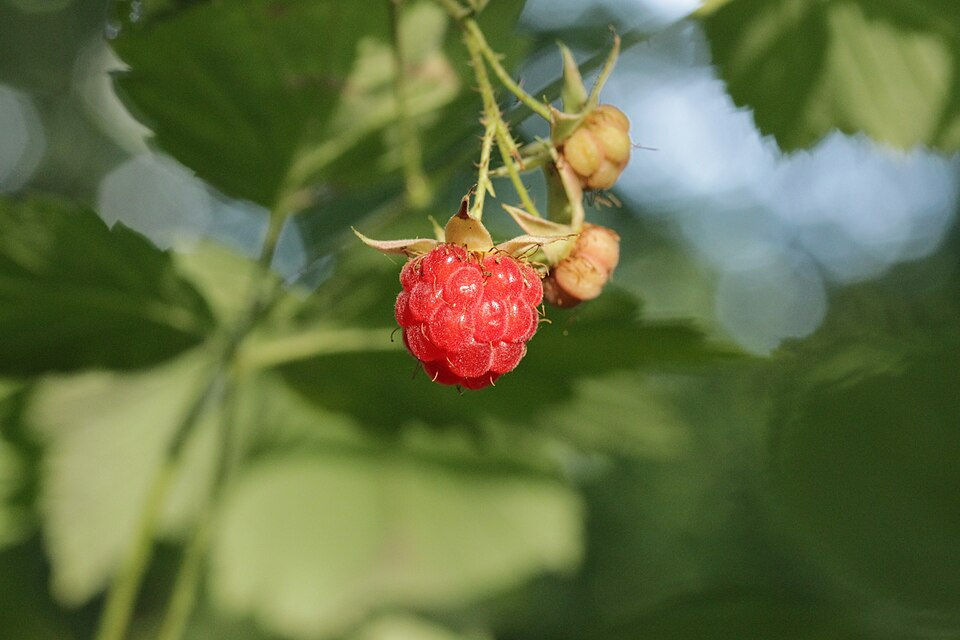
Leaves are pinnately compound with 3 to 5 sharply serrated, ovate leaflets, featuring dark green upper surfaces and distinct silvery-white, downy undersides. Small, 5-petaled white flowers emerge in late spring or summer, developing into fragrant, sweet, aggregate red fruits composed of 20 to 80 individual tiny drupelets. Cultivars are classified into Summer-Bearing (Floricane-fruiting) and Everbearing/Autumn-Bearing (Primocane-fruiting) types.
Pros
High Agricultural & Culinary Value: Produces fresh, highly aromatic, antioxidant-rich berries packed with vitamin C and dietary fiber.
Exceptional Cold Hardiness: Thrives in cold northern climates, with dormant root crowns easily surviving deep winter soil freezes.
Rapid Suckering Establishment: Underground root network expands quickly, forming productive berry patches and hedges within 2 to 3 years.
Dual-Harvest Potential: Everbearing cultivars yield two distinct crops per season (late spring on floricanes and late summer/autumn on primocanes).
Cons
Aggressive Root Suckering Spreading: Underground lateral roots send up adventitious suckers far beyond designated planting rows if not contained.
High Pruning Discipline Requirement: Demands annual pruning to remove dead 2nd-year floricanes and manage primocane density.
Susceptibility to Fungal Cane Diseases: High canopy humidity and poor air circulation invite gray mold (Botrytis cinerea), cane blight, and spur blight.
Field Performance & Care Profile
Light Requirement: Full solar radiation (6 to 8+ hours of direct sunlight daily). Full sun is essential for maximum cane strength, high flower density, and sweet sugar synthesis in ripening berries. Partial shade reduces yield and increases fungal disease risks.
Cold Hardiness: Extremely cold-hardy deciduous shrub. Requires 800 to 1,600 winter chill hours below 7°C (45°F) to break bud dormancy. Fully hardy down to -30°C to -35°C (-22°F to -31°F). (RHS Hardiness Rating H6–H7 / WHZ 3a–8b).
Heat Tolerance: Low to Moderate. Operates best in cool-temperate northern climates. Summer temperatures consistently above 32°C (90°F) cause fruit sunscald, poor berry set, and heat stress.
Soil Requirement: Demands a deep, friable, highly organic, well-draining sandy loam or clay loam with a pH of 6.0 to 6.8. Highly sensitive to waterlogged or poorly drained clay, which triggers root rot (Phytophthora rubi).
Root Structure: Develops a shallow, wide-spreading perennial root system localized in the top 20 to 40 cm of soil, producing vigorous underground horizontal runner roots.
Height & Spread: Canes reach 1.2 to 2.0 meters in height; lateral spread is infinite via suckers if uncontained (keep rows trained to 40 to 60 cm wide).
Watering: High, disciplined moisture needs during flowering and fruiting. Keep soil consistently damp like a wrung-out sponge (2.5 to 4.0 cm of water per week). Irrigate at the soil level using drip lines or Soaker hoses—never overhead sprinklers, which wet leaves and induce Botrytis fruit rot.
Regional Adaptability: World-class fruiting shrub for cool-temperate homesteads, commercial berry farms, and kitchen gardens; requires raised beds and shade cloth in warm, humid regions.
Lifespan: Long-lived perennial root crown; individual patches remain highly productive for 10 to 15+ years when managed correctly.
Flower Color: White to cream 5-petaled flowers.
Blooming & Harvesting Period: Summer-bearers bloom in spring (May) and harvest in June/July; Everbearers harvest on primocane tips from August through first autumn frost.
Foliage Status: Deciduous (silver-white undersides).
Difficulty Level: Moderate. Demands annual cane pruning, trellis support systems, and strict root rot prevention.

Propagation Methods
Dormant Root Sucker Division (Easiest Method): In late autumn or early spring before bud break, dig up young adventitious root suckers emerging near the main row base. Ensure each dug cane retains a firm section of attached horizontal root with fibrous feeder roots. Replant immediately into pre-amended, moist soil at the same depth.
Root Cuttings: Take 10 to 15 cm pencil-thick root pencil sections in late winter while dormant. Lay horizontally 5 cm deep in moist sandy peat mix; fresh primocanes emerge within 4 to 6 weeks.

Pro Care Tips & Secrets
To master "Pruning According to Fruiting Habit," apply the "Type-Specific Cane Pruning Protocol."
Summer-Bearing (Floricane-Fruiting): In late summer immediately after harvest finishes, cut all spent, brown, fruited floricanes down to the ground level. Do not cut the green primocanes—they will overwinter and bear next summer's crop. Thin primocanes to leave 4 to 6 strong canes per linear foot of row.
Autumn-Bearing / Everbearing (Primocane-Fruiting): For a single, massive autumn crop, simply mow or cut ALL canes down to ground level in late winter (February). The plant will send up fresh primocanes in spring that bloom and fruit at their tips by late summer.
To prevent fatal "Phytophthora Root Rot (Phytophthora rubi)," enforce the "Raised Bed & Subsurface Drip Rule." Rubus idaeus roots cannot tolerate standing water or heavy, compacted soils. Always plant raspberries in raised beds 25 to 30 cm high filled with compost-rich, porous soil. Always use subsurface drip irrigation to keep water away from upper stems and fruit clusters.
To eliminate "Cane Collapse & Wind Damage," erect a "T-Trellis Wire Support System." Unsupported raspberry canes arch over under heavy fruit loads, touching wet soil and rotting or snapping in high winds. Install post supports with horizontal cross-arms holding parallel support wires at heights of 80 cm and 140 cm. Train young primocanes between these wires to maintain an upright, well-ventilated vertical canopy structure.
Tags: Fruit-Crop | Deciduous-Shrub | Cold-Hardy | Biennial-Canes | Rosaceae | Edible-Garden


Comments