


The Ultimate Care Guide for Common Boxwood (Buxus sempervirens)


The Living Sculpture of Classic Gardens
Welcome to the definitive grower’s profile for the undisputed royalty of structural gardening. Whether you are designing formal low hedges, intricate parterres, or dramatic topiary shapes, this dense and dependable evergreen remains the gold standard for architectural green design.
Introduction
Botanical Name: Buxus sempervirens
Common Names: Common Boxwood, American Boxwood, European Box
Native Habitat: Native to Western and Southern Europe, Northwest Africa, and Southwest Asia. It thrives naturally in the understory of beech, oak, and pine forests, often growing on rocky, limestone-rich slopes.
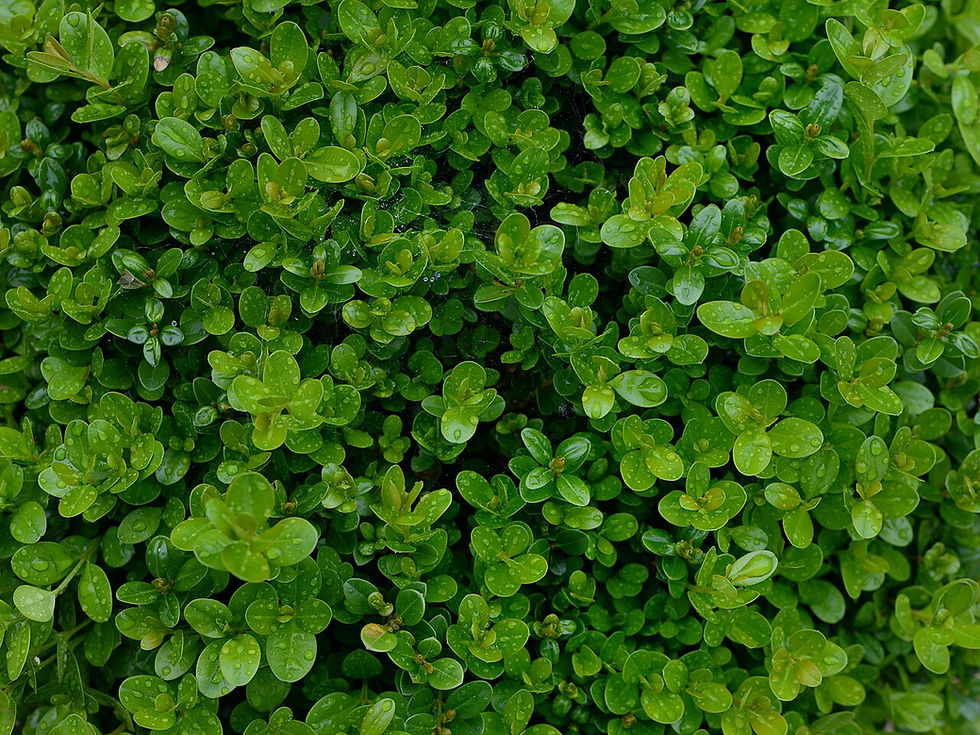
Characteristics: This is a slow-growing, long-lived, broadleaf evergreen shrub or small tree belonging to the Box family (Buxaceae). It is globally celebrated for its exceptionally dense growth habit and small, glossy, oval leaves that remain deep green year-round. Its wood is so dense and heavy that it actually sinks in water, historically prized for fine wood carving and musical instruments.

Pros
Unmatched Definition: The tight internodes and tiny leaves allow it to be sheared into incredibly sharp, crisp geometric shapes, hedges, and topiaries.
Excellent Shade Tolerance: Unlike many structural shrubs, it performs beautifully in filtered light and deep shade without losing its dense habit.
Deer and Rabbit Resistant: The foliage contains bitter alkaloids that make it highly unpalatable to grazing wildlife and common pests.
Superb Cold Hardiness: Stands up excellently to heavy winter frosts, snow loads, and biting cold winds.
Cons
Very Slow Growth Rate: It expands at a patient pace of only 5 to 15 cm (2 to 6 inches) per year, meaning it takes several years to establish a mature, solid hedge.
Susceptible to Boxwood Blight: Can be vulnerable to specific fungal diseases (like Cylindrocladium buxicola) if planted in overcrowded, poorly ventilated, or constantly wet conditions.
Pungent Foliage Scent: The leaves release a distinct, musky, resinous aroma—often compared to an earthy or cat-like scent—which becomes stronger when exposed to hot afternoon sun.
Shallow Roots: Cannot tolerate deep cultivation or aggressive digging around its base once established.
Plant Care Blueprint
Light Requirement
Partial shade to full sun. While it can handle full sun in cooler regions, it prefers partial shade or dappled afternoon protection in hot climates. Intense, baking afternoon sun combined with dry soils can cause the glossy leaves to bronze or scorch.
Cold Hardiness
Down to minus 23 to minus 28 degrees Celsius (minus 10 to minus 20 degrees Fahrenheit). It is exceptionally cold-hardy, thriving comfortably across USDA Hardiness Zones 5 through 8.
Heat Tolerance
Up to 35 to 38 degrees Celsius (95 to 100 degrees Fahrenheit). It manages summer warmth well, but its shallow root system requires protection via mulching to prevent the soil from baking and drying out completely.
Soil Requirement
Prefers moist, fertile, loose, and excellently draining soils with a neutral to slightly alkaline pH. It thrives beautifully in kireçli (limestone/chalky) soils. It completely detests heavy, waterlogged clay; poor drainage will quickly lead to root rot.
Root Structure
Highly branched, dense, and remarkably shallow root system. The majority of its feeding roots sit in the top 30 cm of soil. Because of this, it requires consistent moisture near the surface and cannot tolerate deep digging or heavy foot traffic over its root zone.
Height & Spread
If left completely unpruned over decades, the standard species can slowly reach 3 to 4.5 meters in height (10 to 15 feet) and an equal spread. However, in standard garden cultivation, it is easily maintained at any desired height from 30 cm to 1.5 meters.
Watering
Moderate water needs. Because its roots are shallow, it cannot dig deep for water during droughts. Water deeply once or twice a week during hot, dry summer stretches. Always water at the base of the plant; avoid overhead sprinklers to keep the inner foliage dry.
Regional Adaptability
In Europe, it is a staple of classic British, French, and Mediterranean formal gardens. In North America, it adapts perfectly across the Pacific Northwest, mid-Atlantic, and cooler zones of the Northeast and South.
Lifespan
Perennial. An incredibly long-lived woody shrub that can easily live for 100 to 200 plus years, often outliving the gardeners who planted them.
Flower Color
Inconspicuous, tiny, petal-less yellowish-green flowers that lack ornamental value but are highly attractive to early spring pollinators.
Blooming Period
Early spring (typically running from April through May).
Foliage Status
Evergreen. It holds its rich, deep green, glossy foliage perfectly through all four seasons, providing critical green structure during the bleakest winter months.
Difficulty Level
Experienced. While it is highly resilient once established, its shallow root system, precise drainage needs, and susceptibility to fungal blight require attentive watering habits and clean pruning practices.
Propagation Methods
1. Semi-Hardwood Cuttings (Most Successful Method)
When: Late summer or early autumn, when the fresh spring growth begins to firm up and turn woody.
How: Snip a 10 to 15 cm (4 to 6 inch) cutting from a healthy branch tip. Strip the leaves from the bottom half of the stem. Lightly scrape the bark at the very base to expose the green cambium layer, dip it into rooting hormone powder, and stick it into a moist mix of half sand and half peat moss. Place in a sheltered, shaded area. Roots are slow to form, usually taking 2 to 3 months.
2. Layering (The Laziest Method)
When: Early spring.
How: Pin a low-growing, flexible lower branch down to the ground so that a section of the stem makes firm contact with the soil. Lightly wound the underside of the buried stem section and cover it with a handful of soil and a stone. By autumn, this buried section will develop its own independent root network. You can then sever it from the parent shrub and transplant it.
Pro Care Tips & Secrets
💡 The Sanitized Pruning Secret: Fungal spores love damp, crowded boxwood interiors. Never shear your boxwoods when the foliage is wet from morning dew or recent rain. Furthermore, always dip your pruning shears into a solution of ten percent bleach or rubbing alcohol between bushes. This simple habit prevents the accidental spread of Boxwood Blight across your entire garden layout.
🪵 The Root Shielding Secret: Because Boxwood roots sit so close to the soil surface, they are highly sensitive to summer heat and winter freezes. Always maintain a 5 to 7 cm layer of organic mulch (like shredded bark or leaf mold) around the base. Crucially, leave a small 3 cm gap between the mulch and the actual wooden stems to prevent bark rot.
Editor’s Note
Editor's Note: Buxus sempervirens is the ultimate definition of timeless elegance. It is the architectural spine that anchors wilder, free-flowing perennial beds and brings instant order to any landscape style. While its slow growth requires a patient gardener, the reward is a living piece of sculpture that grows more dignified and valuable with each passing decade. To minimize disease risks, always look for modern blight-resistant cultivars when building a long-term hedge.


Comments