


Ebbinge's Silverberry(Elaeagnus × ebbingei )
- Athena

- 10 Mar
- 3 dakikada okunur

The Silver Gem: Elaeagnus × ebbingei
If you are looking for a plant that combines structural elegance with a metallic, shimmering aesthetic, the Elaeagnus × ebbingei—commonly known as the Silverberry or Ebbing's Silverberry—is an elite choice. This robust hybrid is a cross between Elaeagnus macrophylla and Elaeagnus pungens, inherited from its East Asian ancestors. It is widely celebrated for its tough-as-nails nature and its unique, silvery-scaled foliage.
Why You Should Grow It
This is the "problem solver" of the garden. It thrives where others struggle—salty coastal winds, poor soils, and even heavy shade. Its foliage has a mesmerizing metallic sheen that reflects light, brightening dark corners of the landscape. Plus, its tiny autumn flowers pack one of the most intoxicating, honey-like fragrances in the botanical world.
Why I Might Skip It
If you are looking for showy, colorful flowers, this isn't the plant for you; its blooms are practically invisible. Also, it is a vigorous grower; if left unpruned, it can become a bit "wild" and leggy, potentially outcompeting smaller, delicate neighbors.
Plant Care Guide
Light Requirements
This plant is incredibly versatile. It thrives in Full Sun to Full Shade. While it grows denser in the sun, it is one of the few evergreens that maintains a beautiful silver luster even in deep shade.
Cold Hardiness
It is quite hardy, managing temperatures down to -15°C to -18°C (5°F to 0°F). It can handle frost well, though some leaf bronzing may occur in extreme winters.
Heat Tolerance
Very high. It easily withstands temperatures up to 38°C (100°F). It is particularly valued in Mediterranean climates for its ability to stay green during long, dry summers.
Soil Preferences
It is famously indifferent to soil quality. It grows in poor, sandy, or even chalky soils. As a nitrogen-fixing plant, it actually improves the soil it grows in. The only requirement is that the soil must be well-draining.
Root Structure
It has a deep and vigorous root system. Because it can fix its own nitrogen from the air via its roots, it can establish itself in depleted soils where other plants would starve.
Height and Spread
When left to its own devices, it can reach 300–400 cm (10–13 ft) in both height and width. It is easily maintained as a 150–200 cm (5–6 ft) hedge with annual pruning.
Watering
Drought-tolerant once established. During its first year, water it weekly. Afterward, it rarely needs supplemental watering unless there is a prolonged heatwave. It is a "plant it and forget it" species for water-conscious gardeners.
Regional Suitability
Europe: Excellent for coastal regions and temperate zones (USDA Zones 7–11).
USA: Highly successful in the Pacific Northwest, the Southeast, and coastal California.
Life Span
A long-lived perennial evergreen. It remains productive and aesthetically pleasing for 30 to 40 years with minimal intervention.
Flower Color
Small, bell-shaped, creamy-white to silvery-yellow flowers. They are often hidden beneath the leaves but are highly aromatic.
Blooming Period
Unlike most plants, it blooms in late autumn (October to November), providing a rare scent and nectar source when most of the garden is going dormant.
Foliage Status
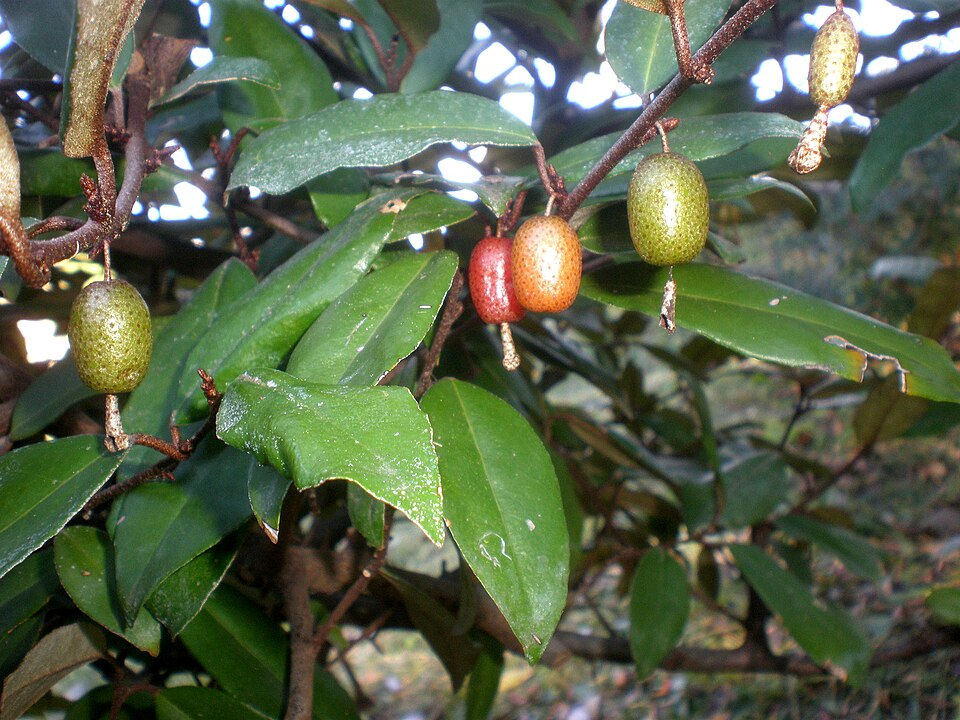
Evergreen. The leaves are dark green on top with a distinct silver, "scaly" underside that shimmers when the wind blows.
Difficulty Level
Beginner. It is nearly impossible to kill and requires very little specialized knowledge.

Propagation Methods
1. Semi-Hardwood Cuttings (Recommended)
Take cuttings in late summer or early autumn. Use about 10–15 cm of current year's growth. Dip in rooting hormone and place in a sandy compost mix. They root relatively easily if kept moist.
2. Seeds
Though possible, seeds require a period of cold stratification and can be slow to germinate. For a professional hedge, cuttings are the preferred method for uniformity.
3. Layering
Low-hanging branches can be pinned to the ground and covered with soil. They will eventually develop their own roots, at which point they can be detached from the mother plant.
Pro Tips for Success
The Coastal Guardian: If you have a garden near the sea, this is your best friend. It acts as a perfect windbreak and is completely immune to "salt burn" from sea spray.
Invisible Fragrance: Plant it near a window or a walkway. In November, you’ll wonder where the amazing honey scent is coming from, as the flowers are tiny and tucked away.
Pruning Strategy: It can throw out long, vigorous "water shoots." Prune these back in early spring to maintain a tight, formal shape.
Editor’s Note
In a world of high-maintenance ornamentals, the Silverberry is a refreshing reminder that a plant can be both tough and beautiful. It’s the "silent worker" of the garden—fixing the soil, blocking the wind, and smelling like a dream right when you think the growing season is over.