

Rose of Sharon Care (Hibiscus syriacus)
- Athena
- 10 Mar
- 3 dakikada okunur

The Summer Hibiscus: Rose of Sharon
If you love the look of the tropics but live in a climate with biting winters, the Rose of Sharon is your garden’s best friend. It brings the oversized, exotic blooms of a hibiscus to a hardy, deciduous shrub that stands its ground year after year.
Introduction
Botanical Name: Hibiscus syriacus
Native Habitat: East Asia (specifically China and India, though long associated with the Middle East)
Characteristics: An upright, vase-shaped deciduous shrub that can be trained into a small tree. It is prized for its late-summer "trumpet" flowers and its ability to thrive in urban environments.
Why You Should Grow It:
It is one of the few shrubs that peaks in late summer (August and September) when most other garden plants have finished blooming. It is incredibly tough, pollution-tolerant, and provides a sophisticated "cottage garden" feel with very little effort.
Why I Might Think Twice:
It is a "late starter" in spring. While other plants are leafing out in April, this one often looks like a collection of dead sticks until late May. Also, older varieties can be "prolific reseeders," meaning you might find dozens of "baby" hatmis popping up in your lawn.
Care Guidelines
Light Requirements
It craves Full Sun to Partial Shade. For the most prolific blooming and best disease resistance, aim for at least 6 hours of direct sunlight.
Cold Hardiness
Extremely resilient. It can withstand temperatures as low as -25°C (-13°F), making it suitable for much colder regions than its tropical cousins.
Heat Tolerance
Very high. It handles summer peaks of 35°C - 40°C (95°F - 104°F) with ease, provided it isn't bone-dry for weeks.
Soil Preferences
Prefers rich, moist, and well-drained soil. It is adaptable to various pH levels but performs best in slightly acidic to neutral ground.
Root Structure
It has a deep, branching taproot system accompanied by lateral fibrous roots. Once established, this makes it quite sturdy and difficult to transplant.
Size and Spread
Typically reaches a height of 240–360 cm (8–12 feet) and a spread of 180–300 cm (6–10 feet). It grows vertically more than horizontally.
Watering
Requires moderate watering. While it can tolerate short droughts, consistent moisture is the secret to those large, fleshy flowers. If the soil gets too dry, the buds may drop before opening.
Regional Adaptability
In the United States, it is a staple in USDA Zones 5–9. In Europe, it is widely beloved from the coastal gardens of the UK to the sunny landscapes of Central and Southern Europe.
Lifespan
A long-lived perennial shrub. It can decorate your garden for 20 to 30 years or more with proper rejuvenation pruning.
Flower Color
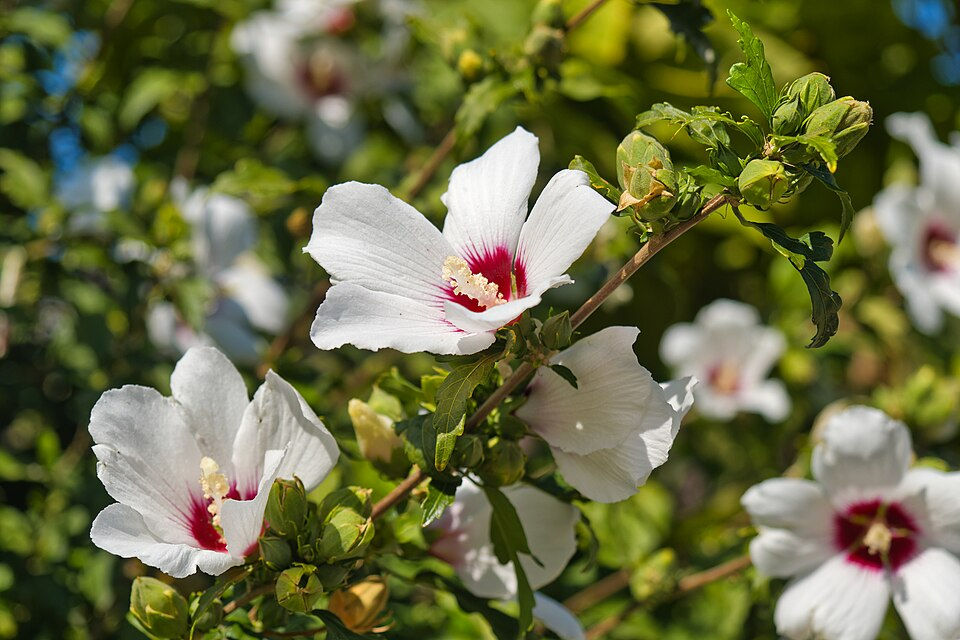
A wide spectrum including white, pink, red, lavender, and bicolor (often with a striking dark "eye" in the center).
Blooming Period
The star of the late show: July through September.
Foliage Status
Deciduous. It loses its palm-shaped, serrated leaves in late autumn.
Difficulty Level
Beginner. It is remarkably forgiving of "imperfect" gardening.
Propagation Methods
Stem Cuttings: Take 10–15 cm (4–6 inch) softwood cuttings in early summer. Remove the lower leaves, use a rooting hormone, and keep them in a humid, shaded environment. They root relatively quickly in a perlite-peat mix.
Winter Hardwood Cuttings: You can also take cuttings in late winter while the plant is dormant. These take longer to root but are very hardy.
Seeds: If you don't mind a surprise (the offspring may not look like the parent), you can collect the dried seed pods in winter and sow them in spring.
Pro-Tips for Success
Prune in Early Spring: Since this plant blooms on "new wood" (the growth that happens in the current year), you should prune it in late winter or very early spring to encourage more flower buds.
The "Slow-to-Wake" Rule: Don't panic in May! Many gardeners think their Rose of Sharon has died over winter because it stays bare for so long. Give it until June before you worry; it’s just sleeping in.
Hummingbird Magnet: If you want wildlife, plant these. The deep trumpet shape is specifically designed for hummingbirds and long-tongued bees.
Editor's Note
"The Rose of Sharon is the ultimate 'bridge' plant. It bridges the gap between the lushness of summer and the cooling of autumn. If you have a spot in your yard that feels empty in August, this is your solution. It’s elegant, rugged, and offers that high-end hibiscus look without the high-maintenance tropical needs."