


Yellow Bird of Paradise, Poinciana (Caesalpinia gilliesii)
- Athena
- 10 Mar
- 3 dakikada okunur

The Exotic Showstopper: Caesalpinia gilliesii
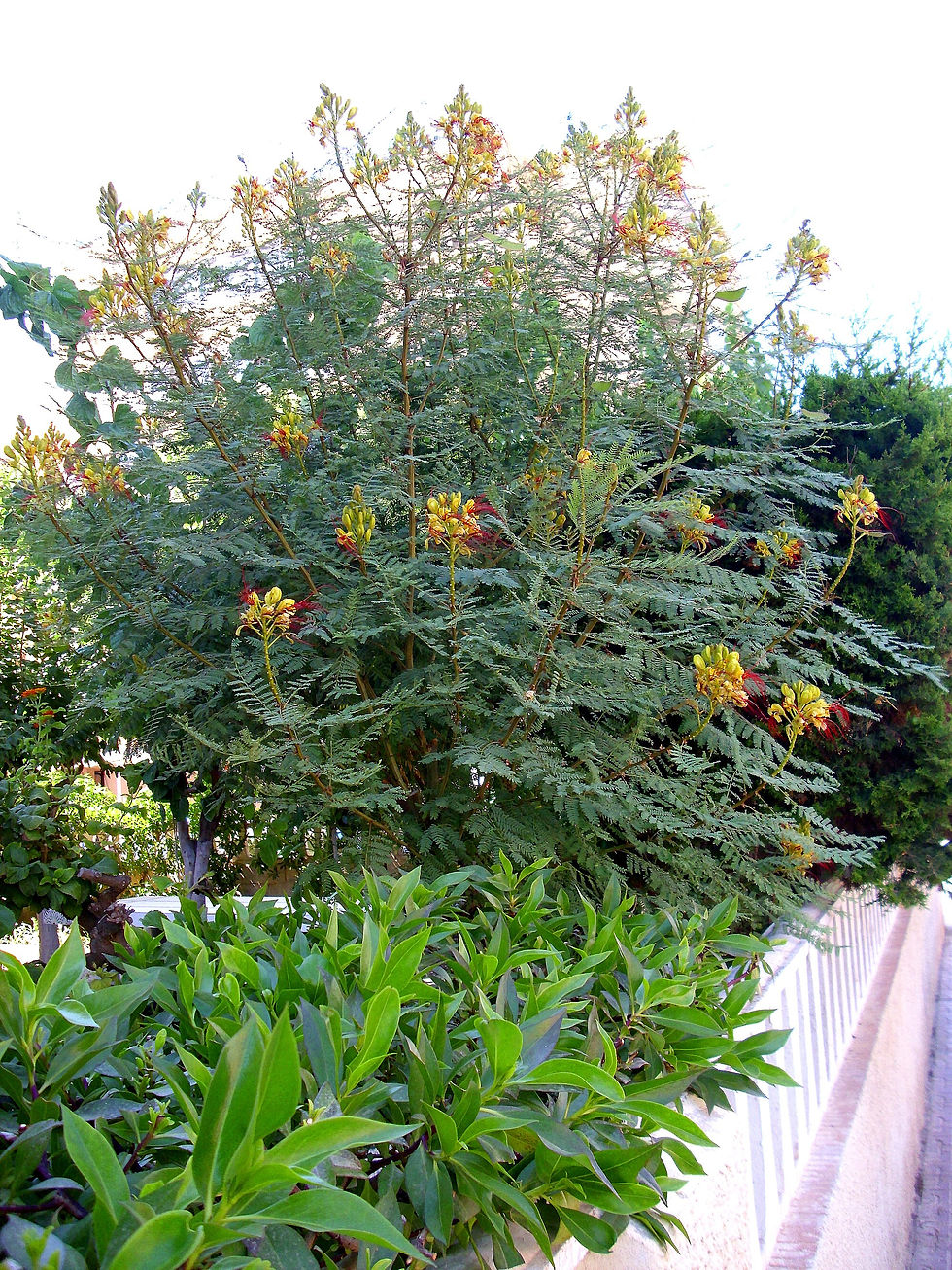
Often called the Bird of Paradise Bush or Desert Bird of Paradise, is a plant that demands attention. Known for its breathtaking, architectural flowers and delicate, fern-like foliage, it brings a touch of the tropics and a sense of high-end botanical art to any landscape. Native to South America (Argentina and Uruguay), it has become a beloved staple in Mediterranean and Aegean gardens.
Why You Should Grow It
If you want a plant that looks like a rare collector's item but is actually incredibly tough, this is it. The long, bright red stamens—resembling a "pasha’s mustache"—protruding from yellow petals create a striking visual. It is exceptionally drought-tolerant, loves the heat, and attracts hummingbirds and butterflies like a magnet.
Why I Might Skip It
It is a deciduous shrub, meaning it will drop its leaves in winter, leaving a somewhat "skeletal" frame. If you need a dense, year-round privacy screen, this isn't the right choice. Also, its seed pods are toxic if ingested, so it may not be ideal for gardens where curious pets or toddlers roam unsupervised.
Plant Care Guide
Light Requirements
This plant is a sun-worshipper. It requires Full Sun. To get those iconic, vibrant blooms, it needs at least 6–8 hours of direct sunlight. In shaded areas, it becomes leggy and rarely flowers.
Cold Hardiness
Surprisingly hardy for an exotic-looking plant. It can withstand temperatures down to -10°C to -12°C (14°F to 10°F). In colder climates, the top growth may die back to the ground, but it often regrows from the roots in spring.
Heat Tolerance
Exceptional. It thrives in intense heat, managing temperatures well above 40°C (104°F) without breaking a sweat. It is a champion for "sun-baked" spots in the garden.
Soil Preferences
It is not picky but demands excellent drainage. It thrives in sandy, rocky, or poor soils. While it can tolerate clay, you must ensure the site doesn't hold standing water, as root rot is its primary enemy.
Root Structure
It features a deep taproot system, which is why it is so successful in drought-prone areas. Once established, it is very difficult to move, so choose its permanent "forever home" carefully.
Height and Spread
Typically grows to a height of 200–300 cm (6.5–10 ft) and a spread of 150–250 cm (5–8 ft). It has an open, airy habit rather than a dense one.
Watering
Low water needs. Water regularly during its first season to establish the taproot. Once established, it is highly drought-tolerant. Overwatering, especially in winter, can be fatal.
Regional Suitability
Europe: Perfect for Mediterranean coasts, Southern Italy, Greece, and Western Turkey (USDA Zones 8–11).
USA: Thrives in the Southwest (Arizona, Texas, Southern California).
Life Span
A long-lived perennial shrub. It can grace your garden for 20+ years if kept in well-draining soil.
Flower Color
A stunning combination of bright yellow petals and dramatically long crimson-red stamens.
Blooming Period
It puts on its best show during the summer months (June to September), often blooming in waves as long as the weather stays warm.
Foliage Status
Deciduous. The fine, bipinnate leaves look like mimosa or fern leaves, providing a soft texture before falling away in late autumn.
Difficulty Level
Beginner to Intermediate. It is easy to grow if you have the right sun and soil, but it requires a bit of discipline with the watering can.
Propagation Methods
1. Seeds (Most Common)
The seeds have a very hard coat. For success, "scarify" them by lightly rubbing with sandpaper or nicking the edge with a knife, then soak in warm water for 24 hours before planting. They germinate quickly once the soil is warm.
2. Semi-Hardwood Cuttings
Taken in late summer. This method is a bit trickier than seeds but possible with the use of rooting hormones and a controlled, humid environment.
Pro Tips for Success
The Pruning Secret: Prune heavily in late winter or very early spring before new growth starts. This encourages a bushier shape and more flowering tips, as it blooms on new wood.
Seed Pod Management: If you want the plant to keep blooming all summer, remove the green seed pods before they mature. This redirects the plant’s energy back into flower production.
Winter Drainage: If your winters are wet, plant it on a slight mound or "hill" to ensure water drains away from the crown.
Editor’s Note
Poinciana is the ultimate "statement piece." It brings a sense of the wild, arid plains of South America right into your backyard. If you have a corner of your garden that feels too hot or too dry for "normal" plants, give it to a Paşa Bıyığı—it will reward you with a display that looks like a fireworks show in slow motion.